
Anthurium Care Guide — Canada
How to grow anthuriums in Canadian homes — keeping the waxy red flowers coming, winter humidity, and why the spathe turns green.
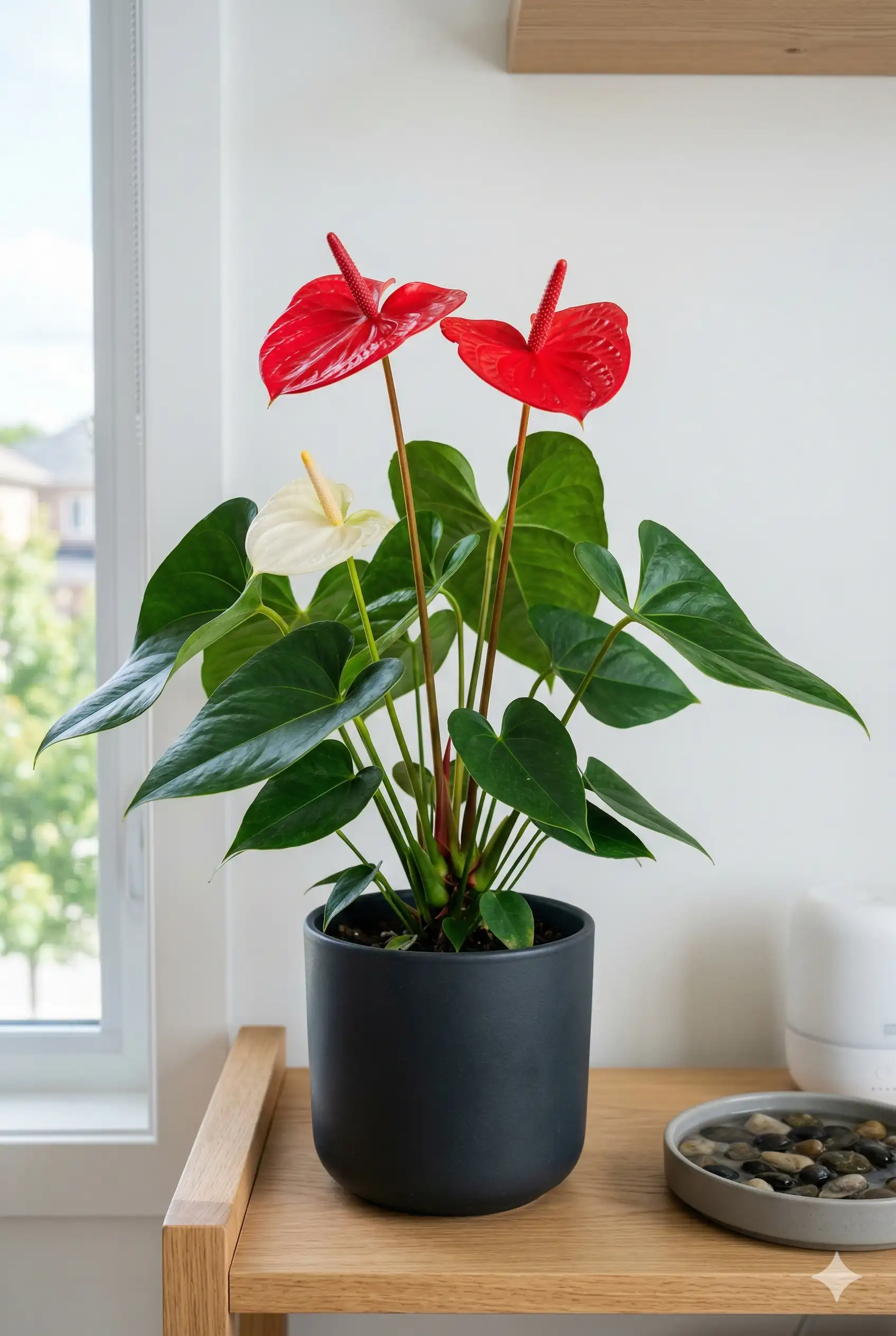
Anthurium (Anthurium andraeanum and related species) care in Canada is manageable once you understand what the plant is telling you — the waxy red, pink, or white spathe (commonly called the flower but actually a modified leaf) lasts for months and the plant blooms repeatedly throughout the year in the right conditions. The most common Canadian problem is dry furnace air causing brown leaf edges and reduced blooming.
This guide covers the complete care routine for Canadian homes, how to keep anthuriums flowering, and the winter humidity solution that makes the biggest difference.
🔴 At a glance: Water — when top 3–5cm dry, every 7–14 days. Light — bright indirect, no direct sun. Humidity — 60–80%, humidifier essential in Canadian winter. Blooming — needs bright light and high humidity simultaneously. Toxic to pets ⚠️
Is your Anthurium getting enough light this winter?
A Canadian winter cuts daylight roughly in half. See what your city actually gets this month, and whether a grow light is needed.
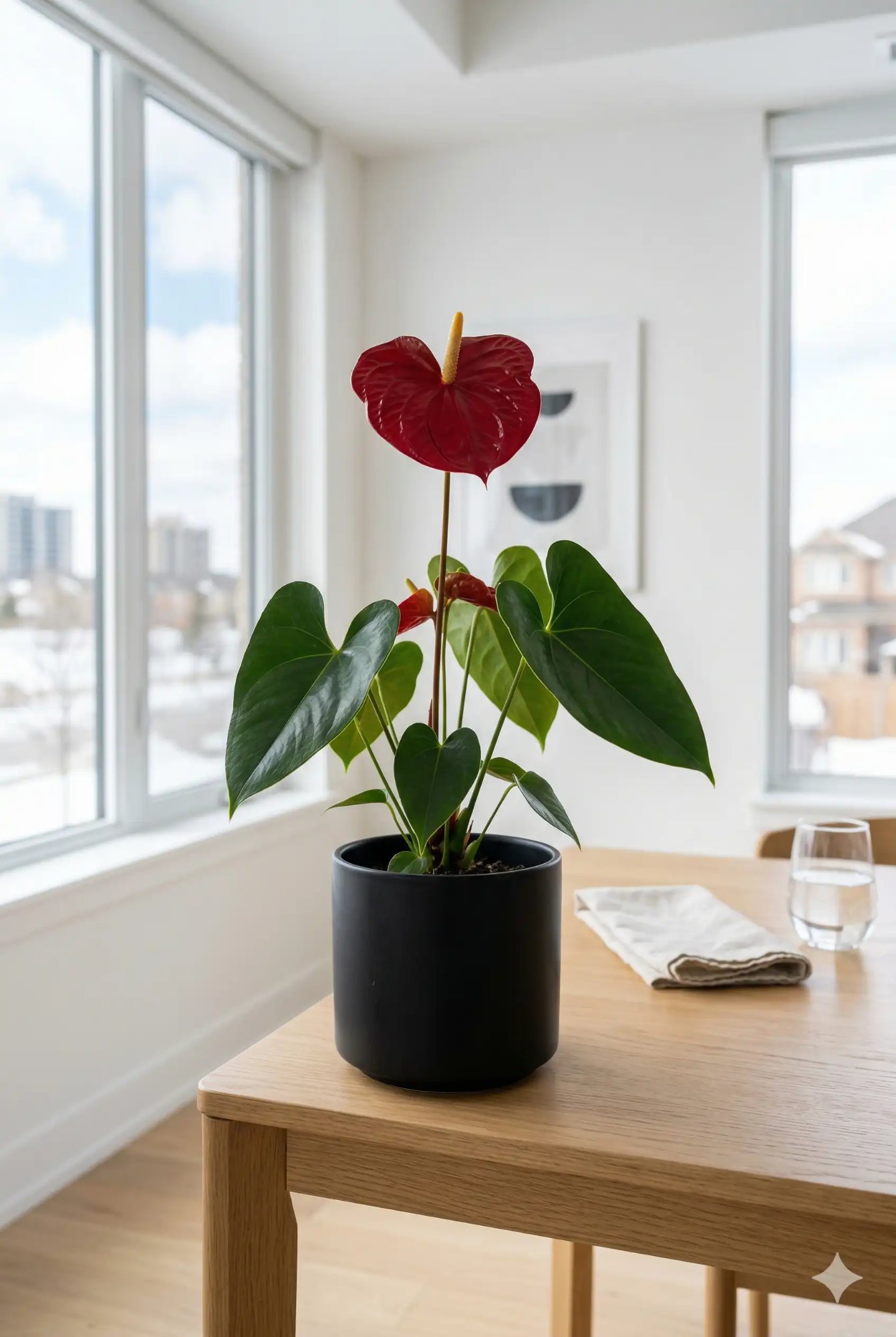
🔴 Quick Care Card
How to Water Anthurium in Canada
Anthuriums need consistent moisture but are very sensitive to overwatering — the combination of wet soil and low winter light causes root rot within weeks. The correct approach is to water thoroughly when the top 3–5 cm of soil is dry, then allow the pot to drain completely. Never leave an anthurium sitting in a full saucer.
Summer watering (May–September)
Water every 7–10 days. Check soil by pressing a finger 3–5 cm deep. Water thoroughly until it drains from the bottom, then empty the saucer after 30 minutes. Use room-temperature water — cold tap water stresses tropical roots.
Winter watering (October–April)
Reduce to every 10–14 days. Growth slows dramatically in Canadian winter low light and the plant uses much less water. The most common anthurium death in Canada happens here — watering on a summer schedule through winter. Always check soil before watering; never water on a fixed schedule.
Water quality matters
Canadian tap water is often fluoridated, which causes brown leaf tips over time. If you notice progressive tip browning despite correct humidity levels, switch to filtered water or let tap water sit overnight before using.
Overwatering kills more houseplants than anything else. A 3-in-1 soil meter shows you exactly when the root zone is dry — push the probe in for an instant moisture, light, and pH reading. No batteries needed.
Affiliate link — GrowersGuide.ca may earn a commission on qualifying purchases, at no extra cost to you. Learn more.
The other thing Canadian houseplants run short on all winter is light. From November to March most homes are too dim to keep plants growing — leaves stretch toward the window, variegation fades, and new growth stalls. A small full-spectrum LED grow light on a timer bridges the dark months, even for tough low-light plants that only survive (rather than grow) in a dim room.
Affiliate link — GrowersGuide.ca may earn a commission on qualifying purchases, at no extra cost to you. Learn more.
Why no fixed schedule works: How fast soil dries depends on temperature, light, pot material, room humidity, and plant size. An anthurium near a bright east window in summer dries faster than one in a dim corner in January — sometimes 2–3× faster. The top 3–5 cm finger test automatically accounts for all of these. See what affects soil drying rate →
Light Requirements for Anthurium
Bright indirect light is essential for anthurium blooming. Direct sun burns the waxy spathes and scorches leaves. Low light stops flowering entirely, even if the plant stays alive. An east or west window within 1 metre of the glass is ideal for most Canadian homes.
East or west window, 1 m from glass. Best for blooming and colour. Ideal year-round.
Plant survives but blooming slows or stops. Move closer to a window or add a grow light to restore flowering.
Burns spathe and scorches leaves. South window in summer too intense — filter with a sheer curtain or step back 1.5 m.
Canadian Winter Care — Humidity Is Everything
Anthurium is more affected by Canadian winters than almost any other common houseplant because it requires both bright light and high humidity to bloom — and Canadian winters deliver neither. A Canadian furnace-heated home in January sits at 25–30% relative humidity. Anthuriums need 60–80%. The result: blooming stops, leaf edges brown, and older spathes fade faster.
Run a humidifier nearby
A small cool-mist humidifier placed 30–60 cm from the plant is the single most effective winter intervention for Canadian anthurium growers. Target 60% relative humidity. A $40–80 humidifier pays back in better flowering within 4–6 weeks. Pebble trays raise local humidity by only 5–8% — helpful but not sufficient on their own.
Move to brightest window
Canadian winter sun is low-angle and weak. Move the plant within 60–100 cm of your brightest window (east or west preferred). Keep at least 5 cm from cold glass. A supplemental LED grow light on a 12-hour timer dramatically improves winter blooming.
Reduce watering, stop fertilising
Reduce watering to every 10–14 days. Stop fertilising completely November through February — feeding a slow-growing plant causes fertiliser salt buildup in the soil without the plant using the nutrients.
Anthurium needs 60–80% humidity to keep blooming, but a Canadian furnace-heated home sits at 25–30% all winter — the reason flowering stops and leaf edges brown. A small cool-mist humidifier 30–60 cm from the plant is the single most effective winter fix (a pebble tray only adds a few percent).
Affiliate link — GrowersGuide.ca may earn a commission on qualifying purchases, at no extra cost to you. Learn more.
Anthurium Varieties Available in Canada
| Variety | Spathe Colour | Notes |
|---|---|---|
| Anthurium andraeanum | Red, pink, white | Most common — widely available at Canadian Tire, IKEA, and garden centres. Long-lasting spathes. |
| Anthurium 'Livium' | Salmon/peach | Compact, very prolific bloomer. Ideal for smaller Canadian apartments. |
| Anthurium clarinervium | Foliage only | Grown for dramatic dark green velvety leaves with white veins. More humidity-demanding than flowering types. |
| Anthurium crystallinum | Foliage only | Large heart-shaped leaves with silver veining. Less common, found at specialty plant shops in Toronto, Vancouver, Montreal. |
How to Propagate an Anthurium
Anthuriums are propagated by division, not by leaf cuttings — a single leaf will not grow into a new plant. The easiest time is in spring, when you are already repotting. Wear gloves: anthurium sap is an irritant and the plant is toxic to pets and people.
Dividing the clump
A mature anthurium grows as a cluster of stems. Slide the whole plant out of its pot, shake the mix off the roots, and look for natural divisions — sections that have their own leaves and their own roots. Gently tease or cut these apart with a clean knife, making sure each division keeps at least two or three leaves and a healthy share of roots. Pot each section into fresh, chunky, well-draining mix.
Offsets and rooted side shoots
Anthuriums also send up small side shoots, or “pups,” beside the main plant. Once a pup has a few leaves and some roots of its own, it can be separated the same way and potted up individually. A leggy anthurium with a bare lower stem and visible aerial roots can also be top-cut just below a set of those roots and the rooted top potted on.
Aftercare for divisions
Fresh divisions are tender. Keep them warm, in bright indirect light, and in a humid spot — a pebble tray or a loose clear cover for the first couple of weeks reduces shock in dry Canadian air. Water lightly and don't fertilise until you see new growth, which signals the roots have re-established.
Anthurium Troubleshooting
Yellow leaves
Overwatering is the most common cause in Canada, especially in winter. Check roots — brown and mushy means root rot. Let soil dry more thoroughly between waterings. If root rot is present, remove the plant from the pot, trim rotted roots, dust with cinnamon (natural antifungal), and repot in fresh dry mix.
Brown leaf edges and tips
Low humidity from forced-air heating — the primary cause in Canadian winters. Solution: humidifier. Secondary cause: fluoride in tap water (switch to filtered water). Tertiary cause: too much fertiliser (flush soil and stop feeding for 2 months).
No new blooms
Insufficient light or low humidity — or both. Move closer to a window, run a humidifier, and resume monthly high-phosphorus fertilising (March–September). Anthuriums also need to be slightly root-bound to bloom — don't overpot.
Spathe turning green immediately
New spathes emerging green (rather than red or pink) indicates insufficient light. Move closer to a window or add a supplemental grow light. Existing blooms fading from red to green over 2–3 months is completely normal — cut at the base when fully green.
Frequently Asked Questions
How often should I water an anthurium in Canada?
Water anthuriums when the top 3–5 cm of soil is dry — typically every 7–10 days in summer and every 10–14 days in Canadian winter. Anthuriums need consistent moisture but cannot tolerate sitting in wet soil. Use room-temperature water and water thoroughly until it drains, then empty the saucer. In Canadian winter with low light, watering frequency should decrease as the plant's water uptake slows significantly. Overwatering in winter is the most common anthurium problem in Canadian homes — the combination of low light and wet soil causes root rot rapidly.
Why is my anthurium spathe turning green?
The spathe (the waxy coloured part commonly called the flower) naturally turns green as it ages — this is normal and indicates the bloom cycle is ending, not a problem. The spathe typically lasts 2–3 months before fading from red or pink to green. Cut it off at the base when it turns green and the plant will redirect energy to producing the next bloom. If new spathes are emerging green rather than red from the start, the plant needs more light — move closer to an east or west window.
How do I get my anthurium to bloom more in Canada?
Anthuriums bloom in response to adequate light combined with high humidity. In Canada the two main barriers are insufficient winter light and dry furnace air. For more blooms: move to within 1 metre of an east or west window; run a humidifier nearby to maintain 60–80% humidity (Canadian furnace air at 25–30% is too dry for anthurium blooming); fertilise monthly with a high phosphorus fertiliser at half strength from March through September; and ensure temperatures stay above 16°C consistently. A grow light on a 12-hour timer combined with a humidifier is the most reliable year-round blooming setup in Canada.
How do I care for an anthurium in a Canadian winter?
Anthuriums are more sensitive to Canadian winters than most tropical houseplants because they need both good light AND high humidity to bloom — and Canada provides neither in winter. Key adjustments: run a humidifier nearby (most important adjustment — furnace air at 25–30% stops blooming and causes brown edges); move to your brightest window; reduce watering to every 10–14 days; stop fertilising from November through February; and keep away from cold windows and heating vents. A pebble tray alone is insufficient — a small humidifier is the correct solution for anthurium winter care in Canada.
Is anthurium toxic to pets?
Yes — anthuriums are toxic to cats, dogs, and humans. They contain calcium oxalate crystals that cause oral irritation, drooling, vomiting, and difficulty swallowing if chewed. Keep out of reach of pets and children. Wear gloves when repotting as the sap can irritate skin. Contact your vet immediately if your pet ingests any part of an anthurium.
Why does my anthurium have brown leaf tips?
Brown leaf tips on anthuriums in Canada are almost always caused by low humidity from forced-air heating. Canadian winter homes drop to 25–30% humidity — anthuriums prefer 60–80%. A humidifier nearby is the correct fix. Secondary causes: fluoride in tap water (switch to filtered water), too much direct sun (move back from window), or fertiliser salt buildup (flush soil and reduce fertilising frequency).
🐾 Have pets? See our Pet-Safe Houseplants guide — which common houseplants are toxic to cats and dogs, which are safe, and what to do if a pet eats one.
📖 More Houseplant Guides
Also Growing Vegetables?
Free planting calendars for 30+ vegetables across every major Canadian city.