
Aloe Vera Care Guide — Canada
How to grow and care for aloe vera in Canadian homes — watering, light, harvesting gel for sunburn and skin care, Canadian winter care, and propagating pups.
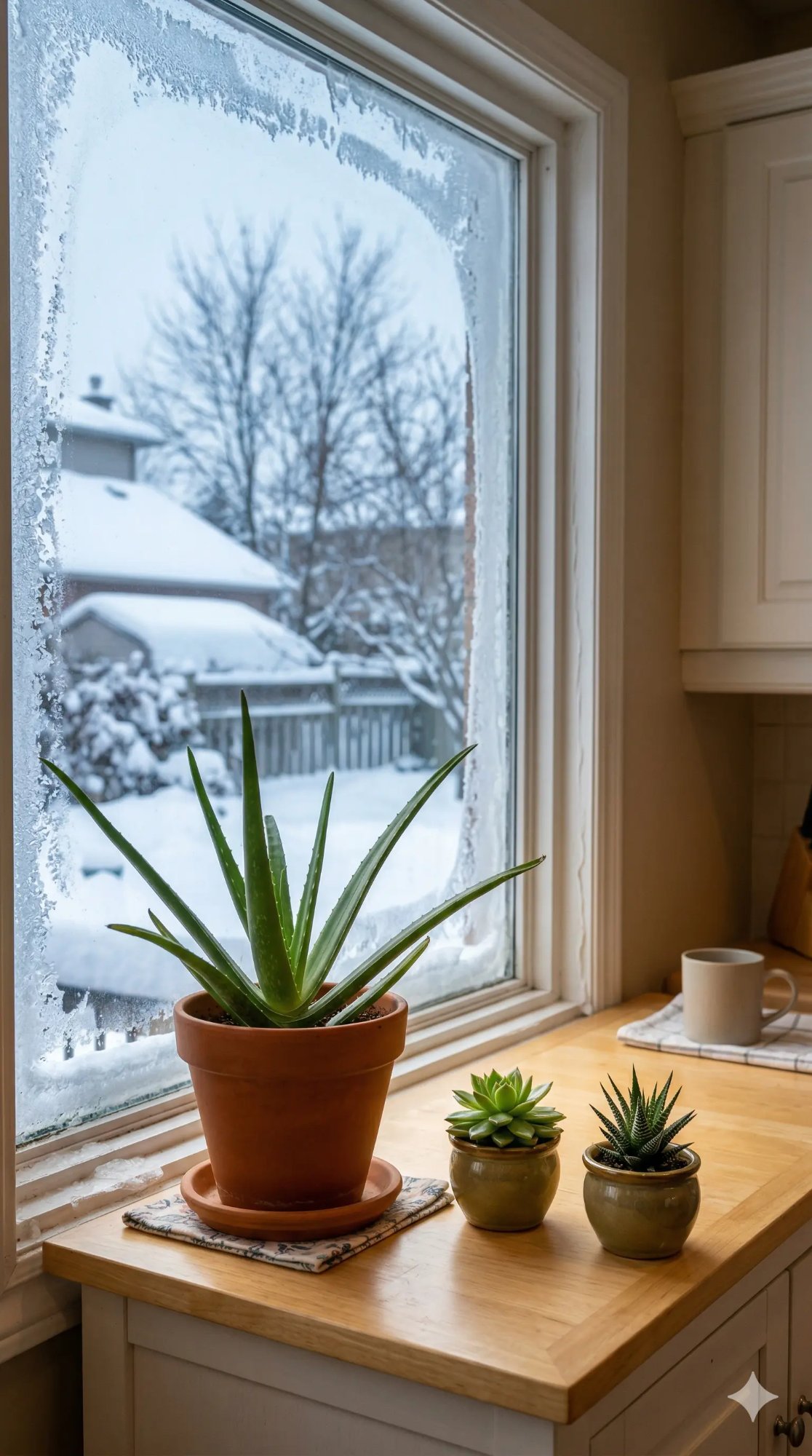
Aloe vera (Aloe barbadensis miller) care in Canada is simple — this is one of the most drought-tolerant plants you can grow indoors, and the dry air from Canadian forced-air heating suits it perfectly. The plant stores water in its thick leaves and can survive months of neglect. The only way to kill an aloe vera reliably is overwatering, and the fix is straightforward: wait longer between waterings and ensure the pot drains freely.
Beyond its care simplicity, aloe vera is the most practically useful houseplant in a Canadian home — the clear gel inside the leaves is genuinely effective on minor burns, sunburn, and skin irritation. This guide covers complete care for Canadian conditions plus how to harvest and use the gel properly.
Aloe vera at a glance: Water — only when completely dry, every 2–6 weeks. Light — direct sun is fine, south window ideal in Canadian winter. Dry furnace air — no problem, suits aloe perfectly. #1 killer — overwatering. Gel harvest — drain yellow sap first, use clear gel only.
Is your Aloe Vera getting enough light this winter?
A Canadian winter cuts daylight roughly in half. See what your city actually gets this month, and whether a grow light is needed.
🌳 Aloe Vera Quick Care Card
Light Requirements — Why Aloe Vera Loves Canadian Winter Sun
Aloe vera is unusual among the houseplants on this list because it actually tolerates and benefits from direct sunlight — the intense light that scorches a pothos or peace lily is perfectly suited to an aloe. This makes the south-facing window that most Canadian homeowners try to protect their plants from the ideal winter location for aloe vera.
Canadian winter light tip: From November through February, move your aloe vera to your south-facing window for maximum light, including direct sun. The low winter sun angle means light intensity is lower than summer even in direct sun — aloe benefits from this position that would be too intense for most plants in July.
☀️ Direct Sun — Best in Winter
South window with direct sun from Nov through Mar. Best growth, firmest leaves, most pups. The correct winter position for Canadian aloe vera.
🪟 Bright Indirect — Best in Summer
East or west window, or south window filtered with sheer curtain in July and August. Intense summer direct sun can bleach leaves if the plant isn't acclimatised gradually.
🌓 Low Light — Avoid
North windows or far from windows — aloe stretches toward light, becomes leggy and pale, produces no pups, and is more susceptible to root rot as wet soil never fully dries. Not suitable.
Can I put my aloe vera outside in Canadian summer?
Yes — aloe vera thrives outdoors in a sunny Canadian summer. Introduce to outdoor sun gradually over 1–2 weeks to prevent bleaching. Full sun in a well-drained pot is ideal. Bring back indoors when night temperatures approach 5°C — typically mid-September to early October in most Canadian cities. Outdoor placement significantly boosts pup production.
How to Water Aloe Vera in Canada
Aloe vera stores water in its thick gel-filled leaves — its natural environment is arid and seasonal drought is the norm. The watering rule is the same as snake plant and ZZ plant: completely dry all the way through before watering again.
Aloe vera watering schedule — Canada: Summer (May–Sept): every 2–4 weeks. Fall (Oct–Nov): every 3–5 weeks. Winter (Dec–Feb): every 4–6 weeks or longer. Spring (Mar–Apr): every 3–4 weeks. Always verify soil is completely dry. When in doubt, wait another week.
Water thoroughly when you do water — pour until it flows freely from drainage holes, then leave completely alone until the next check. Never let an aloe vera sit in a saucer of water. Use a cactus mix or potting soil with very heavy perlite or coarse sand added — fast drainage is as important as infrequent watering for preventing root rot.
Overwatering kills more houseplants than anything else. A 3-in-1 soil meter shows you exactly when the root zone is dry — push the probe in for an instant moisture, light, and pH reading. No batteries needed.
Affiliate link — GrowersGuide.ca may earn a commission on qualifying purchases, at no extra cost to you. Learn more.
The other thing Canadian houseplants run short on all winter is light. From November to March most homes are too dim to keep plants growing — leaves stretch toward the window, variegation fades, and new growth stalls. A small full-spectrum LED grow light on a timer bridges the dark months, even for tough low-light plants that only survive (rather than grow) in a dim room.
Affiliate link — GrowersGuide.ca may earn a commission on qualifying purchases, at no extra cost to you. Learn more.
Why no fixed schedule works: How fast soil dries depends on temperature, light, pot material, room humidity, and plant size. Aloe vera in a terracotta pot on a bright south windowsill in summer may dry in 2 weeks; the same plant in plastic near a north window in winter might not need water for 8 weeks. The skewer-to-the-bottom test accounts for all of these automatically. See what affects soil drying rate →
How to Harvest Aloe Vera Gel
The clear gel inside aloe vera leaves contains compounds that soothe minor burns, sunburn, skin irritation, and dryness. Harvesting correctly improves the quality of the gel — the key step most people skip is draining the yellow aloin sap.
Select a thick, plump outer leaf at least 15–20 cm long. Outer leaves are oldest and contain the most gel. Never take more than one or two leaves at a time — never harvest more than one-third of the plant at once.
Cut the leaf close to the stem base. You'll see yellow-orange liquid draining from the cut — this is aloin, found just under the green skin. Stand the leaf cut-end down in a glass for 15–20 minutes to drain it. Aloin is a laxative if consumed and a skin irritant for some people — draining it improves the gel quality significantly.
Rinse the leaf, trim off the spiky edges with scissors, then slice the leaf open lengthwise. The clear gel is inside — scoop it out with a spoon. The gel should be clear to slightly yellow-tinged and odourless. Discard any yellow liquid that remains.
Apply directly to minor burns, sunburn, dry skin, or irritation. Fresh gel is most effective. Store unused gel in an airtight container in the refrigerator for up to one week. Cold gel from the fridge provides additional soothing relief on sunburn.
Important: Aloe vera gel is for external use on minor skin issues only. Do not ingest fresh aloe vera gel — it may contain residual aloin even after draining. If you have a latex allergy, test a small area of skin before applying aloe vera. For serious burns or medical conditions, consult a doctor.
Canadian Winter Care
Move to south window — more light, not less
The advice for most houseplants in Canadian winter is to protect them from cold windows and move them to safer positions. For aloe vera, the opposite applies to light — move it to your sunniest south-facing window in November and leave it there until April. The combination of direct winter sun and good drainage is ideal. Keep 5 cm from the glass to avoid cold damage, but maximise the light.
Dry furnace air is ideal — no adjustments needed
Canadian forced-air heating that damages humidity-loving plants like monstera and peace lily is perfectly suited to aloe vera. No humidifier, no pebble tray, no misting. The dry winter air is exactly what aloe vera wants. This makes it one of the most genuinely low-maintenance houseplants for Canadian winter conditions.
Extreme caution with winter watering
The most dangerous time for aloe vera in Canada is winter. Low light means growth has stopped entirely, and the plant uses almost no water. Soil stays wet for weeks after watering. In these conditions, watering every 2–3 weeks (fine in summer) becomes fatal overwatering. In Canadian winter, water every 4–6 weeks — and only if soil is completely dry all the way to the bottom. Some large aloes in good light can go 8 weeks without winter watering with no ill effects.
Stop fertilising — resume in spring
Stop fertilising from November through March. Resume in April with a diluted cactus fertiliser once a month through summer. Aloe vera doesn't need heavy fertilising — once a month at half strength during the growing season is sufficient. Over-fertilising causes brown leaf tips and root burn.
How to Propagate Aloe Vera — Pups
Aloe vera naturally produces pups (offsets) at the base. These small plants are already growing their own roots and are the easiest way to get new aloe plants.
Smaller pups haven't developed their own root system yet and won't establish easily. A pup that is 5–10 cm tall with some root development has the best chance of success. Best time in Canada: spring through summer.
Unpot the mother plant and gently separate the pup from the root ball, tracing back to where it connects. If attached by a stem, cut cleanly with scissors. Try to keep some roots on the pup.
Place the pup in a dry, bright location for 24 hours before potting. This lets any cut ends dry and seal, preventing rot when planted. Do not put in water — aloe pups are calloused and planted directly in soil.
Plant in dry cactus mix or potting soil with heavy perlite. Place in bright light. Wait 1 week before first watering — this encourages roots to grow toward moisture. The pup may look slightly wilted for a week; this is normal while roots establish.
Aloe Vera Troubleshooting
Brown mushy leaves — the only serious problem
Root rot from overwatering. Unpot immediately. Trim all brown mushy leaf sections and rotted roots. Let dry 24–48 hours in bright light. Repot in dry fresh cactus mix. Wait 1–2 weeks before first watering. This is the only common aloe vera problem in Canada and is entirely preventable by watering less frequently.
Brown dry crispy tips
Underwatering or cold draft — the key difference from root rot is texture (crispy vs mushy). If soil is very dry, water thoroughly. If near a cold window, move slightly away from the glass. Unlike most tropical plants, aloe vera rarely gets brown tips from dry air.
Pale, yellow, or bleached leaves
Too much intense direct summer sun — the leaves bleach and turn pale yellow. Move to slightly less intense light or filter a south window with a sheer curtain in July and August. In winter, direct south sun is fine; in summer, monitor for bleaching and adjust if needed.
Leaning or floppy leaves
Insufficient light — the plant is stretching toward light and leaves become elongated and floppy rather than firm and upright. Move to a brighter location. Also check if the plant is overdue for repotting — a severely root-bound plant in a tiny pot can also become top-heavy and lean.
Aloe Varieties at Canadian Garden Centres
Standard Aloe vera is the most common, but several related species are sold in Canada — all with similar drought-tolerant care but different sizes and forms.
The classic medicinal aloe. Thick fleshy leaves with gel used for burns and skin care. Most widely sold across all Canadian retailers. Grows to 60 cm, offsets prolifically.
Compact rosette with white-spotted dark green leaves ending in soft tips. Stays under 15 cm — ideal for small Canadian windowsills. More tolerant of lower light than standard aloe vera.
Blue-green compact rosette, stays under 20 cm. Striking blue-grey colouring intensifies in bright light. Less common but available at specialty plant shops in Canada.
Dark green with striking white cross-banding. Compact and ornamental. Available at larger Canadian garden centres and specialty retailers. Tolerates lower light than standard aloe.
Smooth blue-grey leaves with a thin pinkish-coral margin and no teeth. The colour deepens in bright light. A handsome ornamental aloe, increasingly stocked at Canadian specialty plant shops.
A small ornamental hybrid — deep green leaves edged with red teeth and bumps that flush bright red in strong light. Stays compact, grown for looks rather than gel. A popular collector aloe in Canada.
Frequently Asked Questions
How do I use aloe vera gel from my plant?
Cut an outer leaf near the base, stand cut-end down for 15–20 minutes to drain the yellow aloin sap, rinse, slice open, and scoop out the clear gel. Apply directly to minor burns, sunburn, or dry skin. Store in the fridge for up to one week. For external use only — do not ingest fresh gel.
How often do I water aloe vera in winter in Canada?
Every 4–6 weeks in winter — always check that soil is completely dry all the way through. In Canadian winter with low light and cool indoor temperatures, wet soil is the biggest threat. When in doubt, wait another week and check again.
Is aloe vera safe for cats?
No — aloe vera is toxic to cats and dogs. Ingesting aloe vera causes vomiting, diarrhea, lethargy, and other symptoms. The outer leaf skin and aloin sap are more toxic than the inner gel. Keep aloe vera out of reach of pets and contact your vet immediately if your pet ingests any part of the plant.
Can I put my aloe vera outside in Canadian summer?
Yes — aloe vera thrives outdoors in a sunny Canadian summer. Introduce to outdoor sun gradually over 1–2 weeks to prevent bleaching. Full sun in a well-drained pot is ideal. Bring back indoors when night temperatures approach 5°C — typically mid-September to early October in most Canadian cities. Outdoor placement significantly boosts pup production.
How often should I water aloe vera in Canada?
Water aloe vera only when the soil is completely dry all the way through — typically every 2–4 weeks in summer and every 4–6 weeks in winter. Aloe vera is a succulent with thick leaves that store significant water, making it extremely drought-tolerant. Overwatering is the only reliable way to kill an aloe vera in Canada — root rot from wet soil causes the leaves to turn brown, become soft and mushy, and the plant collapses. In Canadian winter with low light and cool indoor temperatures, watering every 4–6 weeks or even less is correct. Always let the soil dry completely between waterings.
How much light does aloe vera need in Canada?
Unlike most houseplants on this list, aloe vera actually benefits from direct sunlight — a south-facing window is ideal, especially in Canadian winters when light is scarce. Aloe vera evolved in bright arid environments and handles direct sun that would scorch a pothos or peace lily. In summer, a south window with direct afternoon sun may cause some bleaching — an east or west window works well. In Canadian winters, a south-facing window with direct sun is the best location. Aloe vera in low light becomes leggy, pale, and produces fewer offsets. Outdoors in a Canadian summer, aloe thrives in direct sun with gradual acclimatisation.
How do I harvest aloe vera gel at home in Canada?
To harvest aloe vera gel: choose a mature outer leaf that is thick and plump (at least 15–20 cm long). Cut it close to the base with a clean sharp knife. Stand the cut leaf upright in a glass for 15 minutes to drain the yellow aloin sap from the cut end — aloin is a laxative and skin irritant, draining it improves the quality of the gel. Rinse the leaf. Cut off the spiky edges and slice the leaf open lengthwise. Scoop out the clear gel with a spoon. Use immediately for burns and skin irritation, or store in an airtight container in the refrigerator for up to one week. Never harvest more than one-third of the plant at once.
How do I care for aloe vera in a Canadian winter?
Aloe vera is one of the easiest houseplants to overwinter in Canada. Move to a south-facing window for maximum light — unlike most houseplants, aloe benefits from direct winter sun and this is the best position. Reduce watering to every 4–6 weeks or longer — in low winter light, soil stays wet for a very long time and overwatering becomes even more dangerous. Stop fertilising from November through February. Aloe vera tolerates Canadian winter dry furnace air well — the thick waxy leaves retain moisture without humidity. Keep away from cold window glass as temperatures below 5°C damage the leaves.
Can I put my aloe vera outside in Canadian summer?
Yes — aloe vera thrives outdoors in a sunny Canadian summer. Introduce to outdoor sun gradually over 1–2 weeks to prevent bleaching. Full sun in a well-drained pot is ideal. Bring back indoors when night temperatures approach 5°C — typically mid-September to early October in most Canadian cities. Outdoor placement significantly boosts pup production.
How do I propagate aloe vera?
Aloe vera produces pups (offsets or babies) that grow from the base of the mother plant. These are the easiest way to propagate. Wait until pups are at least 5 cm tall and have their own small roots. Gently remove the pup from the mother plant — unpot both if necessary, then separate carefully at the roots. Let the pup sit in a dry, bright spot for 24 hours to let the cut end callous over. Pot in dry cactus mix and wait 1 week before first watering. New pups may wilt slightly for a week — this is normal as roots establish. Best time in Canada: spring through summer when better light supports faster establishment.
Why is my aloe vera turning brown or mushy?
Brown mushy leaves indicate overwatering and root rot — the most common aloe vera problem in Canada. Unpot immediately, inspect roots (healthy roots are white or tan; rotted roots are brown and mushy), trim all rotted roots and brown mushy leaf sections, let the plant dry in a bright spot for 24–48 hours, then repot in dry cactus mix. Wait 1–2 weeks before first watering. Brown dry crispy leaf tips indicate underwatering or cold draft damage (not root rot — the key difference is texture: mushy = overwatering, crispy = underwatering or cold). Pale yellow or white leaves indicate too much direct sun causing bleaching — move to slightly less intense light.
🐾 Have pets? See our Pet-Safe Houseplants guide — which common houseplants are toxic to cats and dogs, which are safe, and what to do if a pet eats one.
📖 More Houseplant Guides
Care guides for popular Canadian houseplants.
Also Growing Vegetables?
Free planting calendars for 30+ vegetables across every major Canadian city.