Canada Planting Calendar 2026 — Month by Month and by Region
What to plant, sow, harvest, and do in your Canadian vegetable garden every month of the year — organized by region.
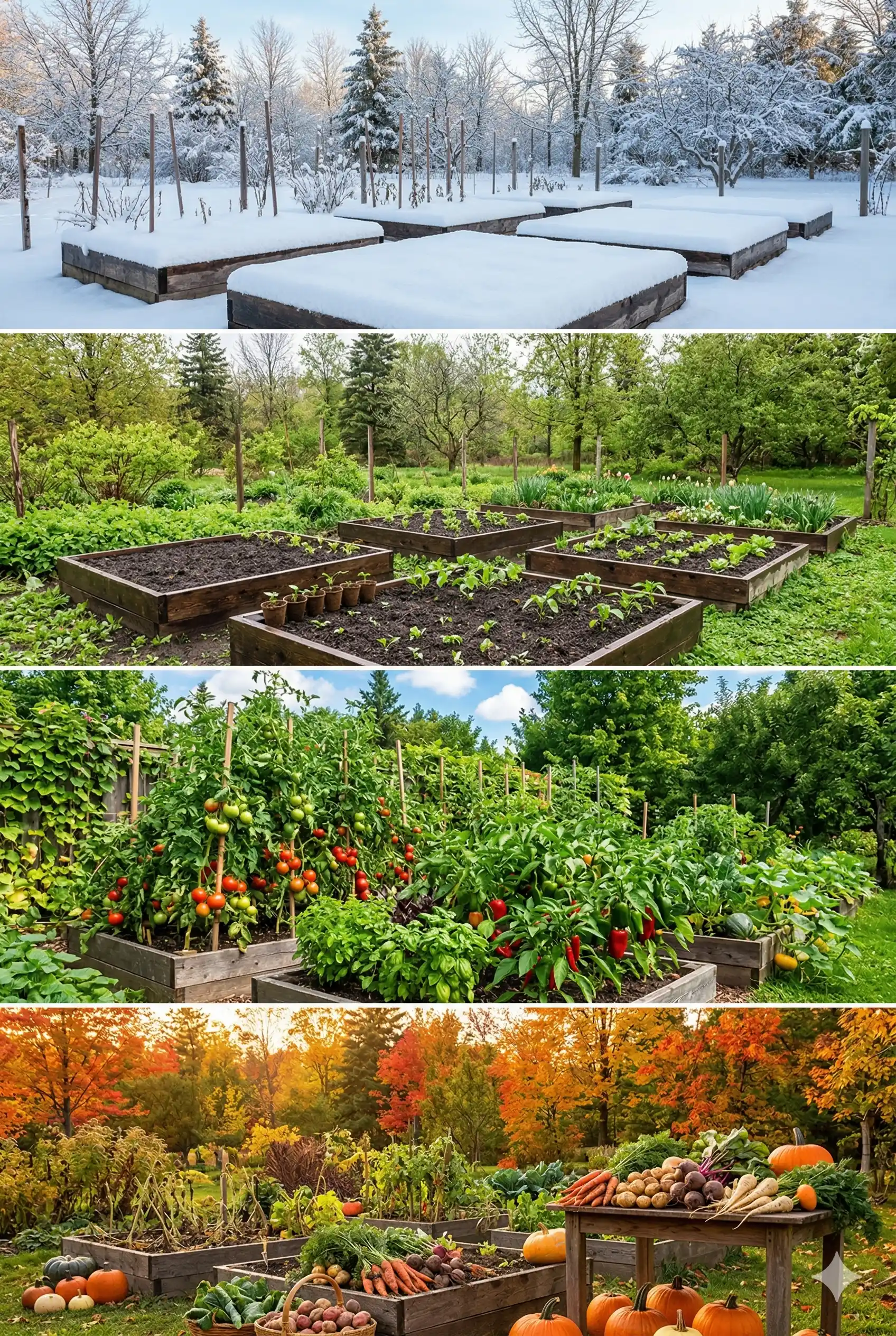
Canadian gardeners face a challenge no American planting guide accounts for: enormous regional variation combined with short, unforgiving growing seasons. The approach that works in Vancouver — where you can plant outdoors in March — would freeze seedlings in Calgary, where frost can hit in late May. This calendar gives you region-specific guidance so you're working with your actual climate, not some generic continental average.
All timing in this guide references your last spring frost date — the most critical number in Canadian gardening. Before using this calendar, find your exact frost date here.
Canadian planting calendar at a glance: January–February — order seeds, plan rotation, prep grow lights. March — start onions/peppers/tomatoes indoors (south of Zone 5). April–May — harden off, direct-sow peas/carrots/lettuce, transplant after last frost. June–August — succession sow, mulch, water deeply. September–October — harvest storage crops, plant garlic, mulch perennials. November–December — clean up, build raised beds, plan next season.
🇨🇦 Quick Zone Reference
Zone 8–9 · Last frost: Mar
Zone 8 · Last frost: late Mar
Zone 6–7 · Last frost: May 12
Zone 5–6 · Last frost: May 5–10
Zone 4 · Last frost: May 26
Zone 4 · Last frost: May 28
Zone 3–4 · Last frost: May 24
Zone 6 · Last frost: May 4
Zone 5 · Last frost: Jun 2
In Ontario? The Ontario planting calendar runs this same month-by-month view against Ontario's own frost dates, city by city, with crop-by-crop sowing windows.
📅 Get the Printable Planting Calendar for Your City
A one-page, print-ready calendar built from your city's actual frost dates — indoor sowing, transplant, direct sow and harvest for 30+ crops. 52 Canadian cities.
❄️ January — Plan & Order
January is planning month. The garden is dormant, but this is when the most organized Canadian gardeners do their most important work: reviewing last year's notes, ordering seeds before popular varieties sell out, and mapping out the new layout.
🌥️ February — Early Indoor Starts
February is when BC gardeners get serious and when the rest of Canada sets up their grow lights. The days are noticeably lengthening, but don't be fooled — it's still far too early to transplant outdoors anywhere except BC's mildest zones.
🌱 March — Main Seed Starting Month
March is the most important month for indoor seed starting across most of Canada. Tomatoes and peppers started now will be the perfect size for transplanting after last frost. Don't start them earlier — plants that outgrow their cells before transplant time become stressed and rootbound.
Get your personalized seed starting dates automatically
🌿 April — Cold-Hardy Planting Begins
April is when gardeners across most of Canada can finally get outdoors and start working. Cold-hardy crops can go in the ground well before last frost — many of them actually taste better when they experience some frost (spinach, kale, carrots all get sweeter). But warm-season crops are still weeks away from outdoor life.
☀️ May — Main Planting Season
May is the busiest and most important month in the Canadian vegetable garden. Last frost passes for most of the country — Toronto and Montreal around Apr 30–May 5, Ottawa May 15–18, Calgary and Edmonton around May 28–Jun 2, Winnipeg May 24. Once that date passes, warm-season crops go in.
🌞 June — Growth Explosion
June is when your garden transforms. Transplants establish, vines begin climbing, and the first summer harvests arrive. This is the month where consistent maintenance — watering, weeding, staking — pays the biggest dividends later in the season.

For the June and July "feed your heavy feeders" tasks above: a Canadian-made slow-release organic 4-4-4 you can side-dress around tomatoes, peppers and corn without risk of burning. One bag covers the mid-season feedings the whole calendar keeps pointing to.
Affiliate link — GrowersGuide.ca may earn a commission on qualifying purchases, at no extra cost to you. See our affiliate disclosure.
🌾 July — Peak Summer Production
July brings the most intense gardening of the year. The harvest is beginning in earnest, hot weather demands consistent watering, and it's time to think ahead to fall crops. Don't get so caught up in summer abundance that you forget to plant for September.
🍅 August — Harvest Overload
August is the moment every Canadian gardener works toward all winter. Everything is producing at once. Use our Harvest Calculator to predict when each crop will peak so nothing goes to waste.
🍂 September — Fall Transition
September is when Prairie and northern gardeners feel the clock ticking. First fall frost arrives in Calgary and Edmonton around September 3–8, Winnipeg September 22. Southern Ontario and Quebec have until October 15. Harvest decisively — don't lose tomatoes to frost.
🍁 October–November — Cleanup & Close
First fall frost arrives across most of Canada in October: Toronto and Ottawa around October 5–10, Prairie provinces in late September to early October. The focus shifts to harvest, storage, and soil preparation for next season.
❄️ December–February — Rest & Plan
For most Canadian gardeners, winter is off-season. But it's also when the next season's success is shaped: good planning, good seed selection, and good rest prepare you for a strong start in spring.
🗓️ Last Frost Dates 2026 — Canada Quick Reference
| City | Last Frost | First Frost | Season | Zone |
|---|---|---|---|---|
| Victoria, BC | Apr 14 | Nov 5 | ~205 days | 9a |
| Vancouver, BC | Mar 26 | Nov 4 | ~224 days | 9a |
| Kelowna, BC | May 16 | Sep 23 | ~130 days | 7a |
| Calgary, AB | May 26 | Sept 10 | ~106 days | 4a |
| Edmonton, AB | May 22 | Sept 11 | ~110 days | 4a |
| Winnipeg, MB | May 24 | Sept 22 | ~119 days | 3b |
| Regina, SK | May 28 | Sept 11 | ~108 days | 3a |
| Windsor, ON | Apr 22 | Oct 25 | ~184 days | 7b |
| Toronto, ON | May 4 | Oct 9 | ~156 days | 7a |
| Ottawa, ON | May 7 | Oct 2 | ~152 days | 5a |
| Montreal, QC | Apr 29 | Oct 9 | ~161 days | 5b |
| Quebec City, QC | May 11 | October 1 | ~141 days | 5a |
| Halifax, NS | May 8 | Oct 17 | ~159 days | 6b |
| St. John's, NL | Jun 1 | Oct 15 | ~137 days | 6a |
For more cities and exact dates for your specific location, use the frost date calculator. The detailed province-by-province breakdown below includes seed starting dates and transplant windows for every region.
Find Your Exact 2026 Frost Dates
100+ Canadian cities — last spring frost, first fall frost, and growing season length
❄️ Frost Date CalculatorBritish Columbia
Zones 4–8 | Longest season in Canada
| City | Last Frost | Start Tomatoes Indoors | Transplant Outdoors |
|---|---|---|---|
| Victoria | Apr 14 | Feb 17–Mar 3 | After Apr 14 |
| Vancouver | Apr 26 | Mar 1 – 15 | After Apr 26 |
| Kelowna | May 16 | Mar 21–Apr 4 | After May 16 |
| Prince George | May 30 | Apr 4 – 18 | After May 30 |
BC's coast has Canada's longest planting season — Victoria and Vancouver gardeners can grow cool-season crops like peas, spinach, and kale nearly year-round. Direct sow peas outdoors as early as February on the coast. The BC interior (Kelowna, Kamloops) has hot summers ideal for corn, peppers, and melons but cooler spring and fall. Northern BC has a Prairie-like short season.
BC planting season tip: Coastal BC gardeners can start a second round of cool-season crops (lettuce, spinach, kale) in late July for fall harvest — the mild fall extends harvests well into November.
👉 Full Vancouver Planting Guide — Zone 9a, 224-day season, year-round growing tips →
Alberta
Zones 3–5 | Short but intense season
| City | Last Frost | Start Tomatoes Indoors | Transplant Outdoors |
|---|---|---|---|
| Calgary | May 26 | Mar 31 – Apr 14 | After May 26 |
| Edmonton | May 22 | Mar 27 – Apr 10 | After May 22 |
| Lethbridge | May 18 | Mar 23–Apr 6 | After May 18 |
Alberta's intense summer sun — long days with 17+ hours of daylight in June — partially compensates for the short season. Tomatoes, peppers, and corn grow quickly once established. Calgary gardeners are well served by short-season varieties (65 days or less for tomatoes). Start seeds indoors in late March to have robust transplants ready for late May.
Alberta planting season tip: Calgary is notorious for late-May and early-June cold snaps — keep frost cloth on hand even after your last frost date. The Chinook winds can warm things up dramatically, then temperatures drop overnight.
Saskatchewan & Manitoba
Zones 2–4 | Shortest season, hottest summers
| City | Last Frost | Start Tomatoes Indoors | Transplant Outdoors |
|---|---|---|---|
| Winnipeg | May 24 | Mar 29 – Apr 12 | After May 24 |
| Regina | May 28 | Apr 2 – 16 | After May 28 |
| Saskatoon | May 22 | Mar 27 – Apr 10 | After May 22 |
The Prairies have Canada's shortest frost-free seasons — Winnipeg averages just 115–120 days — but also some of the hottest summer temperatures. This combination means fast-maturing varieties are essential. Choose tomatoes rated 65 days or less, and prioritize crops that thrive in heat: beans, corn, zucchini, cucumbers, and basil.
Prairie planting season tip: Direct sow cool-season crops (peas, spinach, lettuce, carrots) as soon as the soil can be worked in early to mid-May — well before your last frost date. These crops tolerate light frost and benefit from cool spring weather.
Ontario
Zones 4–7 | Most diverse conditions in Canada
Gardening in Ontario? The Ontario planting calendar gives every month of the year against your own city's frost dates, for every Ontario city we hold data for — the province spans weeks of planting date from the southwest to the north.
| City | Last Frost | Start Tomatoes Indoors | Transplant Outdoors |
|---|---|---|---|
| Windsor | Apr 22 | Feb 26–Mar 12 | After Apr 22 |
| Toronto | May 4 | Mar 9–23 | After May 4 |
| Ottawa | May 7 | Mar 12–26 | After May 7 |
| Sudbury | May 17 | Mar 22 – Apr 5 | After May 17 |
| Thunder Bay | Jun 3 | Apr 8–22 | After Jun 3 |
Ontario spans a huge range of growing conditions. Windsor (Zone 7) has a near-US growing season and can grow sweet potatoes, peanuts, and melons reliably. Toronto and the Golden Horseshoe are among the best vegetable growing regions in Canada — long season, hot summers, mild falls. Northern Ontario is closer to the Prairies in terms of frost dates and variety selection.
Ontario planting season tip: Southern Ontario gardeners can plant garlic in late October for harvest the following July — one of the most productive and low-effort crops for the region. Plant in fall, mulch with straw, and harvest when the lower leaves turn brown.
Quebec
Zones 3–5 | Great summers, cold winters
| City | Last Frost | Start Tomatoes Indoors | Transplant Outdoors |
|---|---|---|---|
| Montreal | Apr 29 | Mar 4–18 | After Apr 29 |
| Quebec City | May 11 | Mar 16 – 30 | After May 11 |
| Sherbrooke | May 29 | Apr 3 – 17 | After May 29 |
Quebec's planting season is similar to Ontario's but with slightly colder springs and falls. Montreal is actually a surprisingly good growing city — the St. Lawrence Valley is warm, and urban heat island effects mean downtown Montreal gardens often outperform suburban ones. Quebec summers get genuinely hot (35°C+), which tomatoes and peppers love.
Quebec planting season tip: Quebec City and eastern Quebec gardeners should stick to short-season varieties for heat-loving crops. Montreal gardeners have more flexibility and can grow most of the same varieties as Toronto.
👉 Full Montreal Planting Guide — Zone 5b, 150 days, bilingual guide for Quebec gardeners →
👉 Full Quebec City Planting Guide — Zone 4b, 141 days, short-season varieties and garlic culture →
Nova Scotia, New Brunswick, PEI, Newfoundland | Zones 4–6
| City | Last Frost | Start Tomatoes Indoors | Transplant Outdoors |
|---|---|---|---|
| Halifax | May 8 | Mar 15 – 29 | After May 8 |
| Fredericton | May 16 | Mar 21–Apr 4 | After May 16 |
| Charlottetown | May 18 | Mar 23 – Apr 6 | After May 18 |
| St. John's | Jun 1 | Apr 6–20 | After Jun 1 |
Atlantic Canada's coastal climate moderates temperatures — summers are cooler than the St. Lawrence Valley but milder than the Prairies. Halifax has a surprisingly early last frost for its latitude. PEI's deep red soils are excellent for root vegetables — the island is world-famous for its potatoes for good reason. Newfoundland (St. John's) has Canada's latest reliable last frost date among major cities.
Atlantic planting season tip: Coastal fog and cool summers in Atlantic Canada favour brassicas (cabbage, broccoli, kale) and root vegetables over heat-loving crops. Focus on cold-tolerant varieties and use row covers to extend the season at both ends.
Get Your Exact 2026 Seed Starting Dates
Enter your city and get a personalized indoor starting calendar for 30+ vegetables
🌱 Seed Starting CalculatorWhat to Plant When Across Canada in 2026
BC coast only: Direct sow peas, spinach, lettuce. Start tomatoes and peppers indoors.
Ontario, Quebec, Maritimes: Start tomatoes, peppers, eggplant, brassicas indoors.
All regions: Direct sow peas, spinach, carrots. Transplant brassicas in mild areas.
All regions: Transplant tomatoes, peppers, cucumbers after last frost. Direct sow beans and corn.
When to Plant Each Crop in Canada
This calendar gives the month-by-month overview — for a single crop's exact indoor-start, direct-sow, and transplant dates by city, jump to its guide:
Holiday season: December in the calendar means holiday plants: keep a cut tree drinking with Christmas tree care in Canada, get a gift bulb to flower again with amaryllis care, and check which December plants are safe with cats and dogs in holiday plants and pets. For presents, see gifts for gardeners in Canada.
Frequently Asked Questions
When is the last frost date in Canada by province?
Average last frost dates by province: BC coast (Victoria, Vancouver) early to mid-April; BC interior (Kelowna, Kamloops) late April to early May; Ontario south (Toronto, Windsor) early May; Ontario north (Sudbury, Thunder Bay) late May to early June; Quebec south (Montreal, Quebec City) early to mid-May; Alberta (Calgary, Edmonton) mid-to-late May; Saskatchewan (Regina, Saskatoon) mid-May; Manitoba (Winnipeg) late May; Nova Scotia (Halifax) late April; New Brunswick (Fredericton) mid-May.
What can I plant in April in Canada?
In April 2026, BC gardeners can plant lettuce, spinach, peas, radishes, and transplant brassicas outdoors. Ontario and Quebec gardeners in southern regions can direct sow peas, spinach, and onion sets outdoors in late April once soil thaws. Prairie gardeners should focus on indoor seed starting in April — tomatoes, peppers, and brassicas — as outdoor planting doesn't begin until mid-May.
When should I plant tomatoes in Canada?
Tomato transplanting date varies by city: Toronto and Montreal around April 30–May 5, Ottawa and Halifax May 15–18, Calgary and Edmonton May 31–June 2, Winnipeg late May. Always wait until after your last expected frost date. Start tomato seeds indoors 6–8 weeks before transplant date — so early to late March in most of Ontario and Quebec. Use our Seed Starting Calculator for exact dates by city.
What can I plant in April in Canada?
In April, direct sow cold-hardy crops outdoors as soon as soil is workable: peas, spinach, lettuce, radishes, arugula, beets, carrots, and chard. These tolerate light frost and actually prefer cool weather. In BC, transplant brassica seedlings outdoors. Across Ontario, Quebec, and the Maritimes, continue seed starting indoors — cucumbers, squash, and zucchini go in around early April (3–4 weeks before last frost). Prairie gardeners start tomatoes and peppers in early April.
When is it safe to plant outside in Calgary?
Cold-hardy crops (lettuce, peas, spinach, carrots, radishes) can go into Calgary soil in early to mid-May as soon as it's workable. For frost-sensitive plants like tomatoes, peppers, cucumbers, and beans, wait until after May 26 — Calgary's average last frost date. However, late frosts do still occur into early June in some years, so keep frost cloth on hand to protect transplants if forecasts drop below 2°C. Calgary's short season (120–130 frost-free days) rewards gardeners who start seeds indoors and use the full season wisely.
What should I do in my garden in March in Ontario?
March in Ontario is primarily an indoor month. Start peppers and eggplant in early March (8–10 weeks before May 10–15 last frost), followed by tomatoes in mid to late March (6–8 weeks before frost). Also start brassicas — broccoli, cabbage, cauliflower, kale. Outdoors, you can spread compost over beds that are accessible and prune any overwintered perennial herbs. Don't direct sow outdoors yet — Ontario soil is typically still too cold and wet in March for successful germination.
Plan Your Season with These Tools
Each calculator works together to give you a complete planting plan
📖 Related Guides
More guides for Canadian gardeners.