
When to Plant Garlic in Canada — 2026 Guide
Fall planting dates by region (BC, Ontario, Quebec, Prairies, Maritimes), the overwintering rules that decide whether your bulbs succeed or fail, best hardneck varieties by zone, and the full garlic calendar from planting to scape harvest, bulb harvest, and curing.
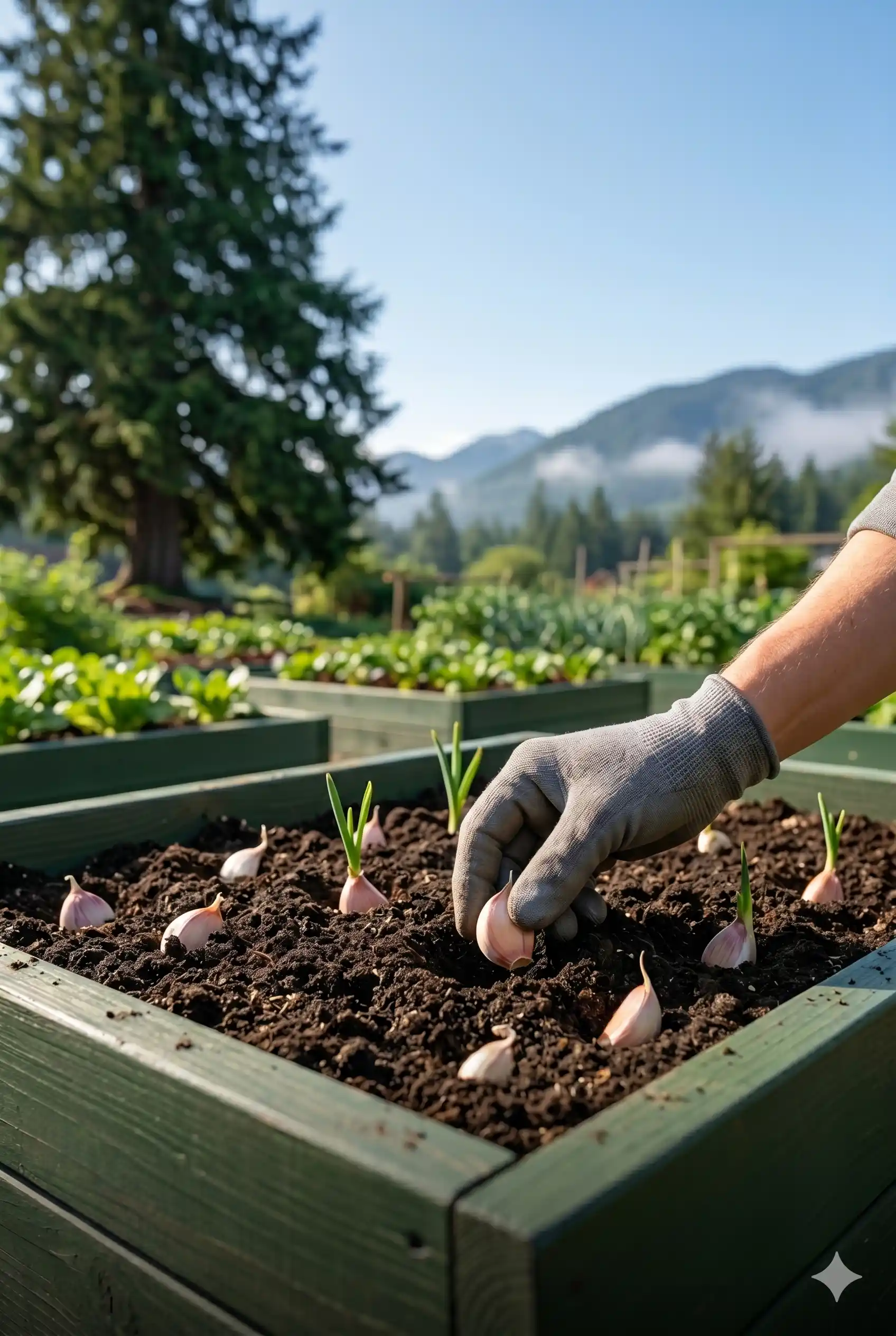
Garlic is unlike every other vegetable in the Canadian garden — it goes in the ground in October, sleeps through winter under a blanket of straw, and produces one of the most satisfying harvests of the summer the following July. It requires almost no attention between planting and scape harvest. But it rewards precision on the two things that matter most: planting timing in fall, and mulch depth.
Across Canada, the planting window varies dramatically — Victoria can plant garlic through November because the ground rarely freezes hard, while Calgary must finish planting by mid-October before the ground locks up. Getting the timing right for your region is the difference between large multi-clove bulbs and disappointing rounds that never properly divided.
Garlic goes in the ground in fall, not spring — spring-planted garlic makes a single undivided round instead of a bulb of cloves.
Garlic in Canada at a glance: Plant in fall, not spring — garlic needs cold vernalisation. Victoria/Vancouver: mid-Oct through Nov. Toronto/Windsor: Oct 10–Nov 1. Ottawa/Montreal: Oct 1–20. Calgary/Edmonton/Winnipeg: Sept 20–Oct 15. Halifax: Oct 1–25. Plant 2–3 inches deep, pointy end up. Mulch with 4–6 inches of straw immediately. Harvest the following June–August.
When should you plant garlic where you garden?
Get your city's frost dates, indoor seed-starting dates, and this week's planting jobs — three free tools.
🌱 Need seeds? West Coast Seeds (a BC company) sells untreated, Canadian-grown vegetable & herb seed — steadier than a random Amazon listing that sells out or varies by region.
🥦 Shop vegetable seeds at West Coast Seeds →Affiliate link — we may earn a commission on qualifying purchases, at no extra cost to you.
🥦 Ready to dig? See When to Harvest Garlic in Canada for the lower-leaf test, regional July windows, and the 3–4 week cure.
🌿 Want the full growing canonical? See Growing Garlic in Canada for hardneck vs softneck variety selection, the best Canadian cultivars (Music, Chesnok Red, German Red, Persian Star), scape harvest rules, the 3-week curing process, storage, and the five most common Canadian garlic problems.
Garlic Planting Dates Across Canada — Fall 2026
The planting window is set by when the ground freezes hard in each region — plant 4–6 weeks before that point to give cloves time to develop roots before full dormancy. Scape and bulb harvest dates shown are for the following summer.
| Region (City) | Zone | Fall Planting Window | Scape Harvest | Bulb Harvest |
|---|---|---|---|---|
| Coastal BC (Vancouver) | 8a | Oct 15–Nov 10 | Late May–Jun 15 | Late Jun–Jul 15 |
| Vancouver Island (Victoria) | 8b | Oct 15–Nov 20 | Late May–Jun 10 | Late Jun–Jul 10 |
| BC Interior (Kelowna) | 6b | Oct 1–20 | Early–Mid Jun | Mid–Late Jul |
| Southern Ontario (Toronto) | 6b | Oct 10–Nov 1 | Late May–Jun 15 | Late Jun–Mid Jul |
| SW Ontario (Windsor) | 7a | Oct 15–Nov 5 | Late May–Jun 10 | Late Jun–Jul 5 |
| Eastern Ontario (Ottawa) | 5a | Oct 1–20 | Mid Jun | Mid–Late Jul |
| Quebec (Montreal) | 5b | Oct 1–25 | Mid Jun | Mid–Late Jul |
| Prairies (Calgary) | 3b | Sept 20–Oct 10 | Late Jun | Late Jul–Aug |
| Prairies (Edmonton) | 4a | Sept 25–Oct 15 | Late Jun | Late Jul–Aug |
| Prairies (Winnipeg) | 3a | Sept 20–Oct 5 | Late Jun | Late Jul–Early Aug |
| Maritimes (Halifax) | 6a | Oct 1–25 | Early Jun | Early–Mid Jul |
Find Your City's Frost Dates
100+ Canadian cities — use first fall frost as your garlic planting reference point
❄️ Free Frost Date CalculatorThe Universal Rules for Garlic (Apply Everywhere)
Garlic asks very little from September through June — but it's unforgiving on these five rules. Ignore any one of them and the July harvest suffers for it.
Always plant in fall — never spring
Garlic requires cold vernalisation — extended cold exposure — to trigger the cellular process that divides a clove into a multi-clove bulb. Without overwintering, spring-planted garlic produces rounds: single undivided cloves about the size of a large pearl. They're edible, but a single round produces the same yield as the clove you planted. Fall planting is the only way to produce proper bulbs in Canada. If you miss the fall window entirely, plant as early in spring as soil is workable — expect 30–50% of normal yield, but rounds are better than nothing.
Plant 4–6 weeks before the ground freezes hard
This window gives cloves time to develop a strong root system before entering winter dormancy. Roots established before freeze-up anchor the clove against frost heaving, establish nutrient access for rapid spring growth, and improve bulb size at harvest. Planting too early (more than 6 weeks before freeze) causes excessive top growth that exhausts the clove before winter. Planting too late (after the ground has frozen hard) results in shallow roots and higher failure rates in cold Prairie winters. The frost calculator gives first hard frost dates for 100+ Canadian cities.
Mulch with 4–6 inches of straw immediately after planting
Straw mulch insulates against freeze-thaw cycles that heave cloves from the ground, retains soil moisture through dry winter periods, and suppresses weeds that emerge during Canada's variable shoulder seasons. In the Prairies (Calgary, Winnipeg), 6 inches minimum is non-negotiable — hard Prairie winters without adequate mulch cause significant clove losses. In coastal BC (Vancouver, Victoria), mulch mainly suppresses the aggressive winter weeds that grow through mild wet winters and handles the occasional hard frost. Always use clean straw, not hay — hay contains weed seeds that will germinate through the mulch. Leave mulch in place over winter; push it aside gently when shoots emerge in spring.
Grow hardneck — not softneck — in Canadian gardens
Softneck garlic — the type sold in grocery stores — is bred for California and Mediterranean climates. It lacks the cold hardiness for Prairie winters and doesn't produce well without sufficient cold vernalisation. In most Canadian zones softneck produces small bulbs with poor clove separation. Hardneck varieties (Porcelain, Purple Stripe, Rocambole types) are cold-hardy across all Canadian zones, produce large flavorful cloves, and generate scapes — a bonus late-spring harvest. Buy seed garlic from Canadian suppliers, which carry locally-adapted hardneck varieties. Russian Red, in particular, has decades of BC and Prairie growing history and is reliably available across Canada.
Cut scapes as soon as they make one full curl
Scapes are the curly green flower stalks hardneck garlic sends up in late May through June. Left on the plant, they divert energy from bulb development into seed production — research consistently shows 20–30% larger bulbs when scapes are removed promptly. The scape should be cut (not snapped) when it's made one full curl but before it straightens back out. Cut at the base just above the top leaf. Scapes are a delicious vegetable in their own right — use them in stir-fries, pesto, and pasta exactly as you would use garlic cloves.
Best Garlic Varieties for Canadian Gardens
All varieties below are hardneck. Buy from Canadian seed garlic suppliers in August–September — supplies sell out well before the planting window opens. Avoid grocery store garlic as seed stock: it's often treated with sprouting inhibitors and is bred for California storage conditions, not Canadian growing.
| Variety | Type | Best Zones | Storage | Why It Works |
|---|---|---|---|---|
| Music | Porcelain | All Canada | 8–9 months | The best all-Canada variety. Large 4–6 clove bulbs, excellent cold hardiness, widely available from every Canadian seed garlic supplier. Reliable from Victoria to Winnipeg. |
| Russian Red | Rocambole | All Canada | 6–8 months | BC-heritage variety, developed and selected for west coast and Prairie conditions. Purple-striped, hot rich flavour, very cold-hardy. One of the best for Alberta and Interior BC. |
| German Red | Rocambole | Zones 5+ | 4–6 months | Intensely complex flavour — arguably the best-tasting Canadian garlic. Shorter storage suits gardeners who use their crop quickly. Great for Ontario and BC coastal. |
| Chesnok Red | Purple Stripe | Zones 4+ | 6–8 months | The best roasting garlic in Canada — cloves stay firm and sweet when roasted whole. Cold-hardy enough for Edmonton and Winnipeg. Beautiful purple striping. |
| Georgian Crystal | Porcelain | Zones 5+ | 8–9 months | Produces very large bulbs — the biggest of the Porcelain types. Mild flavour, excellent storage. Good for Ontario and BC where markets reward large bulb size. |
| Spanish Roja | Rocambole | Zones 5+ coastal | 3–5 months | Classic Rocambole — the most complex, layered garlic flavour available. Short storage suits coastal BC gardeners who harvest in June and use through September. Not suited to cold Prairie winters. |
| Persian Star | Purple Stripe | Zones 4+ | 6–8 months | Medium heat, complex earthy flavour. Cold-hardy Prairie performer. Good for Alberta gardeners wanting variety beyond Music. Striking purple and white pattern on wrappers. |
Common Garlic Problems Across Canada
Rounds instead of divided bulbs
The most common garlic failure in Canada — and almost always caused by spring planting or missed fall planting window. Garlic needs cold vernalisation to divide into cloves; without it, a clove grows into a round: a single undivided bulb. A second cause is planting cloves that were already vernalised improperly (e.g., grocery store garlic from warm storage). Solution: always plant in fall with Canadian-sourced seed garlic. If you get rounds from fall-planted garlic in a known-cold region, the cloves may have been stored at room temperature too long before planting — buy seed garlic early and store cool and dry.
Cloves heaved out of the ground
Freeze-thaw cycles in November and March physically push inadequately rooted or shallow-planted cloves upward. Particularly common in the BC Interior (Okanagan) and anywhere with sunny days alternating with hard overnight frosts. Prevention: plant to the correct depth (base of clove 2–3 inches below soil surface), and apply 6 inches of straw mulch immediately after planting. Mulch acts as a temperature buffer, reducing the amplitude of freeze-thaw cycles at soil level. In the Prairies where this is endemic, never skip the mulch and plant no shallower than 2.5 inches.
Bulb rot in the ground
Caused by waterlogged clay soil, especially in wetter coastal BC winters and wet Ontario spring soils. Garlic needs well-drained soil — it will not tolerate standing water around the clove base. Solution: raise beds 15–20 cm above grade in heavy clay soils; add coarse grit or sand to the planting hole in clay-heavy gardens. Coastal BC gardeners in particular should build proper drainage into raised beds. Don't plant in low-lying areas that collect water. A second cause is planting too deep in very heavy clay — stick to 2 inches depth maximum in waterlogged soils.
Small bulbs at harvest
Three common causes: (1) Scapes not cut promptly — the plant diverted energy into seed production. Cut scapes at one full curl, no later. (2) Harvesting too late — when all leaves have browned, the protective wrapper layers have split and the bulb is past its peak size. Harvest at 3–4 brown / 5–6 green leaves. (3) Poor spring feeding — garlic does its most rapid growth in April and May and needs nutrients available then. Top-dress with a balanced fertiliser or well-rotted compost as soon as shoots are 10 cm tall in spring. Withholding water in the last 2–3 weeks before harvest concentrates the bulb and improves storage.
Mould in storage
Caused by insufficient curing time or curing in humid conditions — the most common problem for coastal BC gardeners. Garlic must cure for 3–4 weeks in a dry, well-ventilated space before storing. Bulbs that feel soft or tacky after 3 weeks haven't finished curing. Coastal BC's humid July and August make curing harder: spread bulbs on racks with a fan running rather than hanging in tight bundles. A dehumidifier in the curing space is a significant help. Do not wash bulbs at harvest — dirt shakes off once dry. Once fully cured, store only dry, firm bulbs with intact wrappers; anything with visible mould or soft spots should be used immediately rather than stored.
Frequently Asked Questions
When should I plant garlic in Canada?
In fall — 4–6 weeks before the ground freezes hard. Victoria/Vancouver: mid-October to November. Toronto/Windsor: October 10 to November 1. Ottawa/Montreal: October 1–20. Calgary/Edmonton/Winnipeg: September 20 to October 15. Halifax: October 1–25. Use the frost calculator to find your city's first hard frost as a reference point.
Can I plant garlic in spring in Canada?
Yes, but expect rounds — single undivided cloves — rather than multi-clove bulbs. Spring planting skips the cold vernalisation that triggers bulb division. If you missed the fall window, plant as early in spring as soil is workable; you'll get some yield, but 30–50% of what fall-planted garlic produces. Fall planting is always preferable.
What type of garlic should I grow?
Hardneck in every Canadian region. Softneck garlic doesn't overwinter reliably outside of the mildest coastal BC microclimates and produces poorly without adequate cold vernalisation. Best all-Canada variety: Music (Porcelain type) — large cloves, cold-hardy, stores 8–9 months. Buy seed garlic from Canadian suppliers; avoid grocery store garlic as seed stock.
What are garlic scapes and why cut them?
Scapes are the curly flower stalks hardneck garlic sends up in late May through June. Left on the plant, they divert energy from bulb development to seed production — removing them at one full curl increases bulb weight by 20–30%. Scapes are edible and delicious; use like garlic in any savoury dish.
Do I need to mulch garlic in Canada?
Yes — 4–6 inches of clean straw immediately after planting. In the Prairies and colder interior regions, mulch is critical insulation against freeze-thaw heaving. In coastal BC, it mainly suppresses winter weeds and handles rare hard frost events. Never skip mulching in the Prairies or Eastern Canada.
When do I harvest garlic in Canada?
When lower 3–4 leaves are brown and 5–6 remain green. Coastal BC: late June to mid-July. Southern Ontario: late June to mid-July. Ottawa/Montreal: mid-late July. Prairies: late July to August. Don't wait for all leaves to brown — wrapper layers split and storage life shortens. Loosen with a fork, don't pull by stem.
How do I cure garlic for storage?
Hang in bundles of 10–15 or spread on racks in a dry, shaded, well-ventilated space for 3–4 weeks. Don't wash bulbs. Coastal BC gardeners need good airflow and a fan due to summer humidity. Once cured, cut stems to 2–3 cm, trim roots, store in mesh bags in a cool dry room (10–15°C). Properly cured hardneck garlic stores 6–9 months.