
When to Plant Tomatoes in Canada — 2026 Guide
Indoor start dates and outdoor transplant dates by region (BC, Ontario, Quebec, Prairies, Maritimes), the right variety for your season length, and the most common timing mistakes Canadian gardeners make.
🍅 New tomato grower? See our Growing Tomatoes in Canada canonical for the full guide: best 60-75 day varieties, determinate vs indeterminate decision, support, watering, late blight prevention for humid Eastern Canada, three-stage feeding schedule, and the 6 most common Canadian tomato problems with fixes.
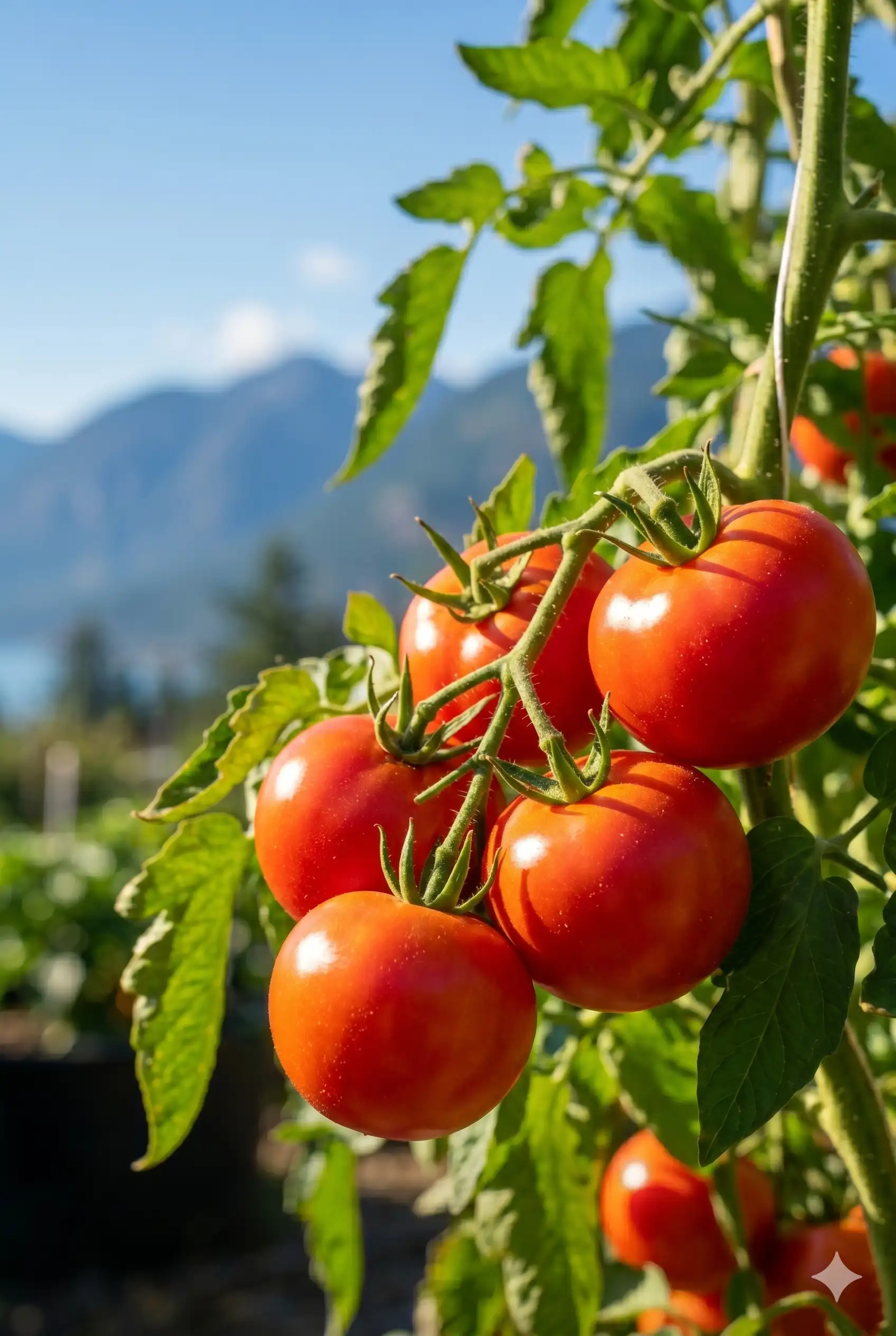
Tomatoes are Canada's most popular garden vegetable — and one of the trickiest to time correctly. The right transplant date in Windsor is six weeks earlier than in Calgary. The right variety for Ottawa is different from the right variety for Vancouver. Planting too early in cold soil causes transplant shock; planting too late shortens the harvest window. This guide gives you exact dates for every region so you can stop guessing.
The key rule: transplant tomatoes outdoors 1–2 weeks after your last frost date, once night temperatures are consistently above 10°C. Last frost dates are averages with a 50% probability — adding a buffer is not optional for a frost-sensitive crop that takes all summer to produce.
Tomatoes in Canada at a glance: Start indoors 6–8 weeks before transplant. Transplant 1–2 weeks after last frost once nights are above 10°C. Vancouver/Victoria: late April. Toronto/Windsor: May 1–10. Ottawa/Montreal: May 20–25. Calgary/Edmonton: June 1–5. Harden off for 7–10 days first. Match variety days-to-maturity to your frost-free window.
When should you plant tomatoes where you garden?
Get your city's frost dates, indoor seed-starting dates, and this week's planting jobs — three free tools.
🌱 Need seeds? West Coast Seeds (a BC company) sells untreated, Canadian-grown vegetable & herb seed — steadier than a random Amazon listing that sells out or varies by region.
🥦 Shop vegetable seeds at West Coast Seeds →Affiliate link — we may earn a commission on qualifying purchases, at no extra cost to you.
Tomato Planting Dates Across Canada — 2026
"Start indoors" dates are 6–8 weeks before safe transplant. "Safe transplant" is last frost plus a 1–2 week buffer. "Max variety days" is the longest days-to-maturity you can reliably ripen before first fall frost.
| Region (City) | Zone | Last Frost | Start Indoors | Safe Transplant | Max Days |
|---|---|---|---|---|---|
| Coastal BC (Vancouver) | 8a | Mar 15 | Feb 15–Mar 1 | Late Apr–May 1 | 75 days* |
| Vancouver Island (Victoria) | 8b | Mar 10 | Feb 10–Mar 1 | Late Apr | 80 days* |
| BC Interior (Kelowna) | 6b | May 5 | Feb 20–Mar 5 | Late May | 80 days |
| BC Interior (Kamloops) | 6b | Apr 20 | Feb 20–Mar 5 | Early May | 80 days |
| Northern BC (Prince George) | 4a | May 25 | Mar 10–25 | Jun 5–10 | 62 days |
| SW Ontario (Windsor) | 7a | Apr 20 | Mar 1–15 | May 1–5 | 85 days |
| Southern Ontario (Toronto) | 6b | Apr 20 | Mar 1–15 | May 1–10 | 80 days |
| Eastern Ontario (Ottawa) | 5a | May 9 | Mar 24–Apr 9 | May 20–25 | 72 days |
| Quebec (Montreal) | 5b | May 9 | Mar 24–Apr 9 | May 20–25 | 75 days |
| Prairies (Calgary) | 3b | May 23 | Apr 1–15 | Jun 1–5 | 62 days |
| Prairies (Edmonton) | 4a | May 14 | Mar 20–Apr 5 | May 28–Jun 3 | 65 days |
| Prairies (Winnipeg) | 3a | May 19 | Apr 1–15 | Jun 1–5 | 62 days |
| Maritimes (Halifax) | 6a | May 10 | Mar 1–15 | May 25 | 72 days |
*Coastal BC max days are calendar days, not heat-unit days — cool summers slow ripening regardless of the frost-free window.
Get Your Exact Tomato Start Dates
100+ Canadian cities — enter yours for indoor start dates for tomatoes and 20+ vegetables
🌿 Free Seed Starting CalculatorThe Universal Rules for Tomatoes (Apply Everywhere)
Tomato timing failures across Canada share the same handful of root causes. These apply from coastal BC to Nova Scotia.
Start indoors exactly 6–8 weeks before transplant — not earlier
The most widespread Canadian tomato mistake is starting too early. A January start means 14–16 week-old seedlings by transplant time — root-bound, overgrown, and often already flowering. These stressed plants produce later harvests, not earlier ones. Crowded roots also cause stunted growth after transplanting that takes weeks to recover. Six to eight weeks is the correct window everywhere in Canada. For Ottawa that means no earlier than late March. For Calgary, no earlier than early April.
Transplant after last frost plus a 1–2 week buffer
Last frost dates are statistical averages with a 50% probability of frost on that date — meaning there's roughly a one-in-two chance of frost after the average date. For tomatoes, one cold night wipes out weeks of effort. Add 1–2 weeks to every last frost date in this table before committing transplants. Toronto's April 20 average last frost means experienced gardeners don't put tomatoes outside until May 1–10. Ottawa's May 9 average means May 20–25 is the practical safe date.
Harden off for 7–10 days before transplanting
Tomato seedlings grown indoors under lights are not ready for direct sun, wind, or outdoor temperature swings. Transplanting without hardening off causes severe transplant shock — plants wilt, stop growing for 2–3 weeks, and may never fully recover. The process: set plants in a sheltered, shaded spot for 1–2 hours on day one. Add an hour of sun exposure daily, working up to full sun by day 7–10. In Canadian springs, nights can still be cold during this period — bring plants in if temperatures drop below 10°C.
Match variety days-to-maturity to your frost-free window
An 80-day tomato needs at least 80 days of warm weather after transplanting to produce a full crop. Count from your safe transplant date to your first fall frost to find your effective season. Calgary: June 1 to September 10 is only 101 days — but tomatoes need warmth, not just frost-free conditions, so 62-day varieties are the safe choice. Ottawa: May 25 to October 12 is 140 days — 72-day varieties are reliable; push 80-day heirlooms only if the summer is warm. Windsor: May 1 to October 25 gives 177 days — only Ontario city where 85-day Mortgage Lifter is truly reliable.
Soil temperature matters as much as air temperature
Tomatoes planted in soil below 10°C experience root-growth stall — plants sit without establishing even when air temperatures are warm. In coastal BC, where springs are cool and cloudy, soil can lag behind air temperature for weeks. A $10 soil thermometer at 10 cm depth is a worthwhile investment: wait until it reads at least 12°C before transplanting. In Ontario and Quebec, May soil in a raised bed or south-facing slope reaches 12–15°C faster than a cold clay bed — microsite selection can shift your safe transplant date by 1–2 weeks.
Best Tomato Varieties by Region
Days to maturity (from transplant, not from seed) is the key spec. Match it to your frost-free window. Cool summers in coastal BC slow ripening regardless of the calendar, so treat coastal variety recommendations conservatively.
| Variety | Type | Days | Best Regions | Why It Works |
|---|---|---|---|---|
| Sub-Arctic Plenty | Slicing | 62 | All Canada | Bred for Canadian short seasons. The reliable choice for Calgary, Winnipeg, Edmonton, and Prince George. Produces full-size red fruit in short windows. |
| Sun Gold | Cherry | 57 | All Canada | Orange cherry. Exceptionally sweet, very high-yielding, ripens fast. The best all-Canada tomato for flavour and reliability. Works in every region including Prairies and coastal BC. |
| Early Girl | Slicing | 62 | All Canada | The default mid-size tomato for Canadian gardens. Reliable producer in all zones. Widely available at Canadian garden centres from April onward. |
| Juliet | Grape / cherry | 60 | Zones 4+ | Roma-style grape tomato. Disease-resistant and crack-resistant. Heavy producer across all zones. Particularly good in wet Maritime and coastal BC summers. |
| Celebrity | Slicing | 70 | Zones 5+ | Disease-resistant (VFN) slicer. Reliable mid-size fruit. Good for Ottawa, Montreal, Halifax, and most of BC. Classic flavour, widely available. |
| Roma | Paste | 75 | Zones 5+ | Best canning and sauce tomato. Meaty, low-moisture flesh. Suitable for Toronto south and BC Interior. Tight margin for Ottawa — choose Celebrity instead in wet or short years. |
| Brandywine | Heirloom | 80 | Zones 6b+ (Toronto, Kelowna) | The classic heirloom. Exceptional complex flavour. Only feasible in Toronto, Hamilton, Kelowna, and Kamloops. Too risky for Ottawa or any Prairie city. |
| Mortgage Lifter | Heirloom | 85 | Windsor, Kelowna only | Very large, meaty fruit. Canada's most demanding tomato — only reliably productive in Windsor and the Okanagan, where summers are hottest and longest. |
Common Tomato Problems Across Canada
Blossom end rot (black leathery bottom on fruit)
A calcium uptake disorder, almost always caused by inconsistent watering rather than calcium deficiency in the soil. Dry periods followed by heavy watering prevent roots from steadily absorbing calcium. Fix: consistent, deep watering — not frequent shallow watering. Mulch heavily around plants to retain soil moisture. Avoid high-nitrogen fertilizers that drive rapid leafy growth at the expense of calcium uptake. Remove affected fruits and maintain even moisture — the next flush will be clean.
Early blight and late blight (Ontario, Quebec, Maritimes)
Early blight shows as brown concentric-ringed spots on lower leaves, spreading upward from soil splash. Late blight spreads as dark water-soaked lesions and can kill plants in days in cool, wet August weather. Prevention for both: stake plants for airflow; water at the base only; mulch to prevent soil splash; rotate tomatoes to a new bed annually. Remove and bag (never compost) affected leaves. In high-pressure regions (Eastern Ontario, Quebec), spray copper fungicide preventively in August. Resistant varieties: Mountain Merit, Defiant, Legend (late blight resistant).
Flower drop during heat waves (Ontario, Quebec, BC Interior)
Tomato flowers abort when daytime temperatures exceed 32°C combined with nights above 24°C — fruit production pauses temporarily until temperatures moderate. This happens in Southern Ontario and Quebec during July and August heat waves, and in the Okanagan during peak summer. Production resumes automatically when temperatures drop below 30°C. Consistent deep watering reduces but doesn't eliminate the effect. A second wave of fruit typically sets in August as temperatures cool.
Slow ripening in coastal BC summers
Vancouver and Victoria gardeners often complain their tomatoes are green heading into September despite an early transplant date. The cause is cool summer temperatures (22°C July average high) — tomatoes need heat to ripen, not just frost-free days. Solutions: choose fast-ripening cherry varieties (Sun Gold at 57 days ripens weeks before any slicing variety); grow in the warmest microsite available (south-facing wall, raised bed, or greenhouse); use walls-of-water season extenders; remove green tomatoes in September before frost and ripen indoors on a warm shelf in indirect light.
Green tomatoes when frost arrives (Prairie gardens)
Calgary and Winnipeg gardeners face the real risk of frost arriving in September before all tomatoes ripen. Planning moves: choose only 62-day varieties to minimize this risk; transplant as early as safe (June 1) rather than waiting; monitor the forecast from September 1 — cover plants with frost cloth on cold nights; harvest all fruit when nighttime temperatures consistently drop below 10°C (green tomatoes will ripen indoors at room temperature); don't refrigerate green tomatoes — cold temperatures halt ripening permanently.
Frequently Asked Questions
When should I plant tomatoes in Canada?
Transplant 1–2 weeks after last frost once nights are above 10°C. Vancouver/Victoria: late April. Toronto/Windsor: May 1–10. Ottawa/Montreal: May 20–25. Calgary/Winnipeg: June 1–5. Halifax: May 25. Start seeds indoors 6–8 weeks before those dates.
When do I start tomato seeds indoors in Canada?
Vancouver/Victoria/Halifax: mid-February to early March. Toronto/Windsor/Hamilton: early to mid-March. Ottawa/Montreal: late March to early April. Calgary/Winnipeg: early to mid-April. Do not start earlier — 6–8 weeks before transplant is the correct window.
Can I grow heirloom tomatoes in Canada?
Yes — in the right cities. 80-day heirlooms (Brandywine, Cherokee Purple) are reliable in Toronto, Hamilton, Kelowna, and Kamloops. In Ottawa, Montreal, and Halifax, 75-day heirlooms can work in a warm summer — 80-day is risky. Prairie gardeners should stick to sub-65-day varieties entirely. Windsor and the Okanagan are Canada's best heirloom tomato climates.
Why are my Calgary or Winnipeg tomatoes not ripening?
Variety choice and timing. Varieties over 65 days are high-risk in Calgary and Winnipeg — they may ripen, but cold Septembers cut the season short. Transplant as early as safely possible (June 1), choose Sub-Arctic Plenty (45 days) or Sun Gold (57 days), and harvest green tomatoes by September 10 to ripen indoors if frost threatens.
Do tomatoes grow better in Ontario or BC?
Ontario's hotter summers (26–27°C July highs in Toronto and Ottawa) produce better yields per plant than coastal BC (22°C July high in Vancouver), despite Vancouver's earlier start. The Okanagan (Kelowna: 29°C July high) is BC's exception and rivals Windsor as one of Canada's best tomato climates. Eastern Quebec is very similar to Ottawa. Prairie tomatoes can produce well with short-season varieties thanks to July and August heat.
Should I prune tomato suckers in Canada?
For indeterminate varieties (most heirlooms, beefsteak, cherry), removing suckers — the shoots that grow in the V between the stem and a branch — concentrates energy into existing fruit and improves airflow. In short-season Prairie gardens, pruning to a single or double stem is especially important: fewer fruits ripen earlier rather than many fruits ripening late. For determinate varieties (Roma, Celebrity), pruning reduces overall yield — leave them alone.