
Pothos Care Guide — Canada
How to grow and care for pothos in Canadian homes — watering, light, humidity, winter care, propagation, and troubleshooting yellow leaves.
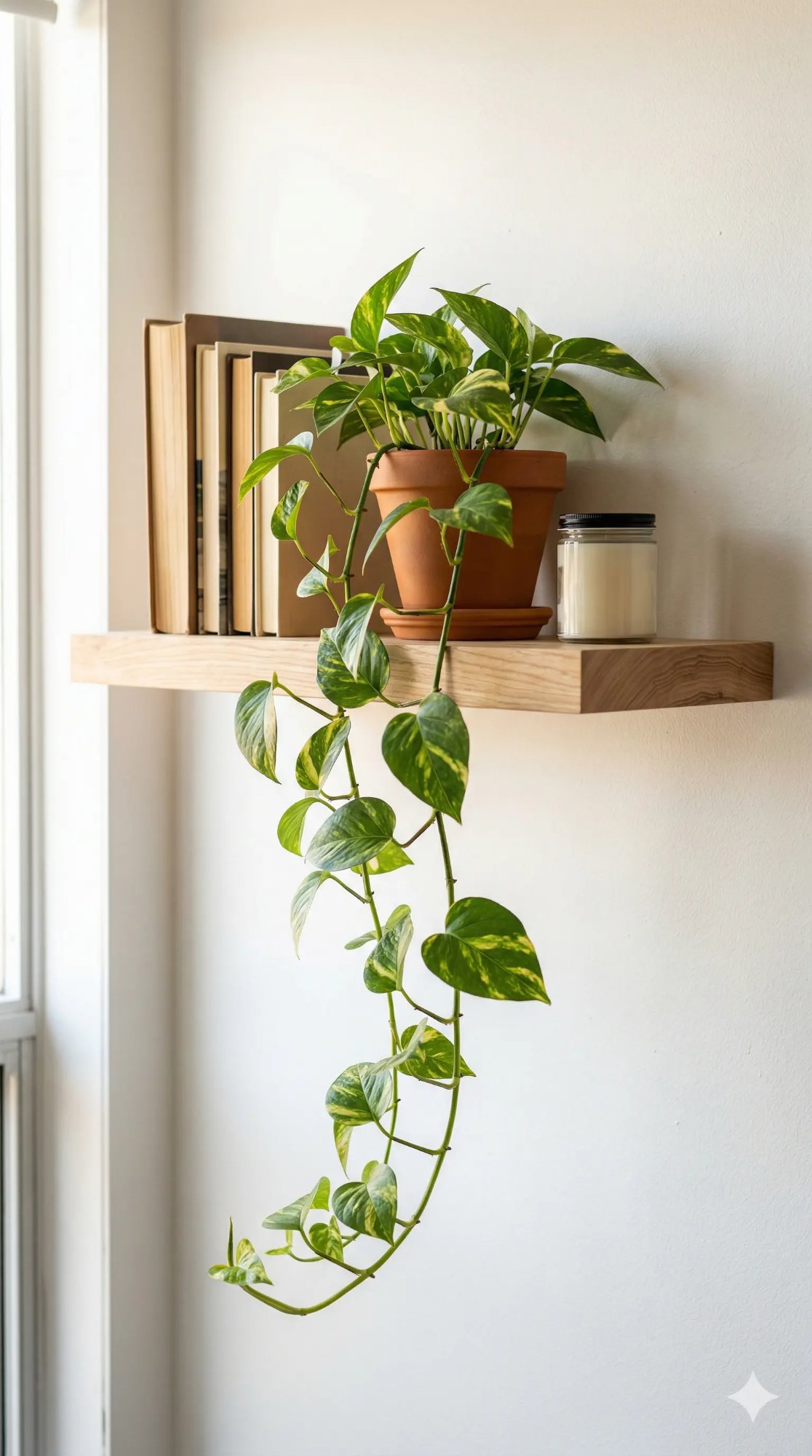
Pothos (Epipremnum aureum, also called devil's ivy) care in Canada is straightforward — this is one of the most forgiving houseplants you can grow, tolerating low light, irregular watering, and the dry air of Canadian forced-air heating. The main ways to kill a pothos are overwatering and cold drafts from winter windows, both of which are easy to avoid once you understand what the plant needs.
This guide covers everything specific to growing pothos in a Canadian home — including the adjustments needed for our long dry winters, the best watering schedule by season, propagation, and how to diagnose and fix the most common problems.
🌿 Pothos Quick Care Card
How to Water Pothos in Canada
Overwatering is the number one way to kill a pothos in Canada. The rule is simple: water when the top 5 cm of soil is dry, not on a fixed schedule. In Canadian summers, this is roughly every 7–10 days. In winter, growth slows significantly and watering drops to every 14–21 days.
Pothos watering at a glance: Summer (May–Sept): every 7–10 days. Fall (Oct–Nov): every 10–14 days. Winter (Dec–Feb): every 14–21 days. Spring (Mar–Apr): every 10–14 days. Always check soil first — these are guides not rules.
Is your Pothos getting enough light this winter?
A Canadian winter cuts daylight roughly in half. See what your city actually gets this month, and whether a grow light is needed.
Always water thoroughly — pour until water flows from the drainage holes, then let the pot drain completely. Never leave pothos sitting in a saucer of water; root rot develops quickly in standing water. Empty saucers 30 minutes after watering.
A key Canadian winter note: forced-air heating creates very dry air (often 25–30% humidity) which dries soil faster than you'd expect even though growth has slowed. Check the soil — don't assume it's still moist because it's winter.
Overwatering kills more houseplants than anything else. A 3-in-1 soil meter shows you exactly when the root zone is dry — push the probe in for an instant moisture, light, and pH reading. No batteries needed.
Affiliate link — GrowersGuide.ca may earn a commission on qualifying purchases, at no extra cost to you. Learn more.
The other thing Canadian houseplants run short on all winter is light. From November to March most homes are too dim to keep plants growing — leaves stretch toward the window, variegation fades, and new growth stalls. A small full-spectrum LED grow light on a timer bridges the dark months, even for tough low-light plants that only survive (rather than grow) in a dim room.
Affiliate link — GrowersGuide.ca may earn a commission on qualifying purchases, at no extra cost to you. Learn more.
Why no fixed schedule works: Soil drying rate depends on temperature, light, pot material, room humidity, and plant size — not the calendar. A pothos in a terracotta pot near a south window in July dries in 4–5 days; the same plant in plastic near a north window in January may take 3 weeks. The finger test automatically accounts for all of these. See what affects soil drying rate →
Light Requirements — Including Canadian Winter
Pothos is one of the best houseplants for Canadian homes precisely because it tolerates the low light of our winters. From November to February, daylight in Toronto or Vancouver is significantly reduced — but pothos handles this better than almost any other tropical plant.
☀️ Bright Indirect
East or west window, 1–2 m back from south window. Best for variegated types (Marble Queen, N'Joy). Fastest growth.
🪟 Medium Light
2–3 m from a window. Golden Pothos and Neon Pothos do well here. Good for most Canadian living rooms in summer.
🌓 Low Light
North windows or far from windows. Growth slows significantly. Solid green varieties (Golden, Neon) survive best. Variegated types lose their markings.
In winter, if your pothos is growing very slowly or leaves are becoming more green and less variegated, it needs more light. Move it closer to a window or add a simple grow light on a timer (12–14 hours per day) — a basic LED desk lamp works for single plants.
Canadian Winter Care — The Key Adjustments
Canadian winters are uniquely challenging for tropical houseplants — not because of the cold outside, but because of conditions inside: very dry air from heating systems, cold drafts from windows, and reduced daylight hours. Pothos is one of the most tolerant houseplants for all three challenges, but these adjustments help it thrive.
Move away from cold window glass
Window glass in a Canadian winter can be 0–5°C even when the room is warm. Pothos leaves touching or close to cold glass develop brown patches and cold damage. Keep a 5–10 cm gap between the plant and the window. If you can feel cold air radiating from the glass when you hold your hand nearby, the plant is too close.
Address dry furnace air
Canadian forced-air heating drops indoor humidity to 25–30% in winter. Pothos prefers 50–70%. Signs of low humidity: brown crispy leaf tips and edges. Solutions: a small humidifier near your plants (most effective); a pebble tray filled with water under the pot (modest effect); or grouping plants together so they create a more humid microclimate. Misting is largely ineffective — it raises humidity for minutes, not hours.
Stop fertilising November through February
Pothos growth slows dramatically in low winter light. Fertilising during this period pushes the plant to grow faster than light supports, producing weak leggy growth. Resume fertilising in March when light improves. During the growing season (April–October), feed monthly with a balanced liquid fertiliser diluted to half strength.
Reduce watering frequency — but monitor soil
Growth slows in winter so the plant uses less water. Reduce to every 14–21 days. But the dry furnace air means soil can dry out faster than expected — always check before watering rather than assuming it's still moist. Cold soil also holds water longer, which increases root rot risk. Let the top 5 cm dry completely before watering.
How to Propagate Pothos
Pothos is one of the easiest plants to propagate — cuttings root readily in water and the process requires no special equipment. The best time to propagate in Canada is spring (March to May) when increasing light encourages faster root development.
Find a healthy stem with 2–4 leaves. Cut just below a node — the small brown bump where leaves attach and roots emerge. A cutting without a node will not root.
Remove any leaves that would sit below the water line. Submerged leaves rot and contaminate the water. Leave at least 2 leaves above water.
Use a glass or jar so you can see root development. Change the water every 3–5 days to prevent algae. Roots appear in 2–4 weeks — faster in spring and summer, slower in winter.
Once roots reach 3–5 cm, pot into well-draining soil. Keep soil slightly moist for the first 2 weeks while the cutting transitions from water to soil growing. Then resume normal watering.
Pothos Troubleshooting — Common Problems
Yellow leaves
Most likely cause: overwatering. Check the soil — if it's wet, let it dry completely before watering again and ensure the pot has drainage. If lower leaves only are yellowing, this is normal ageing. If many leaves are yellowing at once, reduce watering frequency significantly.
Brown crispy leaf tips and edges
Most likely cause in Canada: low humidity from furnace heating. Increase humidity with a humidifier or pebble tray. Also check for cold window drafts touching leaves, or salt buildup from tap water — flush the soil with distilled water occasionally.
Leggy, long stems with small leaves
Cause: insufficient light. The plant is stretching toward light. Move closer to a window or add a grow light. Prune the leggy stems (which you can propagate) to encourage bushier growth from the base.
Variegated leaves turning all green
Cause: insufficient light. Variegated pothos varieties (Marble Queen, N'Joy, Pearls and Jade) revert to solid green in low light. Move to brighter indirect light and the new growth will regain its variegation. Very common in Canadian winters.
Wilting despite moist soil
Cause: root rot from overwatering. Remove the plant from its pot and inspect the roots — healthy roots are white or tan, rotted roots are brown, mushy, and smell bad. Trim all rotted roots with clean scissors, let dry for a few hours, repot into fresh well-draining soil with added perlite, and reduce watering significantly going forward.
Popular Pothos Varieties for Canadian Homes
The classic — green leaves with golden-yellow marbling. Most tolerant of low light. The easiest variety for Canadian apartments.
White and green marbling. Stunning but needs more light than Golden to maintain variegation. Place near a bright window.
Bright chartreuse-yellow solid leaves. Striking colour in Canadian interiors. Tolerates medium-low light.
Small leaves with crisp white and green variegation. Slower growing, needs more light. Beautiful in hanging baskets.
Silvery blue-green elongated leaves. A different species (E. pinnatum) than Golden or Marble Queen, but same care. Prefers slightly higher humidity. Increasingly available at Canadian garden centres.
Frequently Asked Questions
How often should I water pothos in Canada?
Water when the top 5 cm of soil is dry — roughly every 7–10 days in summer and every 14–21 days in winter. Always check the soil before watering. In Canadian winters, dry furnace air can dry the soil faster than expected despite reduced growth.
Why are my pothos leaves turning yellow?
Most likely overwatering — check the soil and reduce frequency. Other causes: too little light (move closer to a window), natural ageing of oldest leaves (normal), or cold draft damage in winter (move away from window glass).
Can pothos survive a Canadian winter?
Yes — pothos is one of the best houseplants for Canadian winters. Keep it away from cold window glass, reduce watering, stop fertilising November through February, and address dry air from heating with a humidifier or pebble tray. Growth will slow but the plant stays healthy.
Is pothos toxic to pets?
Yes — Epipremnum aureum (pothos) is toxic to cats and dogs. It contains calcium oxalate crystals that cause mouth irritation, excessive drooling, and vomiting if chewed. Keep out of reach of pets. If your pet chews pothos leaves, contact your vet or the Pet Poison Helpline.
🐾 Have pets? See our Pet-Safe Houseplants guide — which common houseplants are toxic to cats and dogs, which are safe, and what to do if a pet eats one.
📖 More Houseplant Guides
Easy-care plants that thrive alongside pothos in Canadian homes.
Also Growing Vegetables?
Free planting calendars and calculators for 30+ vegetables across every major Canadian city.