
Christmas Cactus Care Guide — Canada
How to grow and rebloom Christmas cactus in Canadian homes — triggering December flowers, bud drop prevention, and year-round care for Schlumbergera.
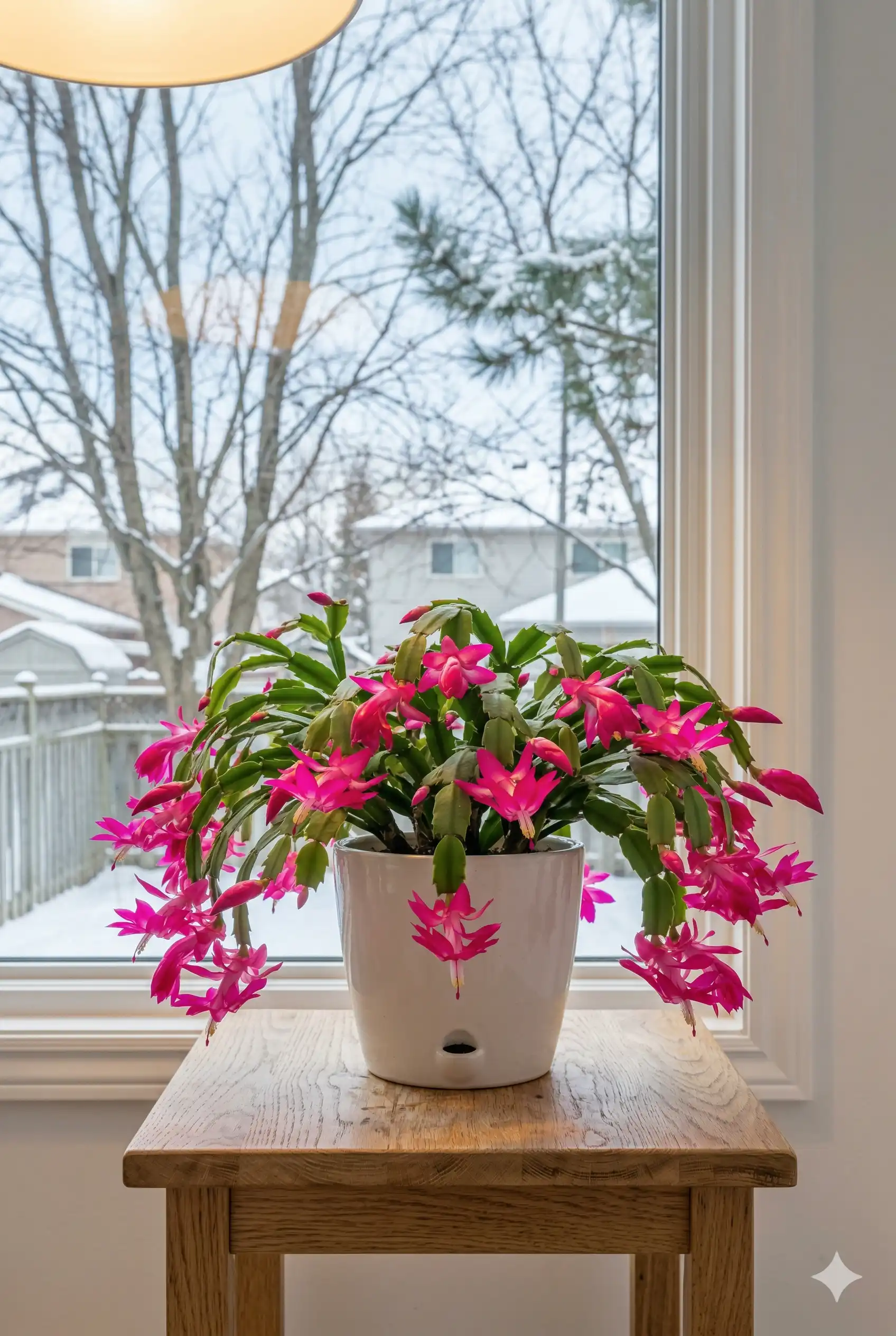
Christmas cactus (Schlumbergera spp.) care in Canada is rewarding because unlike most flowering houseplants, this one blooms reliably every year in winter — exactly when colour is most needed in Canadian homes. Despite the name it is not a desert cactus and has completely different care needs: it originates from Brazilian rainforest and needs regular watering, good humidity, and specific light and temperature cues to bloom on schedule.
The Canadian winter actually helps trigger blooming — shorter days and cool nights near windows from October onward provide the exact conditions that initiate flower buds. This guide covers how to set that up reliably.
🎄 At a glance: Water — when top 3cm dry, every 7–14 days. Light — bright indirect. Bloom trigger — short days + cool nights (13–18°C) in October. Bud drop — caused by drafts and movement. Pet safe — non-toxic ✅
Is your Christmas Cactus getting enough light this winter?
A Canadian winter cuts daylight roughly in half. See what your city actually gets this month, and whether a grow light is needed.
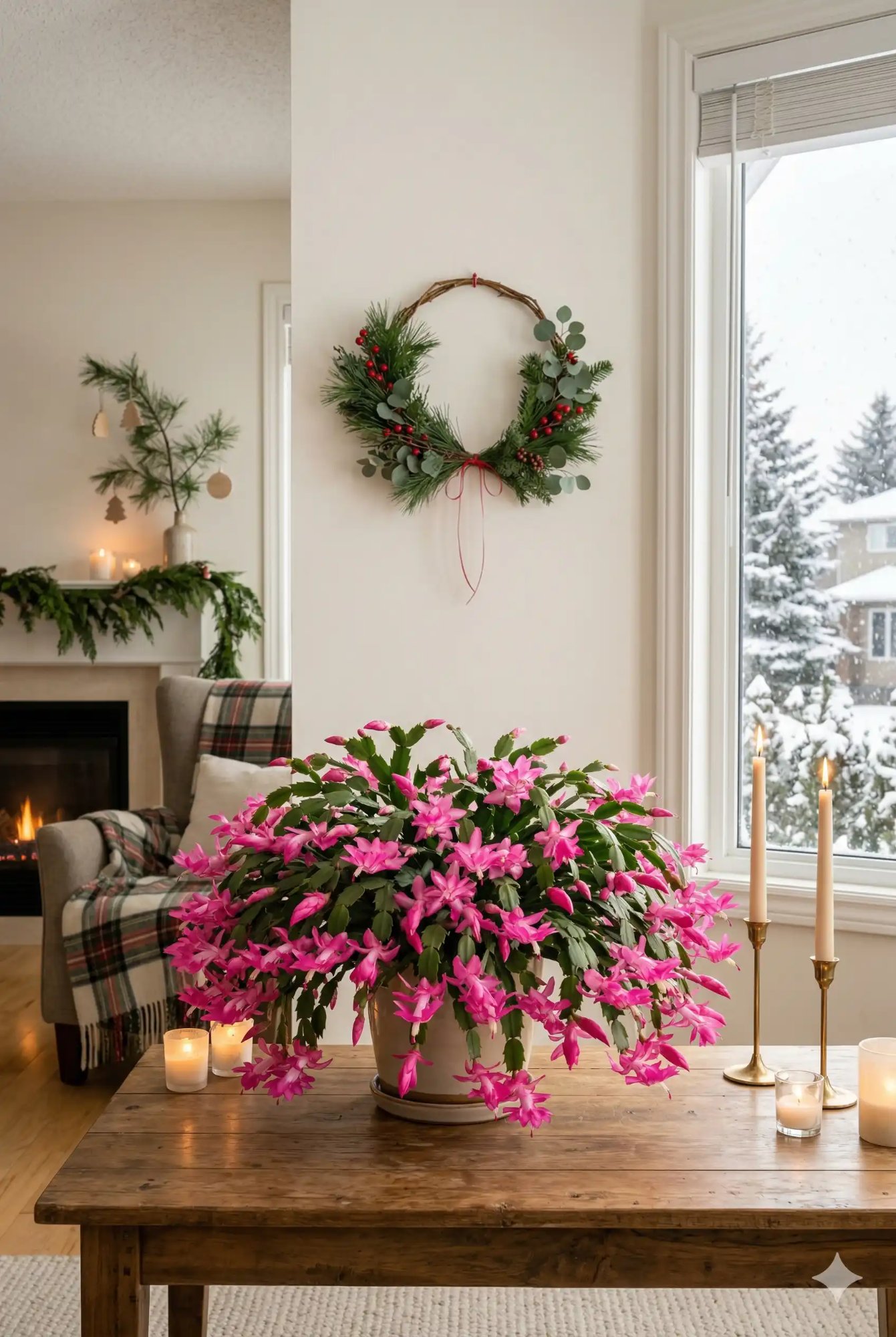
🎄 Quick Care Card
The December Bloom Trigger — How It Works
Christmas cactus is a photoperiodic plant — it needs two simultaneous signals to initiate flower buds: short days (less than 12 hours of light) and cool nights (13–18°C). Canadian autumn provides both naturally. Understanding the mechanism lets you dial in December blooms reliably every year.
| Month | Action | Why |
|---|---|---|
| April–September | Water and fertilize regularly | Growing season — build a strong plant for next bloom cycle |
| October 1 | Move near window; no evening artificial light; reduce watering | Start short-day and cool-night trigger; slight drought stress supports bud set |
| October–November | Maintain darkness after sunset (12+ hours night) | The critical bud-initiation window — 6 weeks of short days triggers the response |
| Mid-November | Buds appear — resume normal watering; do not move plant | Buds oriented to light source — moving plant causes bud drop |
| December | Enjoy blooms; keep away from cold drafts and heating vents | Temperature extremes cause bud and flower drop |
How to Water Christmas Cactus in Canada
Christmas cactus is not a desert cactus — it comes from the humid cloud forests of Brazil and needs more regular moisture than most houseplants labelled "cactus." But it is also sensitive to overwatering. The watering schedule changes significantly through the year depending on which phase the plant is in.
Summer (May–September)
Water every 7–10 days when the top 3 cm is dry. The plant grows actively and appreciates consistent moisture. Monthly feeding with a balanced liquid fertilizer at half strength. Move outdoors to a shaded spot if possible — the summer humidity and natural light strengthens the plant for the bloom cycle ahead.
Trigger Period (October–November)
Reduce to every 10–14 days. A slight moisture stress during bud initiation supports the blooming response — but don't let the segments shrivel. Stop fertilizing. This is when most Canadians accidentally overwater, killing the bloom trigger by keeping soil too wet.
Blooming (December–January)
Resume regular watering once buds appear — a plant with buds and flowers needs consistent moisture. Water every 7–10 days. Do not let it dry completely during blooming or buds will drop. Do not move the plant once buds are set.
Overwatering kills more houseplants than anything else. A 3-in-1 soil meter shows you exactly when the root zone is dry — push the probe in for an instant moisture, light, and pH reading. No batteries needed.
Affiliate link — GrowersGuide.ca may earn a commission on qualifying purchases, at no extra cost to you. Learn more.
The other thing Canadian houseplants run short on all winter is light. From November to March most homes are too dim to keep plants growing — leaves stretch toward the window, variegation fades, and new growth stalls. A small full-spectrum LED grow light on a timer bridges the dark months, even for tough low-light plants that only survive (rather than grow) in a dim room.
Affiliate link — GrowersGuide.ca may earn a commission on qualifying purchases, at no extra cost to you. Learn more.
Why no fixed schedule works: How fast soil dries depends on temperature, light, pot material, room humidity, and plant size. A Christmas cactus in a warm bright room in summer dries faster than one in a cool dim corner in October — the same plant, completely different timing. The top 3 cm finger test automatically accounts for all of these. See what affects soil drying rate →
Schlumbergera Varieties — Which Do You Have?
Three Schlumbergera species are sold in Canada under different holiday names. They look similar but bloom at slightly different times and have minor care differences. The leaf segment edges are the easiest way to tell them apart.
| Common Name | Species | Leaf Edges | Bloom Time | Most Common in Canada? |
|---|---|---|---|---|
| Thanksgiving Cactus | S. truncata | Sharp pointed teeth | November (Canada) | Yes — most sold plants are this |
| Christmas Cactus (true) | S. x buckleyi | Rounded scalloped edges | December–January | Less common — true Christmas bloomer |
| Easter Cactus | Hatiora gaertneri | Flat rounded segments | March–May | Sometimes sold in spring |
| Holiday hybrids | Various crosses | Variable | November–January | Very common in Canadian garden centres |
How to Propagate Christmas Cactus
Christmas cactus is one of the easiest houseplants to propagate, which is exactly why it has been passed down through Canadian families for generations — many plants in homes today are cuttings from a grandparent's plant. A single plant gives you any number of new ones to share, and cuttings make a thoughtful holiday gift. Spring and early summer, during the active growing season, are the best times.
Step 1 — Take a segment cutting
Choose a healthy stem and gently twist off a Y-shaped piece of 2–4 joined segments at a natural joint — no knife needed, it separates cleanly with a twist. Take cuttings from several stems if you want more than one new plant.
Step 2 — Let the cutting callus
Set the cutting aside in a dry, shaded spot for 2–3 days so the cut end dries over and forms a callus. This step is essential — planting a fresh, moist-ended cutting straight into soil usually causes it to rot before it can root.
Step 3 — Plant and root
Insert the callused end about 2–3 cm deep into lightly moist, well-draining cactus or potting mix, so the cutting stands upright. Keep it in bright indirect light and the soil barely moist — not wet. Roots form over 3–6 weeks; a gentle tug that meets resistance means it has rooted. You can also root cuttings in a glass of water, then pot them once roots are a few centimetres long.
Tip — Plant several cuttings together
For a full, bushy plant faster, root three to five cuttings together in the same small pot rather than one. A propagated Christmas cactus is slow but extremely long-lived — well-kept plants in Canada routinely live and bloom for 20 to 30 years or more.
Christmas Cactus Troubleshooting
Buds form but drop before opening
The #1 problem. Once you see buds, do not move the plant — Christmas cactus orients its buds toward the light source and any rotation or relocation causes them to abort. Other causes: cold drafts from exterior walls or doors (keep away from leaky Canadian windows), dry heating vent air (furnace heat drops humidity below 30% — put a pebble tray nearby), or a sudden temperature drop below 10°C.
No buds forming at all
Almost always caused by too much artificial evening light during October–November. Room lights, kitchen lights, and overhead lights after sunset interrupt the darkness the plant needs. Move to a bedroom or other room with minimal artificial light in evenings, or cover the plant with a box every evening from 6 PM to 6 AM for 6 weeks. Not providing the cool night temperatures (keeping plant near a warm central heating vent) also prevents budding.
Limp, wrinkled, or shrivelling segments
Either underwatering or root rot from overwatering — check the soil. Dry soil: water thoroughly and the segments should plump up within a day. If soil is wet but segments are still limp and soft, root rot is likely — unpot, remove rotted roots, repot in fresh well-draining mix, and reduce watering. Segments also wrinkle when the plant is kept in very dry heated Canadian winter air — try a pebble tray.
Plant hasn't bloomed in years
The plant needs a clear annual cycle: growing season (spring/summer), trigger period (October short days + cool nights), bloom (December). If a plant skips the trigger period — because it stays in a well-lit, warm room year-round — it may not initiate buds. Some gardeners in Canada take their plants outdoors to a shaded spot in summer for the humidity boost and then bring them in by September to start the trigger cycle. This reset often restores reliable blooming.
Frequently Asked Questions
How do I get my Christmas cactus to bloom for December in Canada?
Christmas cactus initiates buds in response to two simultaneous conditions: short days (less than 12 hours of light) and cool nights (13–18°C). In Canada, this happens naturally from early October onward — days shorten and nights cool, especially near windows. To ensure December blooming: from October 1, place the plant near a window where it gets natural light during the day but is not exposed to artificial light at night (room lamps and overhead lights interfere with the short-day signal). Cool Canadian nights near the window (13–18°C) provide the temperature cue. Buds should appear within 6–8 weeks — right on schedule for December flowering.
Why is my Christmas cactus dropping buds?
Bud drop is the most frustrating Christmas cactus problem and has specific causes. Moving the plant after buds form is the #1 cause — Christmas cactus orients its buds to the light source and moving it causes them to drop. Cold drafts from exterior doors or leaky windows also causes bud drop in Canadian winter. Low humidity from furnace heating is another cause — keep a pebble tray nearby. Overwatering once buds form also causes drop. Once buds appear, find the ideal spot and do not move the plant until blooms are finished.
How do I water a Christmas cactus in Canada?
Water Christmas cactus when the top 3 cm of soil is dry — more often than true desert cacti but less than tropical houseplants. Every 7–10 days in summer and every 10–14 days in fall. Reduce watering significantly October through November while the plant is being triggered (the slight moisture stress supports bud initiation). Once buds appear in November resume regular watering. Use room-temperature water — cold water stresses the roots. Never let it sit in standing water. Overwatering while buds are forming is a common Canadian mistake.
How much light does Christmas cactus need?
Bright indirect light year-round, and critically — no artificial light after sunset from October 1 through December. The short-day blooming trigger requires genuine darkness for at least 12 hours. If your plant is in a room where lights are on in the evenings from October onward, it may not initiate buds. Move to a room with minimal evening artificial light, or cover with a cardboard box for 12 hours each night. After buds form in November, artificial light restriction is no longer needed.
Is Christmas cactus toxic to pets?
Christmas cactus (Schlumbergera) is considered non-toxic to cats and dogs by most veterinary authorities, though eating large quantities may cause mild gastrointestinal upset. It is significantly safer than many other popular holiday plants (poinsettia, amaryllis, mistletoe). If your pet chews the plant, monitor for vomiting or diarrhea and contact your vet if symptoms persist.
How do I care for Christmas cactus after it finishes blooming?
After blooming finishes (typically February in Canada), the plant enters a rest period. Reduce watering and stop fertilising through March. From April, resume regular watering and begin monthly feeding with a balanced fertiliser at half strength. Move to a bright window for the growing season. In summer some Canadian gardeners move Christmas cactus outdoors to a shaded spot — the increased humidity and natural light strengthens the plant for the next bloom cycle. Bring back indoors before temperatures drop below 10°C.
🐾 Have pets? See our Pet-Safe Houseplants guide — which common houseplants are toxic to cats and dogs, which are safe, and what to do if a pet eats one.
📖 More Houseplant Guides
Also Growing Vegetables?
Free planting calendars for 30+ vegetables across every major Canadian city.