
Companion Planting Guide — Which Vegetables to Plant Together
Use plant relationships to reduce pests naturally, improve yields, and make the most of Canada's short growing season.
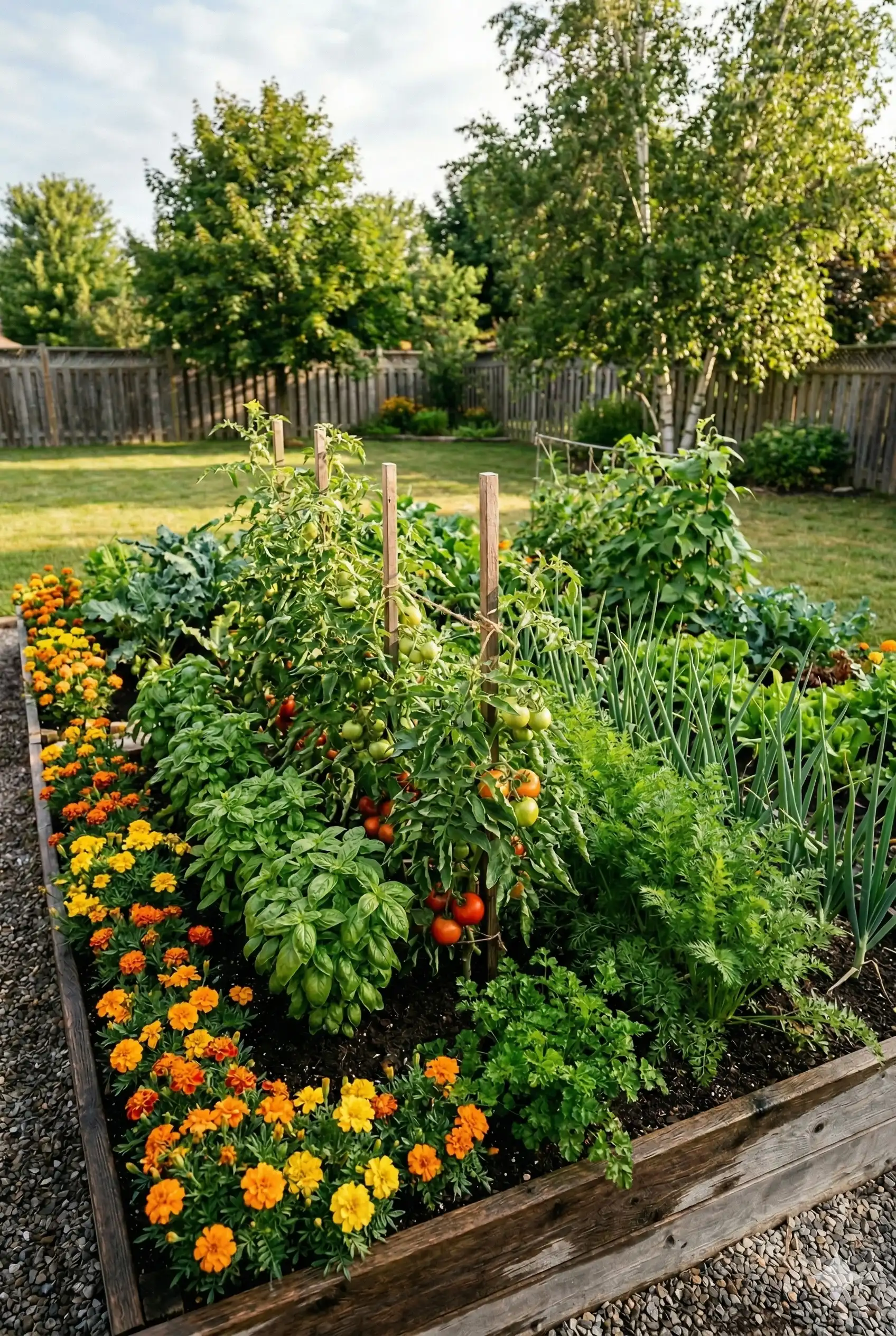
Companion planting is one of the most effective tools available to organic gardeners — and one of the most misunderstood. It's not magic, and not every claimed pairing has strong scientific backing. But the best-documented combinations genuinely work: basil does repel certain insects around tomatoes, marigolds do suppress nematodes, the Three Sisters system does improve yields of all three crops. Done well, companion planting reduces your pest problems, improves soil, and makes your garden more resilient — without any chemical inputs.
For Canadian gardeners, companion planting also offers an important space-efficiency benefit. With a shorter season than most of the world, we want every square foot of our beds working hard from May to October. Good companions maximize that space through vertical layering, succession timing, and mutual support.
Companion planting at a glance: Best classic combinations — tomatoes + basil, carrots + onions, beans + corn + squash (Three Sisters), cabbage + dill. Always pair French marigolds with tomatoes/peppers for nematode + aphid control. Avoid: tomatoes near brassicas, beans near onions/garlic, fennel near anything. Plant herbs at bed edges for whole-bed pest dilution.
Complete Companion Planting Chart
This chart covers the most common Canadian vegetable garden crops. "Good companions" share space beneficially — through pest repulsion, nitrogen fixing, ground shading, or simply not competing for the same root depth or nutrients. "Avoid" combinations actively inhibit each other's growth or share disease and pest vulnerability.
| Vegetable | Good Companions | Keep Apart From | Why It Works |
|---|---|---|---|
| 🍅 Tomatoes | Basil, carrots, marigolds, borage, parsley | Fennel, cabbage, corn, potatoes | Basil repels aphids & whiteflies; marigolds deter nematodes |
| 🌶️ Peppers | Basil, carrots, tomatoes, marigolds | Fennel, brassicas | Basil improves flavour and repels aphids |
| 🥕 Carrots | Onions, leeks, lettuce, tomatoes, peas, rosemary | Dill, parsnips | Onions repel carrot fly; carrots repel onion fly |
| 🥒 Cucumbers | Beans, peas, radishes, sunflowers, nasturtiums | Potatoes, sage, aromatic herbs | Radishes repel cucumber beetles; nasturtiums act as trap crop |
| 🫘 Beans | Corn, squash, cucumbers, carrots, potatoes | Onions, garlic, shallots, fennel | Beans fix nitrogen into soil for corn & squash |
| 🧅 Onions & Garlic | Carrots, tomatoes, lettuce, beets, roses | Beans, peas, asparagus | Strong scent confuses and repels many pest insects |
| 🥬 Lettuce | Carrots, radishes, strawberries, tall plants (shade) | Parsley, celery | Shaded by tall neighbours in summer heat — extends season |
| 🥦 Brassicas | Nasturtiums, dill, thyme, onions, beets | Tomatoes, strawberries, peppers, pole beans | Nasturtiums trap aphids away from plants |
| 🌽 Corn | Beans, squash, pumpkins, cucumbers, melons | Tomatoes, celery | Three Sisters — classic polyculture with mutually reinforcing benefits |
| 🥔 Potatoes | Beans, peas, cabbage, marigolds, horseradish | Tomatoes, peppers, eggplant, cucumbers, squash | Keep away from tomato family — shares blight disease |
| 🌿 Basil | Tomatoes, peppers, asparagus, oregano | Sage, thyme | Repels aphids, whiteflies, spider mites — plant throughout garden |
| 💐 Marigolds | Almost everything — especially tomatoes, peppers | None significant | Suppress soil nematodes; repel aphids, whiteflies, cabbage moths |
| 🌸 Nasturtiums | Cucumbers, squash, brassicas, fruit trees | None significant | Trap crop — aphids prefer nasturtiums, leaving vegetables alone |
Planning Your Companion Garden?
Calculate exactly how many plants fit in your bed
🥕 Plant Spacing CalculatorThe 6 Best Companion Planting Combinations for Canadian Gardens
The Three Sisters — North America's Original Companion Planting
The Three Sisters — corn, beans, and squash grown together — is the oldest documented companion planting system in North America. Developed and refined by Indigenous nations over thousands of years (including the Haudenosaunee, Anishinaabe, Wendat, and many others), it remains one of the most effective polycultures any Canadian gardener can grow. Every plant supports the other two in a way modern agronomy still studies.
Sources: Three Sisters companion planting — traditional Indigenous method; consistent with this site’s companion planting guide.
🔄 Free to reuse — please credit GrowersGuide.ca with a link.
🌽 Corn — the eldest sister
Corn provides a tall living trellis for the beans to climb — no stakes or wire needed. Plant first by 2–3 weeks so stalks are 15–20 cm tall before beans are sown. Use a flour or flint variety with strong stalks, not modern sweet-corn hybrids (they fall over under bean weight).
🍃 Beans — the middle sister
Beans (pole varieties, not bush) climb the corn and fix atmospheric nitrogen into the soil through root nodules, feeding next year's planting. Sow 2–3 weeks after corn is up. Use traditional dry beans or pole runner beans — not bush beans, which won't climb.
🍋 Squash — the youngest sister
Squash (winter squash, pumpkin, or zucchini) sprawls along the ground, large leaves shading the soil — suppressing weeds and holding moisture. Prickly stems also deter raccoons and groundhogs from raiding the corn. Sow at the same time as beans.
Planting a Three Sisters mound in Canada
- After last frost (mid-May southern Ontario, early June Prairies), build a flat-topped mound about 1 m wide, 30 cm tall.
- Plant 4–6 corn seeds in the centre of the mound, 15 cm apart. Wait 2–3 weeks until corn is 15–20 cm tall.
- Plant 4–6 pole bean seeds around the corn, 15 cm out from each stalk.
- At the same time, plant 2–3 squash seeds at the edge of the mound, spaced 30–45 cm apart, so vines trail outward.
- Water deeply once a week. Mound style means good drainage in wet springs and concentrated root zone.
A note on respectful use: the Three Sisters is a living Indigenous knowledge system, not a generic gardening technique. Many Indigenous-led seed-saving and agriculture organizations across Canada (including Indigenous Seed Keepers Network and Akwesasne Freedom School) offer traditional Three Sisters seed varieties and growing guidance. Sourcing seed from these organizations — rather than generic catalogues — supports the cultural continuity of the system. The Canadian Organic Growers also distribute heritage Three Sisters seed kits some years.
Companion Flowers & Herbs for Pest Control
Some of the most effective companion plants are not crops at all — they're flowers and herbs that confuse pests, attract beneficial insects, or serve as sacrificial trap plants. Most Canadian gardeners underuse these.
| Companion | Pair with | How it works |
|---|---|---|
| Marigolds (French) | Tomatoes, beans, peppers, squash | Roots release alpha-terthienyl, which suppresses root-knot nematodes in soil. Above-ground scent masks tomato volatiles, reducing whitefly attack. |
| Nasturtiums | Brassicas, beans, cucumbers, squash | A trap crop — aphids prefer nasturtium leaves over your beans or kale, concentrating the pest on a single plant that you can prune off. Flowers attract hoverflies that eat the aphids. |
| Calendula | Tomatoes, lettuce, broccoli, anywhere | Sticky sap traps aphids on the leaves. Flowers attract parasitic wasps that lay eggs in cabbage worms and tomato hornworms. |
| Basil | Tomatoes, peppers | Strong-scent volatiles confuse tomato hornworm and thrips. Field trials show 18–30% reduction in pest pressure on tomato in side-by-side plots. |
| Dill | Cucumbers, lettuce, brassicas | Flower umbels attract beneficial wasps and hoverflies. Critically, also keeps cabbage moths confused by the strong scent. |
| Borage | Strawberries, tomatoes, squash | Heavy bee-attractor; pollination of nearby strawberries and squash improves notably. Deep roots also bring up trace minerals. |
| Chives / garlic | Carrots, tomatoes, brassicas, roses | Sulphur compounds deter aphids, carrot rust fly, and Japanese beetles. Plant in a continuous border around vegetable beds for whole-bed protection. |
| Sweet alyssum | Lettuce, broccoli, cucumbers | Tiny white flowers are the favourite food of hoverflies, the larvae of which eat 200+ aphids each before pupating. Plant as a ground-cover under taller crops. |
| Sunflowers | Cucumbers, squash, beans, corn | Living trellis for vining beans & cucumbers, dappled shade for lettuce, heavy pollinator + bird draw. Plant the north edge of the bed so they don't shade sun-loving crops. See Growing Sunflowers in Canada. |
Combinations to Avoid
Not all plant neighbours are beneficial. These combinations actively inhibit growth, share disease, or compete intensely enough to reduce yields for both plants:
Why Companion Planting Works — The Science
Companion planting benefits fall into four main categories, each with its own mechanism:
🧪 Chemical Repulsion
Plants release volatile organic compounds that confuse pest insects' ability to locate host plants. Basil, marigolds, and alliums all work this way. The scent of one plant masks the chemical signals the pest uses to find another.
🌱 Nitrogen Fixation
Legumes (beans, peas) host Rhizobium bacteria in root nodules that convert atmospheric nitrogen into plant-available ammonium. When legume roots decompose, they release this nitrogen into the soil for neighbouring plants.
🎯 Trap Cropping
Some plants are so attractive to pests that they draw them away from crops you want to protect. Nasturtiums attract aphids; mustard attracts flea beetles. Pests concentrate on the trap crop rather than spreading through the whole garden.
🐝 Beneficial Attraction
Flowers attract beneficial insects — hoverflies, parasitic wasps, and lacewings — that prey on garden pests. Dill, fennel, coriander, and marigolds are especially effective. A diverse, flowering garden is a healthier garden.
Companion Planting Myths Worth Ignoring
Some companion planting advice has been repeated for so long it's accepted as fact — but isn't backed by research. The most reliable pairings are tested and explained above. Here's what to stop worrying about.
Myth: marigolds repel all pests from your whole garden
Marigolds do reduce root-knot nematodes in the soil they grow in (research-confirmed) and the scent does deter whiteflies on tomatoes (mild effect). But they do not repel slugs, deer, rabbits, cucumber beetles, or most caterpillars. The "marigolds protect everything" idea spreads because they're easy to grow and the scent is noticeable to us — not because pests avoid the whole garden.
Myth: tomatoes "shouldn't be planted near brassicas"
This appears in every old companion-planting chart but has no research basis. The two crops are competitive for nutrients (both heavy feeders), but they don't actively harm each other. Plant them apart only because both need maximum sun and root space — not because of any chemical or scent interaction.
Myth: planting basil makes tomatoes taste better
A persistent and charming claim, but no controlled tomato-flavour studies support it. Basil does reduce pest pressure on tomatoes (real benefit) and the two grow well in similar conditions, but tomato sugar content, acidity, and aroma compounds are determined by variety, ripeness, and water stress — not adjacency to basil.
Myth: companion planting eliminates the need for crop rotation
These are separate practices that solve different problems. Companion planting helps within a single growing season; crop rotation prevents soil-borne disease and pest build-up between seasons. Skipping crop rotation because you "companion plant" is one of the fastest ways to get blight on tomatoes and clubroot on brassicas. How crop rotation works in a Canadian garden ›
Myth: "magnetic" or "energetic" plant pairings
Some companion-planting charts list dozens of pairings based on biodynamic or astrological reasoning rather than tested biology. These don't reliably produce the claimed effects. The pairings in the chart at the top of this page are limited to those with documented mechanisms: shade, nitrogen fixation, scent masking, predator attraction, or root chemistry.
Frequently Asked Questions
Does companion planting actually work, or is it a myth?
Some companion planting claims are well-supported by research; others are folklore. The combinations with the strongest scientific evidence are: marigolds suppressing nematodes (confirmed in multiple studies), basil repelling insects near tomatoes (volatile compounds confirmed effective), the Three Sisters mutual benefit system (hundreds of years of validated practice), carrot-onion fly repulsion (confirmed by Scandinavian research), and nitrogen fixation by legumes (completely confirmed biochemistry). Treat companion planting as one helpful tool among many rather than a complete substitute for other pest management.
What is the best companion plant for tomatoes?
Basil is the most popular and well-supported companion for tomatoes — plant one basil plant per tomato and let it grow in the shade beneath the tomato canopy. French marigolds planted around the bed perimeter suppress nematodes and deter aphids. Carrots can be planted between tomatoes to loosen soil around shallow tomato roots. Borage (an edible herb with blue flowers) attracts beneficial pollinators and is believed to repel tomato hornworms. Avoid planting tomatoes near potatoes, fennel, corn, or brassicas.
Can I plant tomatoes and peppers together?
Yes — tomatoes and peppers are compatible companions. They're both in the nightshade family, share similar growing conditions (full sun, warm soil, regular watering), and don't compete intensely. They can share a raised bed, though they'll both need adequate spacing for airflow and to prevent disease spread. The risk is that being in the same plant family, they're susceptible to some of the same diseases. Don't plant them in the same location two years in a row — rotate crops so neither spends consecutive seasons in the same spot.
How far apart should companion plants be?
For pest repulsion through scent, companions work best within 60–90 cm of each other — close enough that the aromatic compounds reach the crop you're protecting. For trap cropping, companions can be placed at the perimeter of a bed. For nitrogen fixing, legume roots need to be close enough to the benefiting plant that the soil nitrogen is accessible — within the same bed. Use our Plant Spacing Calculator to figure out how many plants fit together at proper spacing.
What should I not plant next to squash?
Avoid planting squash near potatoes — they attract similar pests and potatoes can spread blight to squash. Don't plant squash near other squash family members (cucumbers, melons, pumpkins) in a small garden if you're concerned about cross-pollination — though for eating rather than seed saving, this doesn't matter. Fennel should always be kept away from squash. Good companions for squash include beans (nitrogen), corn (structure), nasturtiums (trap crop for squash bugs), and marigolds (general pest deterrence).
Plan Your Garden Layout
Use these tools to calculate spacing, soil, and timing
📖 Related Guides
More guides for Canadian gardeners.