
Best Houseplants Canada — 12 Picks for Every Light Level
Chosen specifically for Canadian winter conditions: low light, short days, and the bone-dry air from forced-air furnaces that kills most tropical plants.
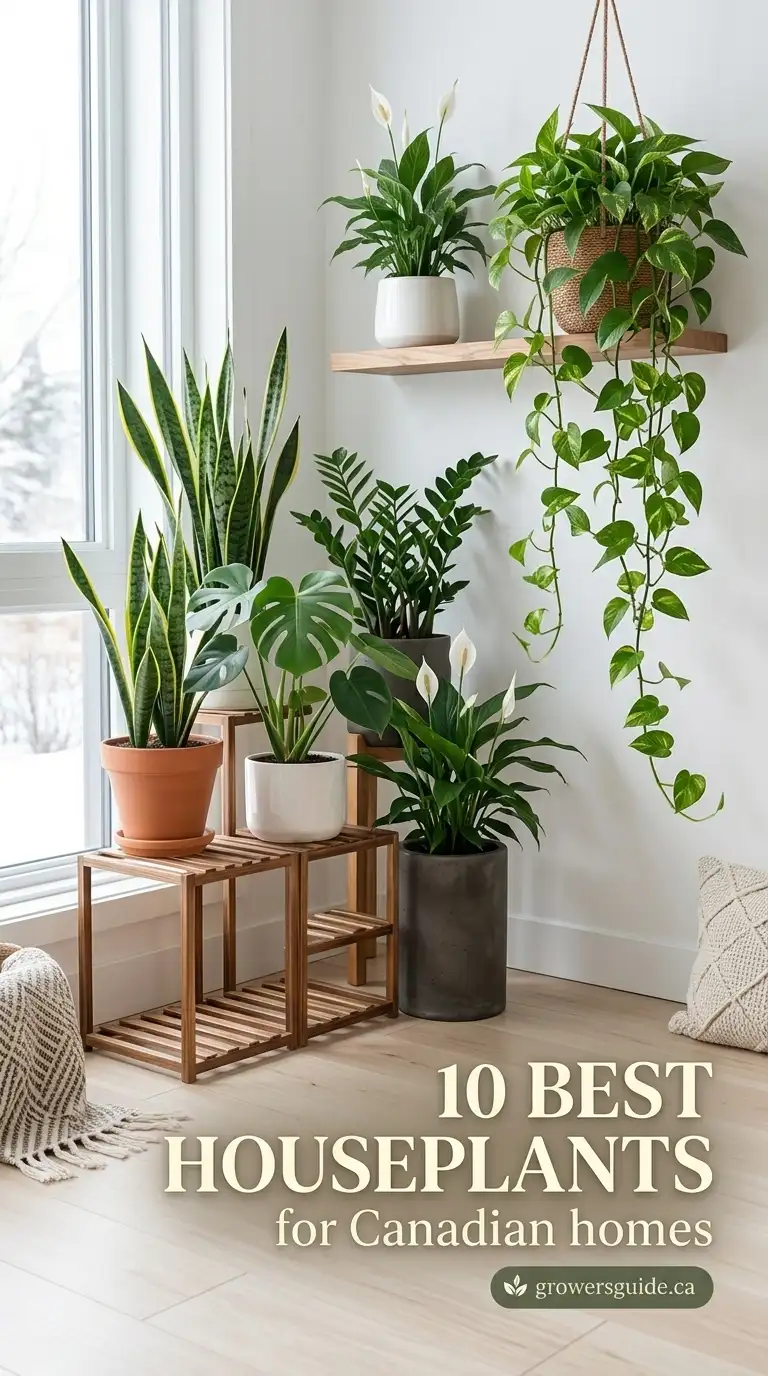
Most houseplant guides are written for homes in California or the UK — with south-facing rooms full of light and winter humidity above 50%. A Canadian home in January looks nothing like that. Forced-air furnaces drop indoor humidity to 20–30%. North and east windows provide barely enough light for a handful of plants. And cold windowsill glass kills tropical roots that look perfectly fine in the warm room air above them.
Every plant on this list was chosen with those conditions in mind. They're organized by light requirement so you can match the plant to your actual window.
Best houseplants for Canada at a glance: Any light / dark rooms: snake plant, ZZ plant. Low to medium: pothos, peace lily, heartleaf philodendron, Chinese evergreen. Medium to bright: monstera, spider plant, rubber plant, aloe vera. Bright indirect: bird of paradise, fiddle leaf fig (demanding). Biggest Canadian winter challenge: dry furnace air — snake plant and ZZ plant handle it best.
Low Light — North Windows & Dark Apartments
These four tolerate north-facing windows or rooms without direct natural light. They still need some ambient daylight — no plant survives in true darkness.
1. Snake Plant (Sansevieria) — Best Overall for Canada
The single best houseplant for Canadian conditions. Tolerates low light, dry furnace air, irregular watering, and neglect better than any other common houseplant. Evolved in dry, rocky West African environments — Canadian heated homes closely mimic this. Water once every 2–4 weeks in winter and it thrives.
2. ZZ Plant (Zamioculcas) — Best for Dark Corners
The ZZ plant's rhizomes store water and nutrients, making it the most drought-tolerant leafy houseplant available. It can survive weeks without water and months without fertilizer. The waxy, glossy leaves reflect furnace-dry air without desiccating. Ideal for dark Canadian apartments and offices. Slow grower — don't expect rapid filling-out of a new pot.
3. Peace Lily (Spathiphyllum) — Only Flowering Low-Light Plant
Peace lily is the only common flowering houseplant that blooms in low light — white spathes appear even in rooms with only ambient natural light. The plant dramatically droops when thirsty, which makes it an excellent self-signalling plant for new owners. Note: peace lily is sensitive to fluoride in tap water (brown tips) — use filtered or standing tap water.
4. Chinese Evergreen (Aglaonema) — Colour in Low Light
Aglaonema comes in green, silver, red, and pink varieties and tolerates darker conditions than almost any other patterned foliage plant. The solid green varieties handle the lowest light; coloured varieties (red, pink) need more light to hold their colour. A reliable choice for hallways, bathrooms, and dark bedrooms.
Medium Light — East or West Windows
These plants grow best with 2–4 hours of indirect or gentle direct morning/afternoon sun. East and west windows in Canada.
5. Pothos (Epipremnum) — Most Forgiving Trailing Plant
Pothos is the most adaptable houseplant — it will grow (more slowly) even in low light, and in medium to bright light it grows vigorously. Wilts visibly before dying, giving clear watering cues. Golden pothos and marble queen are the most common varieties; neon pothos needs more light to hold its bright colour. Easy to propagate: cut below a node and place in water.
6. Heartleaf Philodendron — Fast and Dramatic
The heartleaf philodendron is a fast-trailing foliage plant similar to pothos but with heart-shaped, velvety leaves and faster growth in medium light. One of the easiest houseplants to propagate — nodes root readily in water or moist soil. Similar care to pothos; both are nearly indestructible on an east or west window.
7. Spider Plant (Chlorophytum) — Best for Propagating
Spider plants produce arching stems of baby plants (spiderettes) that can be pinned into soil to root into new plants — one pot becomes many. Tolerates dry air, irregular watering, and a range of light conditions. Brown tips are extremely common in Canadian homes (dry air + fluoride in tap water) — cosmetic only, doesn't affect plant health. Use filtered water or let tap water sit overnight.
8. Monstera (Monstera deliciosa) — Statement Plant
Monstera is the most popular large-format houseplant and grows well in medium indirect light on a Canadian south window (kept back from the glass) or a bright east window. The fenestrations (split leaves) only develop in adequate light — plants in dark corners produce small, uncut leaves. Use a humidifier in Canadian winters to prevent brown leaf edges. Wipe leaves monthly to remove dust that blocks light.
Bright Indirect — South Windows & Grow Lights
These plants need a south-facing window or supplemental lighting to stay healthy through Canadian winters.
9. Rubber Plant (Ficus elastica) — Dramatic Foliage
Rubber plants grow into impressive statement trees over several years and tolerate moderate dry air better than most Ficus. Deep green or burgundy leaves. The main challenge in Canada is leaf drop from temperature change — keep away from exterior doors and cold drafts. South window preferred; adapts to bright east or west with some loss of lower leaves.
10. Aloe Vera — Useful and Nearly Indestructible
Aloe vera thrives in the dry conditions of Canadian heated homes — it evolved in arid environments and prefers low humidity. South window only; aloe stretches and etiolates quickly in insufficient light. Soak-and-dry watering: water deeply, then let soil dry completely (2–4 weeks in winter). Harvest the gel from mature leaves for burns and skin — the Canadian kitchen essential houseplant.
11. Bird of Paradise (Strelitzia) — High Reward, High Demand
Bird of paradise grows into a dramatic tropical statement plant and can flower indoors given enough light — but it needs the sunniest spot you have. In Canada, a south window in a single-storey home is the minimum. Flowers indoors only after the plant reaches maturity (5–7 years typically) and with consistent bright light. Tolerates dry air better than most tropical plants.
12. Fiddle Leaf Fig (Ficus lyrata) — Beautiful but Demanding
Fiddle leaf fig is included because it's widely purchased in Canada and widely killed. It drops leaves from temperature changes, drafts, overwatering, underwatering, low humidity, and being moved. In Canada it needs a south window, a humidifier, consistent watering, and a stable location away from drafts. Worth it if you can meet its needs — not for beginners or drafty Canadian homes.
Canadian Winter Care — 4 Rules for Every Houseplant
Move closer to windows
Winter sun is low-angle and weak in Canada. A plant 1 metre from a south window in January receives a fraction of the light it got at the same spot in July. Move plants as close to glass as possible without cold-glass contact.
Keep pots off cold windowsills
Window glass in a Canadian winter can be 5–10°C colder than room air. Tropical plant roots sitting on a cold sill suffer even when the room feels warm. Use a cork trivet, wood board, or shelf below the window line to capture the light without the cold.
Dramatically reduce watering
Plants in low light grow slowly and use less water. Overwatering in winter is the most common cause of houseplant death in Canada. Stop any fixed schedule — check soil before every watering. Most plants want the top 3–5 cm dry before watering in winter.
Address dry furnace air
A furnace-heated Canadian home in January can drop to 20–25% relative humidity — dangerously dry for most tropical plants. Options: run a whole-home or room humidifier (best), group plants together so transpiration raises local humidity, or place pots on a pebble tray with water below the drainage holes.
Overwatering kills more houseplants than anything else. A 3-in-1 soil meter shows you exactly when the root zone is dry — push the probe in for an instant moisture, light, and pH reading. No batteries needed.
Affiliate link — GrowersGuide.ca may earn a commission on qualifying purchases, at no extra cost to you. Learn more.
Frequently Asked Questions
What are the best houseplants for Canadian winters?
Snake plant and ZZ plant — both tolerate low light and extremely dry furnace air. For medium light: pothos, heartleaf philodendron, peace lily. For bright south windows: rubber plant, aloe vera, monstera.
What houseplants grow in low light in Canada?
Snake plant, ZZ plant, pothos, peace lily, and Chinese evergreen (aglaonema) all grow in low-light Canadian rooms. Snake plant and ZZ plant are the most reliable in near-dark conditions.
What's the easiest houseplant for beginners in Canada?
Snake plant. It tolerates low light, dry air, irregular watering, and is nearly indestructible. ZZ plant is the runner-up. Both thrive in conditions that kill most other houseplants.
Why do houseplants die in Canadian winter?
Usually overwatering (plants use less water in low winter light) or cold roots from windowsill glass. Move plants closer to windows, keep pots off cold glass, and check soil before watering rather than following a fixed schedule.