
String of Pearls Care: Watering, Shriveling, Fixes
String of pearls care comes down to reading the pearls. Each one stores water, so its shape tells you what the roots are doing. The catch is that a thirsty plant and a rotting one can both show shriveled pearls, and in a Canadian winter the rotting one is far more common.
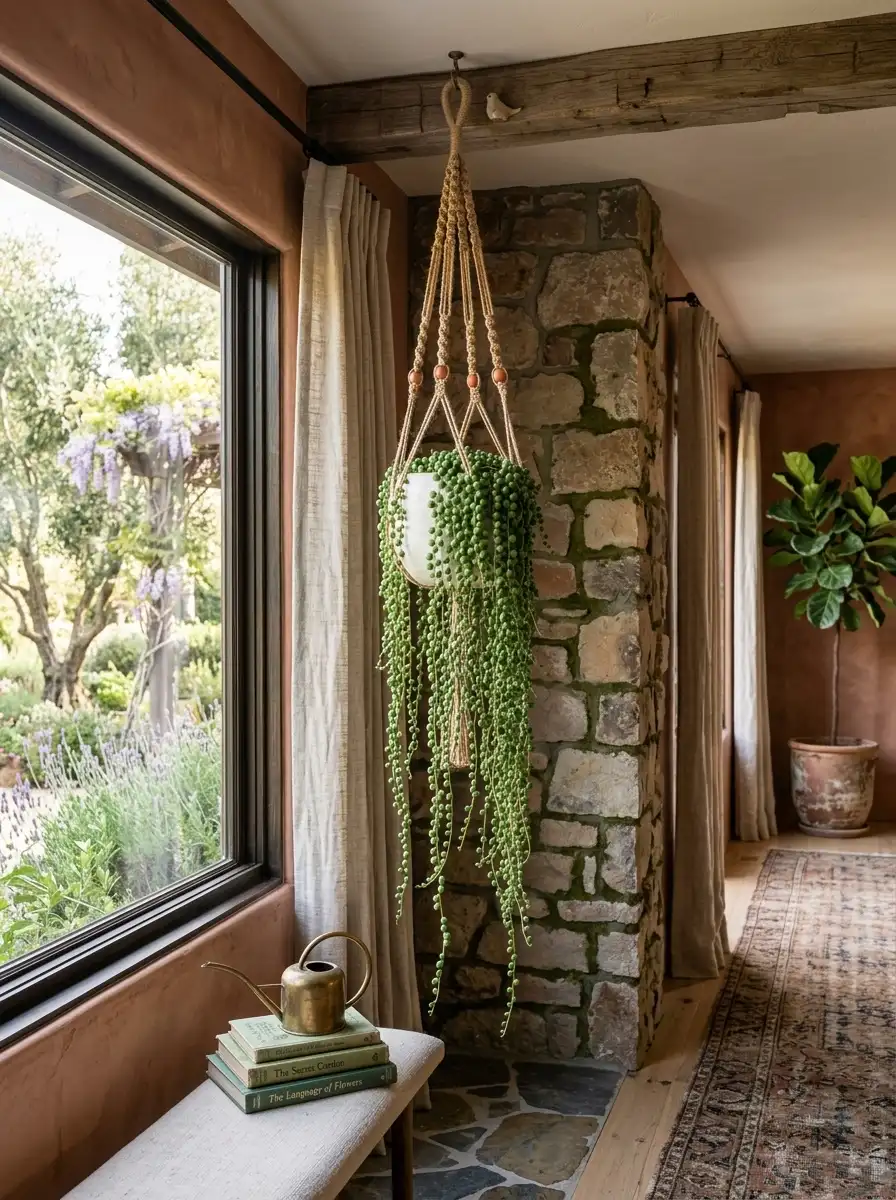
In short: very bright light, a gritty cactus mix in a small pot with a drainage hole, and a thorough watering only when the top 2–3 cm is dry — every week or so in summer, every two to four weeks in winter. Shriveled pearls with dry soil mean thirst; shriveled or mushy pearls with wet soil mean rot. The ASPCA database has no listing; its succulent article says eating it causes vomiting and lethargy.
What the Pearls Are Telling You
| What you see | Likely cause | What to do |
|---|---|---|
| Shriveled, wrinkled pearls, dry soil | Thirst | Soak the pot, let it drain. Pearls plump up in a day or two. |
| Shriveled pearls, wet soil | Roots or stems rotted, cannot drink | Check the soil line; root healthy strands as cuttings. |
| Soft, mushy, see-through pearls | Overwatered | Stop watering; remove mushy strands; repot in dry gritty mix if the soil smells sour. |
| Stems brown or black at the soil | Rot at the crown | Cut above it and start again from cuttings. |
| Top of pot bald, tips still green | Crown rotted, or too little light | Lay cuttings back onto the bare soil to refill it. |
| Brown, dry, crispy pearls on one side | Sun scorch through glass in summer | Pull it back from a hot south or west window May to August. |
| Long bare gaps between small pearls | Too little light | Move to the brightest window; add a grow light in winter. |
| White cottony tufts on stems | Mealybugs | Dab with a swab dipped in rubbing alcohol; isolate. |
| White crust on soil or pot rim | Mineral salts from tap water | Scrape it off; flush the pot with plenty of water. |
| White fuzzy mould on the soil | Mix that stays wet | Water less; remove the top layer. |
| Pearls falling off | Handling, or a cold draught | Move it as little as possible; keep away from cold glass. |
Is it dying, or just old? NC State Extension notes that older plants tend to decline after several years and recommends renewing them from cuttings. A string of pearls that has thinned slowly over three or four years with no sign of rot is often simply worn out.
How to Water String of Pearls
- Water when the top 2–3 cm is dry and the pearls have just begun to soften. NC State advises not letting it dry out completely, so do not wait for every pearl to wrinkle.
- Water thoroughly, from the top or by soaking the pot for 10 minutes, then let it drain fully.
- Summer: often every 7–10 days. Winter: every two to four weeks in a heated home with short days. Check rather than count.
- Small pot, gritty mix. Cactus mix with extra perlite or grit, in a shallow pot only slightly wider than the plant, with a drainage hole. A big pot of wet soil is what rots the crown.
- No saucer full of water, and no decorative pot without a hole.
The surface of a pot of string of pearls dries in a day while the roots stay wet. A moisture probe reads the mix where the roots are, which is what decides whether to water.
Affiliate link — GrowersGuide.ca may earn a commission on qualifying purchases, at no extra cost to you. See our affiliate disclosure.
Track watering for your string of pearls with the free GrowersGuide app. Pick your plant, and it adds a reminder to your phone calendar when it is time to water. No account needed.
Light and Temperature in a Canadian Winter
NC State recommends bright, indirect light and warns that direct sun can scorch it. In Canada that advice changes with the season: from May to August keep it back from a hot south or west window, but from November to February put it right at the brightest window you have. A cool room is fine in winter — NC State gives about 10–16 °C — and it slows the plant down so it needs even less water.
| City | Dec 21 | Jan 21 | Feb 21 | Mar 21 |
|---|---|---|---|---|
| Vancouver | 8h11 | 8h51 | 10h28 | 12h09 |
| Calgary | 7h54 | 8h37 | 10h21 | 12h10 |
| Winnipeg | 8h05 | 8h46 | 10h26 | 12h10 |
| Toronto | 8h55 | 9h27 | 10h45 | 12h09 |
| Ottawa | 8h43 | 9h17 | 10h40 | 12h09 |
| Montreal | 8h42 | 9h16 | 10h40 | 12h09 |
| Halifax | 8h48 | 9h21 | 10h42 | 12h09 |
Is your string of pearls getting enough light this winter?
A Canadian winter cuts daylight roughly in half. See what your city actually gets this month, and whether a grow light is needed.
A hanging string of pearls is often too far from the glass in winter. A clip-on LED aimed at the crown keeps new growth compact through the short days.
Affiliate link — GrowersGuide.ca may earn a commission on qualifying purchases, at no extra cost to you. See our affiliate disclosure.
Not sure which light, how close or how many hours? Our guide to grow lights for indoor plants covers distance, timers and which houseplants actually need one.
Propagating from Cuttings
- Cut a healthy strand 8–12 cm long.
- Remove the pearls from the bottom few centimetres.
- Lay the bare section on, or just under, slightly moist cactus mix, pinned down with a bent paper clip so it touches the soil.
- Keep it bright and barely moist. Roots usually form in 2–4 weeks in spring or summer.
Cuttings are also the rescue for a rotting plant and the way to fill a bald top: lay several back onto the surface of the same pot. Wear gloves if your skin reacts; NC State notes the sap can irritate skin. More in the series: easiest houseplants to propagate and jade propagation, another succulent.
Want more plants? The full step-by-step is in our string of pearls propagation guide: strands laid on soil, or in water, when to do it in Canada, and what goes wrong.
Pets
The ASPCA plant database has no entry for string of pearls. The ASPCA's own article on succulents says that if it is eaten it can cause stomach upset, mainly vomiting, and lethargy, and points out that as a hanging plant it is easy to keep out of reach. See houseplants and pets.
Sources
- NC State Extension Plant Toolbox — Curio rowleyanus (light, water, winter temperature, cuttings, pests, sap)
- ASPCA — Are succulents safe to have around pets?
- Day length: worked out from each city's latitude.
Related Guides
Growing other succulents too? Light, winter watering, soil and leggy growth for the whole group are in how to care for cactus and succulents indoors.
Frequently Asked Questions
How often should I water a string of pearls?
Water thoroughly when the top 2–3 cm of mix is dry and the pearls have just started to lose their plumpness, then let it drain completely. In spring and summer that is often every 7–10 days; in a Canadian winter, every two to four weeks. Never let the pot sit in water: rot from wet soil kills far more string of pearls than thirst.
Why is my string of pearls shriveling?
Shriveled, wrinkled pearls mean the plant is short of water, but there are two reasons that look alike. If the soil is dry, it is thirsty: soak it and the pearls plump up within a day or two. If the soil is wet and the pearls still shrivel, the roots or stems at the soil line have rotted and cannot take up water; the pot needs to be checked and healthy strands rooted as cuttings.
How do I know if my string of pearls is overwatered?
Pearls go soft, translucent or mushy, often yellow first; stems turn brown or black at the soil line; the top of the pot thins out while the tips of the strands still look fine; and the mix smells sour or stays wet for days. Stop watering, let it dry, and take cuttings from healthy strands in case the crown is lost.
Why is my string of pearls dying?
Most often rot from soil that stays wet in a pot that is too big or has no drainage hole, especially in winter. Other causes: too little light (long bare gaps between pearls, a sparse top), a cold draught, or simple age, since NC State Extension notes older plants tend to decline after several years and are best renewed from cuttings.
What is the white fuzz on my string of pearls?
White cottony tufts on the stems or between pearls are usually mealybugs, which NC State lists among this plant's pests: dab them with a cotton swab dipped in rubbing alcohol and isolate the plant. A white crust on the soil or pot rim is mineral or fertilizer salt from tap water, and fuzzy white growth on the soil surface is mould from mix that stays wet.
Is string of pearls toxic to cats and dogs?
The ASPCA plant database has no entry for string of pearls. The ASPCA's article on succulents says eating it can cause stomach upset, mainly vomiting, and lethargy, and suggests hanging it out of reach. NC State Extension notes the sap can irritate skin. Treat it as a plant pets should not chew.
How do I propagate string of pearls?
Cut a strand 8–12 cm long, remove the pearls from the bottom few centimetres, and lay that bare part on or just under moist cactus mix, pinned down so it touches the soil. Keep it bright and barely moist; roots usually form in 2–4 weeks in spring or summer. Several cuttings in one pot fill it out faster.