
Guide d'entretien du Collier de Perles — Canada
Comment cultiver et entretenir le collier de perles (Senecio rowleyanus) dans les foyers canadiens — succulente retombante exigeante en lumière, arrosage rare, comment lire les perles et bouturage facile.
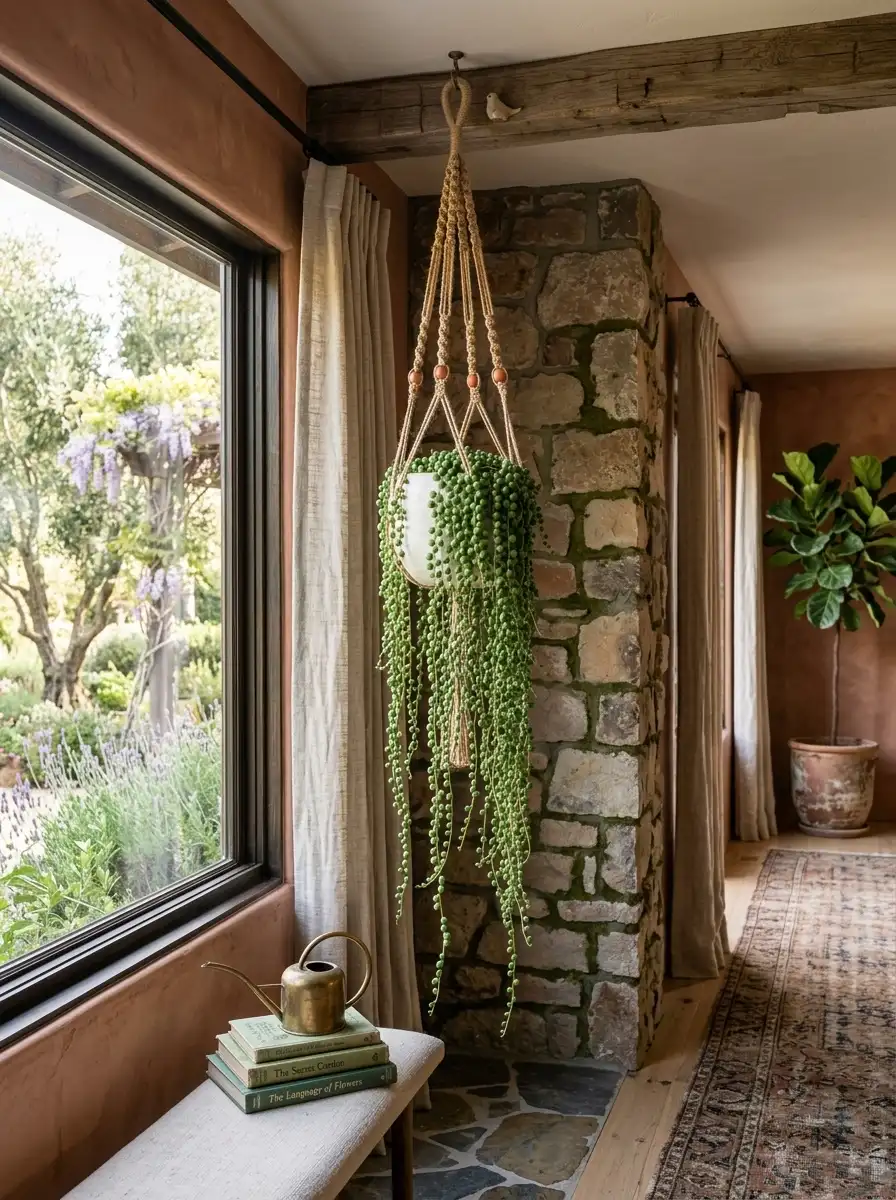
Le collier de perles (Senecio rowleyanus) est l'une des plantes d'intérieur les plus photogéniques — perles rondes vertes sur tiges retombantes — et l'une des plus difficiles à garder pleine au Canada. C'est une succulente sud-africaine qui exige BEAUCOUP de lumière vive : sans fenêtre sud ou ouest, elle décline en quelques mois.
Ce guide couvre tout ce qui est spécifique à la culture du collier de perles dans un foyer canadien — comment lire les perles pour l'arrosage (ratatinées vs molles = problèmes différents!), pourquoi une fenêtre sud est obligatoire, bouturage facile pour remplir une plante clairsemée, et toxicité aux animaux.
Votre plante reçoit-elle assez de lumière cet hiver ?
Un hiver canadien coupe les heures d'ensoleillement de moitié. Voyez ce que votre ville reçoit ce mois-ci et si une lampe de croissance est nécessaire.
🌿 Fiche d'entretien rapide
Collier de perles en bref : Fenêtre sud OBLIGATOIRE — succulente très exigeante en lumière. Arrosage — seulement quand terreau totalement sec. Lire les perles : ridées = soif (sûr); molles/translucides = trop d'eau (danger). Bouturage facile — posez tiges sur terreau. Toxique aux chats et chiens.
Lire les perles — diagnostic critique
La texture des perles vous dit tout sur l'arrosage. C'est le diagnostic le plus important pour cette plante :
✅ Perles dodues et fermes
État optimal — bien arrosée et en santé. Pas besoin d'arroser. Continuez les soins actuels.
⚠️ Perles légèrement ridées/plates
Soif — la plante puise dans ses réserves. C'est le problème SÛR et FACILE. Arrosez à fond et les perles regonflent en 1-2 jours.
✖ Perles molles/translucides/jaunes
Arrosage EXCESSIF — pourriture des racines. DANGEREUX. Arrêtez d'arroser, vérifiez les racines, dépotez si nécessaire.
Comment arroser au Canada
Arrosez seulement quand le terreau est complètement sec. Le collier de perles est très tolérant à la sécheresse — l'arrosage excessif est sa cause de mort #1.
Horaire d'arrosage : Été (mai-sept) : tous les 2-3 semaines. Automne (oct-nov) : tous les 3-5 semaines. Hiver (déc-fév) : tous les 4-6 semaines ou plus. Printemps (mars-avril) : tous les 3-4 semaines. En cas de doute, attendez. Les perles vous diront quand.
L'arrosage excessif tue plus de colliers de perles que tout le reste. Un humidimètre 3-en-1 confirme que le terreau est totalement sec — enfoncez la sonde pour une lecture instantanée d'humidité, lumière et pH. Aucune pile requise.
Lien affilié — GrowersGuide.ca peut toucher une commission sur les achats admissibles, sans frais supplémentaires pour vous. En savoir plus.
Lumière — fenêtre sud non-négociable
Le collier de perles est l'une des plantes d'intérieur les plus exigeantes en lumière qu'on cultive couramment. Sans assez de lumière, il décline irréversiblement.
☀️ Fenêtre sud (idéal)
Soleil direct plusieurs heures par jour. Tiges denses, perles rapprochées. Position optimale canadienne.
🪟 Fenêtre ouest (bon)
Soleil d'après-midi. Croissance saine, parfois moins dense qu'en sud. Bon plan B.
✖ Est ou nord (déclin)
Insuffisant. Les tiges s'amincissent, perles rétrécissent et tombent. Décline sur plusieurs mois.
Soins hivernaux canadiens
Maximisez la lumière — c'est l'enjeu hivernal
La lumière hivernale canadienne est le principal défi. Déplacez vers votre fenêtre sud la plus lumineuse pour la saison. Si pas de fenêtre sud, lampe horticole est presque obligatoire.
Réduisez DRASTIQUEMENT l'arrosage
Passez à tous les 4-6 semaines en hiver. En faible lumière et températures fraîches, le terreau reste mouillé bien plus longtemps. La règle : si vous hésitez, attendez encore.
Arrêtez la fertilisation
Aucune fertilisation de novembre à février. Reprise en mars avec un engrais pour cactus dilué à quart-force, mensuel jusqu'en septembre.
Acceptez un certain amincissement hivernal
Même avec les meilleurs soins, le collier de perles peut s'amincir un peu en hiver canadien. Bouturez les tiges saines au printemps pour reremplir le pot.
Bouturage — secret pour remplir un pot clairsemé
Le collier de perles est l'une des plantes les plus faciles à bouturer. Astuce : au lieu de jeter une plante clairsemée, vous pouvez tailler les tiges saines et les poser sur le même pot pour la remplir.
Choisissez des sections vigoureuses avec perles fermes. Ciseaux propres. Vous pouvez tailler les extrémités d'une plante existante pour la faire pousser plus touffue ou prendre des boutures séparées.
Posez les tiges à plat ou enroulez sur la surface du terreau. Pressez légèrement pour assurer le contact. Pas besoin d'enfouir — les racines sortent des nœuds où les perles touchent le terreau.
Brumisez légèrement (l'exception au "pas de brumisation") pour garder le terreau juste humide. Lumière vive indirecte. Racines en 3-6 semaines. Puis reprenez l'arrosage normal pour succulentes.
Astuce canadienne : au printemps, taillez les bouts des tiges existantes et posez-les sur le terreau du même pot. La plante repousse plus touffue + les boutures remplissent les espaces vides. Une plante clairsemée peut être ravivée en pleine en 2-3 mois.
⚠️ Toxique aux chats et chiens
Le collier de perles est toxique aux chats et chiens. Sève irritante pour la peau humaine aussi. Comme c'est une plante retombante avec tiges qui pendent à portée, c'est un mauvais choix pour foyers avec animaux qui mâchouillent — suspendez bien hors de portée. Pour alternative retombante non-toxique : plante-araignée ou Hoya.
Diagnostic — problèmes courants
Perles ratatinées/plates
Cause : soif. Arrosez à fond. Perles regonflent en 1-2 jours. Problème SÛR et facile à corriger.
Perles molles/translucides
Cause : arrosage excessif + pourriture des racines. URGENT. Dépotez, taillez le pourri, laissez sécher 24-48 h, rempotez dans terreau pour cactus sec. Arrêtez l'arrosage 2 semaines.
Plante nue au centre, vivante aux extrémités
Cause : amincissement par faible lumière ou âge. Taillez les tiges saines et posez-les sur le terreau du pot — elles s'enracineront et rempliront. Améliorez la lumière permanente.
Tiges étirées avec grands espaces entre perles
Cause : manque de lumière. Déplacez vers fenêtre sud. Coupez les sections étirées (bouturez-les) pour encourager une nouvelle croissance compacte.
Questions fréquentes
Pourquoi les perles de mon collier ratatinent ?
Soif — le plus souvent. Arrosez à fond, perles regonflent en 1-2 jours. ATTENTION : si les perles sont molles/translucides (pas juste ridées), c'est l'opposé — arrosage excessif et pourriture. Lisez la texture.
Combien de lumière pour un collier de perles ?
BEAUCOUP. Fenêtre sud ou ouest avec soleil direct plusieurs heures par jour. Une des plantes d'intérieur les plus exigeantes en lumière. Sans fenêtre sud au Canada, lampe horticole presque obligatoire.
Le collier de perles est-il toxique pour les chats ?
Oui — toxique aux chats et chiens. Cause vomissements, salivation et léthargie. Les tiges retombantes sont tentantes pour les animaux. Suspendez hors de portée ou évitez si vous avez des animaux qui mâchouillent.
Mon collier de perles est presque nu — peut-on le sauver ?
Probablement oui. Taillez les tiges saines aux extrémités, posez-les sur le terreau du même pot. Elles s'enracineront et le pot se remplira en 2-3 mois. Améliorez aussi la lumière sinon le problème reviendra.
À quelle fréquence arroser un collier de perles au Canada ?
Arrosez un collier de perles seulement quand le terreau est complètement sec — typiquement tous les 2-3 semaines en été et tous les 4-6 semaines (ou moins) en hiver canadien. C'est une succulente qui stocke l'eau dans ses perles rondes, donc elle tolère bien mieux la sécheresse que l'arrosage excessif. Les perles elles-mêmes sont le meilleur indicateur : perles dodues et fermes = bien arrosée; perles légèrement plates qui ramollissent = soif et prête à boire. Arrosez à fond jusqu'au drainage, videz la soucoupe, et n'arrosez plus avant que le terreau soit complètement sec. L'arrosage excessif est la cause #1 de mort au Canada — terreau détrempé pourrit les fines tiges au niveau du sol et la plante s'effondre.
Pourquoi les perles de mon collier ratatinent-elles ?
Des perles ratatinées, plates ou ridées signifient généralement que la plante a soif — elle puise dans l'eau stockée dans ses feuilles. C'est le problème sécuritaire et facile à corriger : arrosez la plante et les perles se regonflent en un ou deux jours. L'opposé dangereux est : perles molles, translucides, jaunissantes ou qui éclatent — c'est l'arrosage excessif et la pourriture. Lisez la texture : fermes mais légèrement plates et ternes = arrosez; molles, spongieuses et décolorées = arrêtez d'arroser et vérifiez les racines. Le ratatinement peut aussi suivre la pourriture des racines, où les racines endommagées ne peuvent plus absorber l'eau même si le terreau est humide — si le terreau est mouillé et les perles ratatinent quand même, suspectez la pourriture.
Combien de lumière le collier de perles a-t-il besoin au Canada ?
Le collier de perles a besoin de TRÈS lumière vive — c'est l'une des plantes d'intérieur les plus exigeantes en lumière couramment cultivées, et elle prend plusieurs heures de soleil direct. Au Canada, une fenêtre sud ou ouest est idéale toute l'année. La lumière vive garde les tiges pleines et les perles dodues et rapprochées; dans un endroit sombre la plante s'étire, les espaces entre les perles s'agrandissent, les perles rétrécissent et les tiges s'amincissent et meurent. L'hiver est la saison difficile — les jours courts et faibles canadiens sont la raison principale du déclin d'un collier de perles intérieur. Donnez-lui la fenêtre la plus lumineuse de la maison pendant les mois sombres, ou complétez avec une lampe horticole.
Le collier de perles est-il toxique pour les chats et chiens ?
Oui — le collier de perles (Senecio rowleyanus) est toxique aux chats et chiens, et sa sève peut aussi irriter la peau humaine. L'ingestion peut causer vomissements, salivation, léthargie et inconfort digestif chez les animaux. Comme c'est une plante retombante dont les tiges pendent tentamment à portée, c'est un mauvais choix pour les foyers avec chats ou chiens qui mâchouillent les plantes — suspendez-le bien hors de portée ou gardez-le dans une pièce sans animaux. Lavez vos mains après avoir manipulé des tiges cassées. Si vous voulez une plante retombante pet-safe à la place, la plante-araignée ou un Hoya sont tous deux non-toxiques.
Comment bouturer un collier de perles ?
Le collier de perles est l'une des plantes les plus faciles à bouturer. Prenez quelques tiges saines de 8-12 cm de long et soit posez-les à plat sur un terreau pour succulentes sec et aéré, soit enroulez-les sur la surface en pressant doucement les tiges en contact avec le mélange. Les racines se forment aux nœuds — les points le long de la tige où chaque perle est attachée — partout où elles touchent le terreau. Vous pouvez aussi retirer une perle ou deux à une extrémité et glisser cette section nue dans le terreau. Gardez le terreau à peine humide et en lumière vive; les racines s'établissent en quelques semaines. Poser plusieurs tiges sur la surface du pot est aussi l'astuce pour rendre une plante clairsemée et étiolée pleine à nouveau.
Pourquoi mon collier de perles meurt et devient nu ?
Un collier de perles qui s'amincit, avec des tiges nues et perles tombées, indique généralement l'une de trois choses. L'arrosage excessif et la pourriture est le plus fréquent — les tiges ramollissent et meurent du niveau du sol; laissez le terreau sécher complètement et vérifiez les racines. Trop peu de lumière est le suivant — la lumière hivernale canadienne faible fait s'étirer, rétrécir et mourir les tiges; déplacez vers votre fenêtre la plus lumineuse. Le manque d'eau poussé trop loin ratatinera aussi et croustillera les perles jusqu'à ce que les tiges meurent. Comme la plante pousse du sol vers l'extérieur, une plante nue au centre mais vivante aux extrémités des tiges peut être ravivée en taillant les tiges saines et les replaçant sur le terreau pour s'enraciner et remplir le pot.
📖 Autres guides de plantes d'intérieur
Succulentes et plantes retombantes aux côtés du collier de perles.
Vous cultivez aussi des légumes ?
Calendriers de plantation gratuits pour 30+ légumes dans toutes les grandes villes canadiennes.