
Plante de Jade (Crassula) : guide d'entretien au Canada
Comment cultiver et entretenir la plante de jade (Crassula ovata, aussi appelée arbre de jade ou plante d'argent) dans les foyers canadiens — arrosage rare, fenêtre sud essentielle, pourquoi les feuilles tombent, corriger la croissance étiolée d'hiver et bouturage facile.
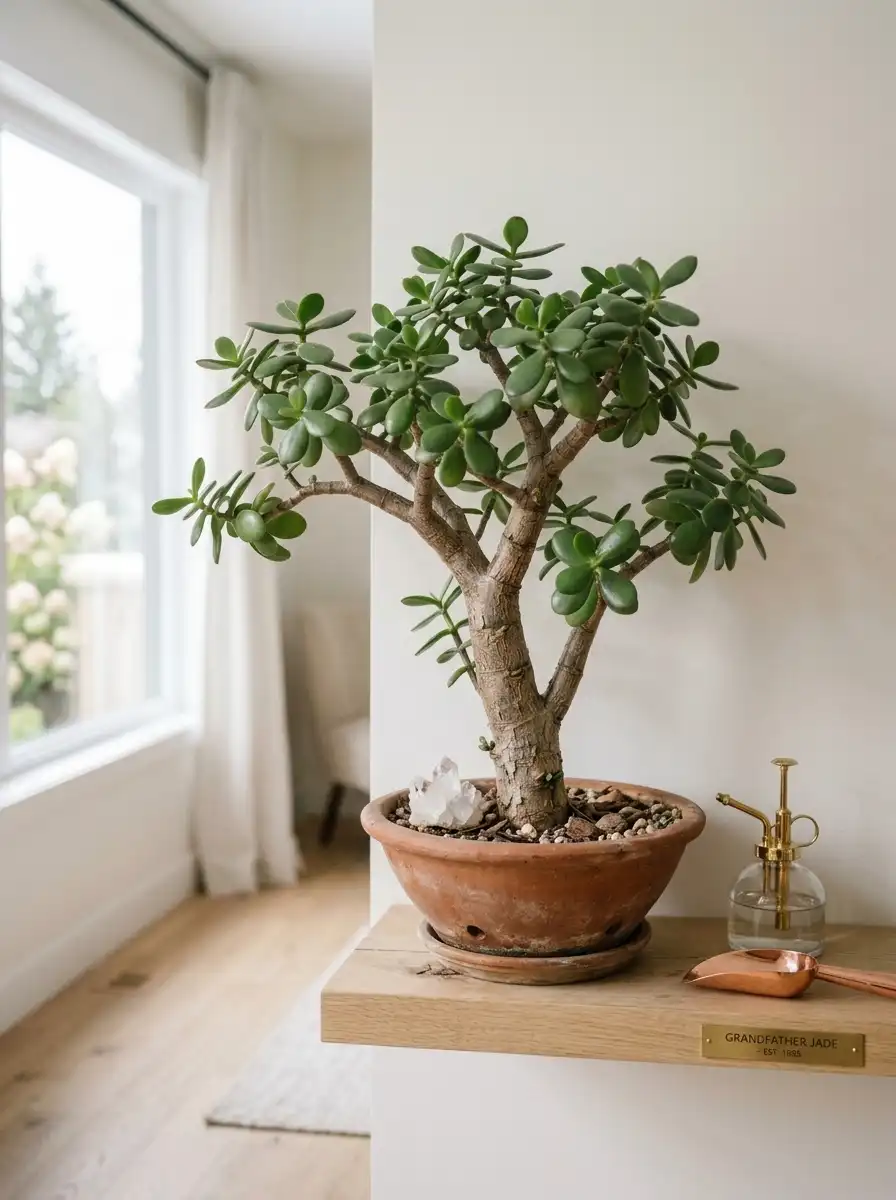
La plante de jade (Crassula ovata, aussi appelée arbre de jade, plante d'argent ou plante porte-bonheur) est l'une des succulentes d'intérieur les plus iconiques au Canada. Elle vit littéralement des décennies — beaucoup de jades canadiens sont des plantes de famille transmises sur 3-4 générations. Comme l'aloès, elle adore le soleil direct (rare avantage pour les fenêtres sud canadiennes en hiver).
Ce guide couvre tout ce qui est spécifique à la culture du jade dans un foyer canadien — pourquoi l'arrosage rare est la clé, comment éviter l'étiolement hivernal, bouturage facile (avec étape critique du callus), et toxicité aux animaux.
Votre plante reçoit-elle assez de lumière cet hiver ?
Un hiver canadien coupe les heures d'ensoleillement de moitié. Voyez ce que votre ville reçoit ce mois-ci et si une lampe de croissance est nécessaire.
🌿 Fiche d'entretien rapide
Plante de jade en bref : Lumière — fenêtre sud, soleil direct OK et préféré. Arrosage — seulement quand totalement sec, tous les 2-3 semaines en été, 4-6+ en hiver. Feuilles tombent = arrosage excessif ou froid. Étirée = manque de lumière hivernale; lampe horticole ou bouture. Toxique aux chats et chiens.
Comment arroser la plante de jade au Canada
Le jade est une succulente — il stocke l'eau dans ses feuilles charnues. Arrosez seulement quand le terreau est complètement sec jusqu'au fond du pot. C'est la règle d'or et la seule difficulté à maîtriser.
Horaire d'arrosage : Été (mai-sept) : tous les 2-3 semaines. Automne (oct-nov) : tous les 3-5 semaines. Hiver (déc-fév) : tous les 4-6 semaines ou plus. Printemps (mars-avril) : tous les 3-4 semaines. La technique : arrosage à fond, puis sécheresse complète avant le suivant.
L'arrosage excessif tue plus de jades que tout le reste. Un humidimètre 3-en-1 confirme que le terreau est sec jusqu'au fond — enfoncez la sonde pour une lecture instantanée d'humidité, lumière et pH. Aucune pile requise.
Lien affilié — GrowersGuide.ca peut toucher une commission sur les achats admissibles, sans frais supplémentaires pour vous. En savoir plus.
Pourquoi les feuilles tombent — 3 causes
Cause #1 : Arrosage excessif
Le plus fréquent. Terreau détrempé pourrit les racines. Feuilles deviennent molles, jaunes, translucides. Solution : laissez sécher complètement, dépotez, vérifiez les racines, taillez le pourri, rempotez dans un terreau pour cactus sec.
Cause #2 : Dommages au froid (hiver canadien)
Le jade ne tolère pas les températures sous 10 °C. Feuilles touchant une vitre canadienne froide ou exposées à un courant d'air d'une porte extérieure tombent. Solution : éloignez 30 cm de toutes les fenêtres et portes en hiver.
Cause #3 : Changement soudain
Déplacement vers beaucoup moins de lumière, ou arrosage soudain après une longue sécheresse, peut déclencher une chute. Une feuille basse occasionnelle tombe = normal. Plusieurs en même temps = problème.
Lumière — fenêtre sud essentielle au Canada
Comme l'aloès, le jade adore le soleil direct (rare parmi les plantes d'intérieur). Au Canada, c'est une recommendation pratique pour les fenêtres sud — l'une des rares plantes qui prospère vraiment là.
☀️ Fenêtre sud (idéal)
Soleil direct toute l'année. Croissance compacte avec marges rouges sur les feuilles (signe de bonne exposition). Choix optimal au Canada.
🪟 Fenêtre ouest (bon)
Soleil direct d'après-midi. Croissance saine, parfois moins compacte qu'en sud. Bon plan B au Canada.
✖ Est ou nord (à éviter)
Lumière insuffisante. La plante s'étire vers la fenêtre, devient pâle, perd sa forme compacte. Choix sous-optimal.
Comment corriger un jade étiolé d'hiver canadien
L'étiolement (longues tiges nues, feuilles espacées et petites) est extrêmement commun en hiver canadien. La lumière de novembre à février est insuffisante pour le jade dans la plupart des emplacements.
- Solution #1 : Plus de lumière — déplacez vers fenêtre sud, ou ajoutez une lampe horticole sur minuterie 12 h de novembre à mars.
- Solution #2 : Taillez la croissance étirée — la croissance existante ne se redensifiera pas, mais les sections taillées peuvent être bouturées. La plante repoussera compacte des nœuds restants si la lumière s'améliore.
- Solution #3 : Acceptez l'étiolement saisonnier — si vous ne pouvez pas améliorer la lumière, attendez le retour de la lumière au printemps. La nouvelle croissance d'avril-septembre sera compacte naturellement.
Bouturage — l'étape critique du callus
Le jade est l'une des plantes les plus faciles à bouturer — mais une étape critique est ratée par presque tous les débutants : laisser la coupure former un cal sec avant de planter. Sans cette étape, la bouture pourrit immédiatement.
Tordez doucement une feuille saine entière (avec sa base). Laissez former un cal 3-5 jours. Posez sur du terreau pour cactus sec — pas besoin de l'enfoncer. Petit plantule + racines en quelques semaines.
Coupez segment de 8-15 cm. Retirez les feuilles du bas. Laissez former un cal 3-7 jours dans un endroit sec et lumineux. Insérez dans terreau pour cactus sec. Attendez 1 semaine avant le premier arrosage.
Laissez l'extrémité coupée sécher complètement 3-7 jours avant le contact avec le terreau. Sans cal, la bouture pourrit. Avec cal, taux de succès très élevé.
⚠️ Toxique aux chats et chiens
La plante de jade (Crassula ovata) est listée comme toxique aux chats et chiens par l'ASPCA. Ingestion cause vomissements, léthargie et perte de coordination. Généralement léger plutôt que mortel mais à éviter. Gardez sur étagère haute ou dans une pièce sans animaux. Pour alternatives non-toxiques succulentes-style : plante-araignée. Pour feuillage tropical non-toxique : calathéa.
Questions fréquentes
À quelle fréquence arroser une plante de jade ?
Seulement quand le terreau est complètement sec — tous les 2-3 semaines en été, tous les 4-6 semaines ou plus en hiver. En cas de doute, attendez.
Pourquoi les feuilles de mon jade tombent-elles ?
3 causes principales : arrosage excessif (le plus fréquent, feuilles molles translucides), dommages au froid des fenêtres canadiennes en hiver, ou changement soudain d'environnement.
Pourquoi mon jade est-il étiré ?
Manque de lumière, surtout en hiver canadien. Solution : fenêtre sud ou lampe horticole. Taillez les sections étirées (bouturez-les) — la nouvelle croissance sera compacte en meilleure lumière.
Le jade est-il toxique pour les chats ?
Oui — toxique aux chats et chiens selon l'ASPCA. Cause vomissements et léthargie. Gardez hors de portée.
À quelle fréquence arroser une plante de jade au Canada ?
Arrosez la plante de jade seulement quand le terreau est complètement sec — typiquement tous les 2-3 semaines en été et tous les 4-6 semaines (ou moins) en hiver canadien. Le jade est une succulente qui stocke l'eau dans ses feuilles et tiges épaisses, donc elle tolère bien mieux la sécheresse que l'arrosage excessif. La méthode fiable est arrosage à fond puis sec complet : arrosez jusqu'au drainage, puis n'arrosez pas avant que le pot entier soit sec comme un os — enfoncez un doigt ou une sonde d'humidimètre jusqu'au fond pour confirmer. En hiver, quand la lumière est faible et la plante pousse à peine, arroser une fois par mois ou moins est correct. L'arrosage excessif est la cause #1 de mort de jade au Canada : feuilles molles, jaunes, translucides et pourriture des racines.
Pourquoi les feuilles de ma plante de jade tombent-elles ?
La chute des feuilles de jade a trois causes courantes au Canada. Arrosage excessif est le plus fréquent — terreau détrempé pourrit les racines et la plante perd des feuilles molles, mou ou translucides; laissez sécher complètement et réduisez drastiquement. Dommages au froid en deuxième — le jade ne tolère pas les températures sous environ 10 °C, et les feuilles qui touchent une vitre canadienne froide en hiver, ou un courant d'air d'une porte extérieure, tombent; déplacez à 30 cm du verre froid. Le troisième est un changement soudain — déplacer un jade vers beaucoup moins de lumière, ou un manque d'eau dur après une longue période sèche, peut déclencher une chute. Un jade en santé ne perd que la feuille du bas occasionnelle; une perte soudaine de plusieurs feuilles indique toujours eau ou froid.
Pourquoi ma plante de jade est-elle étirée et étiolée ?
Un jade étiolé — longues tiges nues avec feuilles espacées et petites — est l'étiolement, causé par trop peu de lumière. C'est extrêmement courant en hiver canadien, quand la lumière du jour est courte et faible. Le jade est une plante de haute lumière : il veut plusieurs heures de soleil direct. Dans un endroit peu lumineux, il s'étire vers la fenêtre, produisant une croissance faible, pâle et largement espacée qui s'affaisse souvent. La solution est plus de lumière — déplacez vers votre fenêtre sud ou ouest la plus lumineuse, ou ajoutez une lampe horticole de novembre à mars. La croissance étirée existante ne se resserrera pas, mais vous pouvez tailler les tiges étirées (les boutures s'enracinent facilement) et la plante repoussera compacte en meilleure lumière.
Les plantes de jade sont-elles toxiques pour les chats et chiens ?
Oui — la plante de jade (Crassula ovata) est listée comme toxique aux chats et chiens par l'ASPCA. L'ingestion peut causer vomissements, léthargie ou dépression, et perte de coordination. Le composé toxique n'est pas entièrement identifié, mais les réactions sont généralement légères plutôt que mortelles. Néanmoins, le jade n'est pas une plante sécuritaire pour les animaux — gardez hors de portée des chats et chiens qui mâchouillent le feuillage, sur une étagère haute ou dans une pièce où les animaux n'ont pas accès. Si vous voulez une plante succulente-style véritablement sécuritaire, considérez la plante-araignée; si vous voulez du feuillage tropical sécuritaire, le calathéa est non-toxique.
Combien de lumière la plante de jade a-t-elle besoin au Canada ?
Les plantes de jade ont besoin de lumière vive avec plusieurs heures de soleil direct — c'est l'une des plantes d'intérieur les plus exigeantes en lumière. Au Canada, une fenêtre sud est idéale toute l'année; une fenêtre ouest est bonne. Les fenêtres est donnent assez de lumière en été mais sont souvent trop faibles en hiver. Contrairement à beaucoup de plantes d'intérieur, le jade veut activement le soleil direct sur ses feuilles — la lumière forte produit une croissance compacte et de belles marges rouges sur les feuilles. Le défi au Canada est l'hiver : journée courte et faible de novembre à février fait que le jade s'étire et devient étiolé. Mettez-le à votre fenêtre la plus lumineuse pour l'hiver, ou complétez avec une lampe horticole.
Comment bouturer une plante de jade ?
Le jade est l'une des plantes d'intérieur les plus faciles à bouturer. Deux méthodes fonctionnent bien. Bouture de feuille : tordez doucement une feuille saine entière, laissez l'extrémité brisée former un cal (sécher) 3-5 jours, puis posez-la sur du terreau pour cactus sec; racines et un petit plantule se forment en quelques semaines. Bouture de tige : coupez un segment de tige 8-15 cm de long, retirez les feuilles du bas, laissez l'extrémité coupée former un cal 3-7 jours, puis insérez dans un terreau pour cactus sec. L'étape du callus est essentielle — planter une coupure fraîche non-callusée dans un terreau humide cause la pourriture. Après plantation, attendez environ une semaine avant le premier arrosage léger, puis arrosez avec parcimonie jusqu'à l'établissement des racines. Printemps et été sont les meilleurs moments pour bouturer au Canada.
📖 Autres guides de plantes d'intérieur
Plantes faciles aux côtés du jade dans les foyers canadiens.
Vous cultivez aussi des légumes ?
Calendriers de plantation gratuits pour 30+ légumes dans toutes les grandes villes canadiennes.