
English Ivy Care Guide — Canada
How to grow English ivy (Hedera helix) as a houseplant in Canadian homes — bright indirect light, even watering, cool rooms, and how to beat the spider mites that are every indoor ivy grower's main battle.
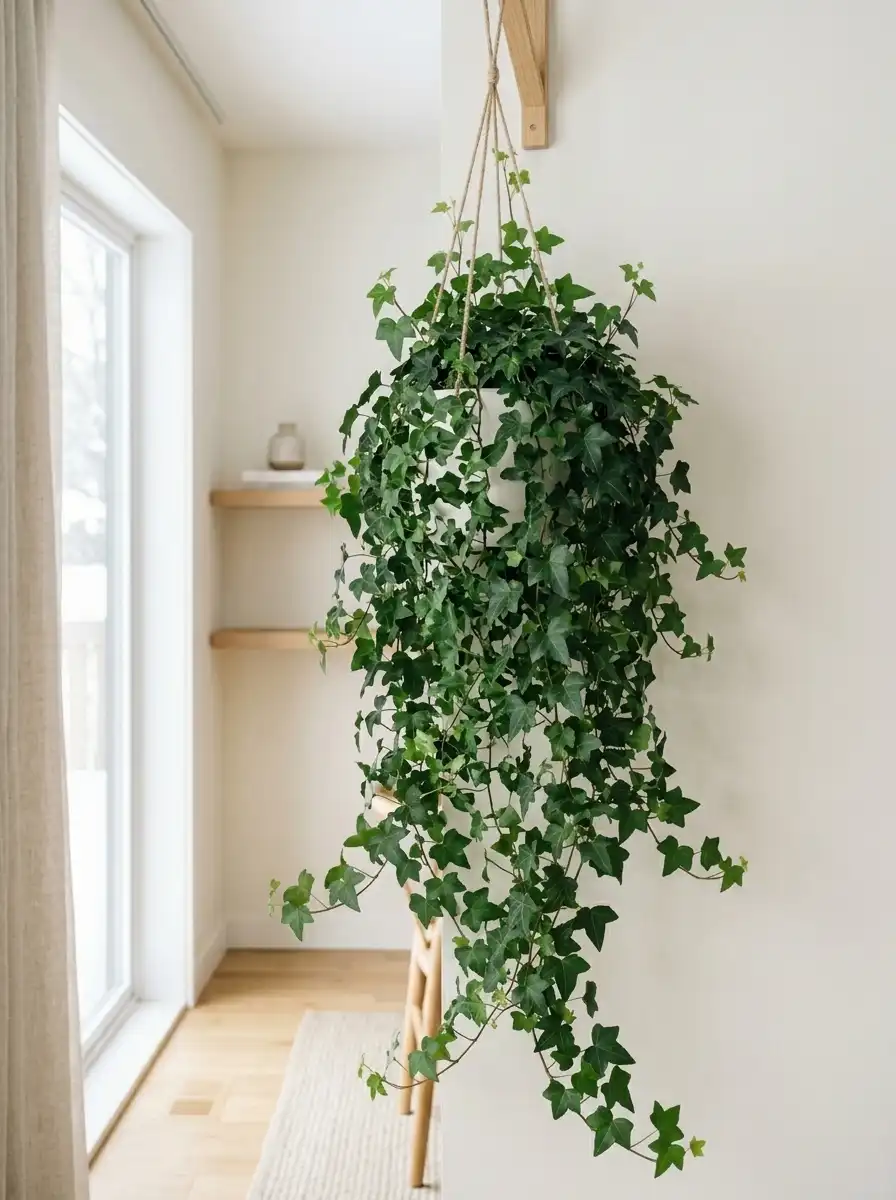
English ivy (Hedera helix) is a classic trailing and climbing houseplant — elegant cascading over a shelf, up a moss pole, or down a hanging basket, and available in a wonderful range of leaf shapes and variegation. Unlike most popular houseplants it actually prefers cooler rooms, which makes it a good fit for the cooler corners of a Canadian home. The one ongoing battle with indoor ivy is spider mites, which love dry winter air — manage humidity and you have a graceful, easy plant.
This guide covers the complete English ivy care routine for Canada — light, even watering, the cool temperatures it prefers, beating spider mites, variety differences, propagation, and an important note on growing ivy responsibly.
English ivy at a glance: Water — keep evenly moist, when top 2–3cm dry. Light — bright indirect, no harsh sun. Temperature — prefers cool rooms (10–21°C). Main pest — spider mites in dry winter air. Pets — no, toxic to cats and dogs ⚠️
Is your English Ivy getting enough light this winter?
A Canadian winter cuts daylight roughly in half. See what your city actually gets this month, and whether a grow light is needed.
🌿 English Ivy Quick Care Card
Spider Mites — the Main English Ivy Battle in Canada
If there is one thing that defeats indoor English ivy in Canada, it is spider mites. Ivy is one of their favourite hosts, and the dry air of a Canadian home in winter is exactly the warm, arid environment they breed fastest in. Catching them early and managing humidity is the whole game.
How to spot them
Look for fine webbing in the leaf joints, pale yellow stippling or speckling across the leaves, and an overall dull, dusty appearance. Spider mites are tiny — check the leaf undersides, ideally with a magnifier. A badly affected ivy looks faded and limp and sheds leaves. Inspect a new ivy carefully before bringing it home, and keep checking through the winter.
How to treat them
Isolate the plant. Rinse it thoroughly in the shower or sink to physically wash mites off — including the leaf undersides — and repeat weekly. Wipe the leaves, then treat with insecticidal soap every few days until the mites are gone, as eggs hatch in waves. Cutting back a heavily infested vine and starting over from clean cuttings is sometimes the simplest fix.
How to prevent them
Humidity is the best prevention. Run a humidifier or use a pebble tray through the Canadian heating season, and keep ivy in a cooler room — spider mites breed far slower in cool, humid conditions than in warm, dry ones. A regular rinse in the shower every few weeks keeps populations from building. Healthy, well-lit, humid ivy rarely has a serious mite problem.
Light Requirements for English Ivy in Canada
English ivy does best in bright indirect light indoors. It tolerates medium light, but in a dim spot it grows leggy and loses its variegation. Avoid harsh direct sun through glass, which scorches the leaves.
Bright Indirect — Best
An east or north window, or set back from a south/west window. Compact growth and strong variegation. Best for the cream- and gold-marked varieties.
Medium — Acceptable
Further from a window. Plain green varieties cope; growth slows and stretches a little. Move it brighter in a Canadian winter.
Low Light / Direct Sun — Avoid
Deep shade gives leggy, sparse growth and faded variegation; harsh direct sun scorches the leaves. Avoid both extremes.
Canadian houseplants run short on light all winter. From November to March most homes are too dim to keep plants growing — leaves stretch toward the window, variegation fades, and new growth stalls. A small full-spectrum LED grow light on a timer bridges the dark months, even for tough low-light plants that only survive (rather than grow) in a dim room.
Affiliate link — GrowersGuide.ca may earn a commission on qualifying purchases, at no extra cost to you. See our affiliate disclosure.
Not sure which light, how close or how many hours? Our guide to grow lights for indoor plants covers distance, timers and which houseplants actually need one.
English Ivy Varieties at Canadian Garden Centres
Hedera helix comes in dozens of cultivars with very different leaf shapes, sizes, and variegation. All share the same care — bright indirect light, even moisture, cool rooms, and a humidity routine to keep spider mites down.
| Variety | Look | Notes |
|---|---|---|
| Glacier | Grey-green leaves edged in creamy white | One of the most popular variegated ivies; bright light keeps the white crisp |
| Needlepoint | Small, narrow, sharply pointed deep-green leaves | Fine-textured and tidy; a compact, elegant trailer |
| Gold Child | Green leaves with bright golden-yellow margins | Wants good light to hold the gold edge |
| Duckfoot | Tiny three-lobed leaves shaped like a duck's foot | Dense, small-leaved; charming in small pots |
| Ivalace | Glossy dark-green leaves with ruffled, curled edges | Textured, lacy look; popular ornamental cultivar |
| California / Pittsburgh | Classic five-lobed mid-green ivy leaves | The traditional plain-green ivy; vigorous and easy |
How to Water English Ivy in Canada
Keep the soil lightly and evenly moist — water when the top 2–3 cm has dried. English ivy is not drought-tolerant and crisps if it dries out fully, but it also dislikes soggy soil. Water thoroughly until it drains, empty the saucer, and water again when the surface has dried slightly.
English ivy watering schedule — Canada: Summer (May–Sept): every 5–7 days. Fall (Oct–Nov): every 7–10 days. Winter (Dec–Feb): every 10–14 days. Spring (Mar–Apr): every 5–7 days. Always check the top 2–3 cm first, and use room-temperature water. Water thoroughly until drainage; empty the saucer after 30 minutes.
Overwatering is a common way to lose an indoor English ivy. A 3-in-1 soil meter shows you exactly when the root zone is dry — push the probe in for an instant moisture, light, and pH reading. No batteries needed.
Affiliate link — GrowersGuide.ca may earn a commission on qualifying purchases, at no extra cost to you. See our affiliate disclosure.
Why no fixed schedule works: How fast soil dries depends on temperature, light, pot material, room humidity, and plant size. An English ivy in a bright warm room dries far faster than one in a cool, dim winter corner. The top 2–3 cm finger test automatically accounts for all of these. See what affects soil drying rate →
Track watering for your English ivy with the free GrowersGuide app. Pick your plant, and it adds a reminder to your phone calendar when it is time to water. No account needed.
Temperature — English Ivy Likes It Cool
Unlike most popular tropical houseplants, English ivy actually prefers cooler conditions — it is happiest around 10–21°C and welcomes cool nights. This makes it a genuinely useful plant for the cooler spots in a Canadian home: a chilly entryway, a cool bedroom, a north-facing room, or a bright basement — places where a tropical plant would sulk. It also means ivy is less stressed by the cooler air near a Canadian window than a warmth-loving plant would be (though you should still keep its leaves off freezing glass). The practical bonus: cooler rooms also slow down spider mites, ivy's main pest. Just avoid the hottest, driest spots in the house, such as right beside a heating vent.
How to Propagate English Ivy
English ivy is one of the easiest houseplants to propagate — cuttings root readily in plain water. Spring and summer are the best times. Wear gloves, as the sap can irritate skin.
Take a stem cutting
Cut a healthy stem 10–15 cm long with several leaves, snipping just below a node (the point where a leaf joins the stem). Strip the lowest one or two leaves so a bare node is exposed — that is where roots form.
Root in water or soil
Stand the cutting in a glass of water on a bright windowsill, refreshing the water weekly; roots usually appear in 2–4 weeks. Once roots are a few centimetres long, pot it into moist, well-draining soil. Cuttings also root directly in lightly moist soil. Planting several rooted cuttings together gives a full, lush pot much faster.
Refilling a leggy plant
If your ivy has gone thin and leggy, propagation doubles as the fix: trim the long bare vines, root the healthy cuttings, and pot them back into the same container to fill it out. Regular trimming also keeps an ivy bushy and dense rather than straggly.
Rooting English Ivy in Water
Water is the easiest way to root English ivy, and you can watch it work. Use a narrow glass or jar so the cuttings stand up, and set it in bright light out of direct sun. Only the bare nodes belong under water: any leaf left below the surface rots and clouds the water. Change the water every few days, or as soon as it looks cloudy.
Small white roots usually appear at the nodes within two to four weeks, a little slower on a cool windowsill in January. Pot the cuttings once the roots are a few centimetres long. Roots grown in water are softer than roots grown in soil, so keep the new pot evenly moist for the first few weeks while they adjust; a cutting left in a jar for months has a harder move. Ivy can live in water for a long time, but it grows better, and stays fuller, in soil.
Wear gloves when you take cuttings. Keep the jar where a cat or dog cannot chew the leaves or drink the water. More plants that root this way are in plants that grow in water, and the full ranking is in the easiest houseplants to propagate.
Why Are My English Ivy Leaves Turning Brown or Yellow?
English ivy tells you quickly when something is wrong, and in a Canadian house most leaf problems come from the same three things: soil that dried out, air that is hot and dry, or spider mites. Look at where the damage is and how fast it came, and the cause is usually plain.
| What you see | Usual cause | What to do |
|---|---|---|
| Leaves turning brown and crisp, edges first | The soil dried out completely, or the plant sits near a heat register or radiator | Water before the pot dries right through; move it away from the heat |
| Pale speckles, then dull brown leaves | Spider mites | Check the undersides; rinse and treat as in the spider mite section above |
| Brown patches on the side facing the window | Direct sun through the glass, or leaves pressed against cold glass in winter | Pull it back from the pane; filter strong sun with a sheer curtain |
| Soft brown or black leaves near the soil, wet mix | Too much water; the roots are rotting | Let it dry more; check the roots and repot in fresh mix if they are brown and mushy |
| Yellow leaves, many at once | Soggy soil, or a pot with no drainage | Water less often; make sure water runs out of the pot and the saucer is emptied |
| A few yellow leaves low on old stems | Normal ageing | Pick them off |
| Brown tips and edges on otherwise healthy leaves | Dry winter air, or fertilizer salts building up in the mix | Add humidity; flush the pot with plenty of water now and then; feed lightly |
English ivy drying up
When whole vines go dry and brittle from the tips back, the usual story is a pot that dried out completely once or twice in a warm room, often near a heat register, often with spider mites making it worse. Ivy does not recover dead stems. Cut the dry vines back to green growth, keep the soil evenly moist from now on, raise the humidity, and check for mites. If most of the plant is gone, root the healthiest tips and start a fresh pot.
English ivy dropping leaves
A few old leaves dropping from the bare base of long stems is normal. Leaves falling all along the stems is not. Look for spider mites first. Then think about what changed: a plant moved to a darker spot, a pot left to dry right out, a cold draught from a door or window, or a sudden spell of dry heat when the furnace came on in the fall. Fix the conditions and the new growth comes in full; trimming the bare stems back makes the plant bush out again.
English Ivy Troubleshooting
Webbing, stippled or dusty-looking leaves
Spider mites — the number-one English ivy problem indoors. Isolate the plant, rinse it thoroughly (undersides too), raise the humidity, and treat with insecticidal soap every few days until clear. Cooler, more humid conditions prevent them returning.
Leggy growth, fading variegation
Too little light. Move to a brighter window — variegated ivies in particular need good light to hold their cream and gold markings. Trim leggy vines back to encourage bushier growth, and root the cuttings.
English Ivy Outdoors in Canada: Hardiness by Zone
English ivy is an evergreen vine, and outdoors it is hardier than its houseplant reputation suggests. Virginia Tech Extension rates the species for US zones 4 to 9, depending on the cultivar, and notes that some cultivars are not hardy even in zone 6. The University of Connecticut adds that variegated and fancy-leaved forms tend to be less hardy than plain green ones, so the Glacier or Gold Child in your living room is the wrong ivy to test outside.
US and Canadian zone numbers are not the same scale: the US map is built from winter lows alone, the Natural Resources Canada map from several climate measures. So read the table below as a rule of thumb, not a guarantee. It groups the cities on this site by their NRCan zone. Even where ivy survives, its leaves often brown over winter wherever they stick up above the snow; snow cover and a shaded, sheltered spot help most.
| Where | What to expect outdoors |
|---|---|
| Coastal BC Nanaimo (9a), Vancouver (9a), Victoria (9a), Abbotsford (8b), Burnaby (8b), Chilliwack (8b), Surrey (8b) | Fully hardy, evergreen, and it spreads. This is where English ivy is an invasive plant. Do not plant it. |
| Zones 6 and 7 Windsor (7b), Hamilton (7a), Kelowna (7a), Mississauga (7a), Niagara Falls (7a), St. Catharines (7a), Toronto (7a), Brampton (6b), Halifax (6b), Kamloops (6b), London (6b), Markham (6b), Oshawa (6b), Guelph (6a), Kingston (6a), Kitchener (6a), St. John's (6a) | Plain green types usually survive in a shaded, sheltered spot. Leaves above the snow often brown by March; new growth replaces them. |
| Zone 5 Barrie (5b), Charlottetown (5b), Laval (5b), Montreal (5b), Saint John (5b), Sydney (5b), Corner Brook (5a), Fredericton (5a), Gatineau (5a), Moncton (5a), Ottawa (5a), Quebec City (5a), Sherbrooke (5a), Trois-Rivières (5a) | Borderline. Expect dieback in a hard winter, and losses where there is no snow cover. Variegated types rarely make it. |
| Zone 4 and colder Lethbridge (4b), Medicine Hat (4b), Prince George (4b), Sudbury (4b), Calgary (4a), Edmonton (4a), Red Deer (3b), Thunder Bay (3b), Winnipeg (3b), Brandon (3a), Regina (3a), Saskatoon (3a), Prince Albert (2b), Thompson (1a) | Not reliable outdoors. Grow it as a houseplant, or in a pot that comes inside before the first frost. |
Zones are the Natural Resources Canada zones used across this site. Not on the list? Find your zone.
English ivy is invasive in British Columbia
The Invasive Species Council of BC lists English ivy as an invasive evergreen vine that smothers native plants and is of little use to most wildlife. It is concentrated in southwestern BC, on the coast and the islands, where it spreads as a dense mat over the ground or climbs into trees. In coastal BC, do not plant it in the garden. Ask a garden centre for a native or non-invasive groundcover instead.
Wherever you live, the second rule matters just as much: never dump ivy trimmings or an unwanted plant in a ravine, a park or the backyard compost, where cut stems can root. Bag ivy waste for the garbage. A potted ivy indoors poses no invasive risk at all.
Is English Ivy Toxic to Cats and Dogs?
Yes. The ASPCA lists English ivy (Hedera helix) as toxic to dogs, cats and horses. The toxic principle it names is triterpenoid saponins (hederagenin), and the signs it lists are vomiting, abdominal pain, drooling and diarrhea. It also notes that the leaves are more toxic than the berries.
A trailing ivy hangs right at cat height, so grow it high up, or in a room your pets do not use, and keep jars of cuttings out of reach too. If a pet eats part of an ivy, call your vet or a pet poison line. Our houseplants and pets guide lists safer trailing plants.
Frequently Asked Questions
Is English ivy a good houseplant for a cool Canadian room?
Yes — it is one of the few popular houseplants that genuinely prefers cool conditions. English ivy is happiest around 10–21°C and welcomes cool nights, so it suits a chilly entryway, a cool bedroom, a north room, or a bright basement — spots where tropical plants struggle. Cool rooms also slow down spider mites, ivy's main pest. The catch is humidity: keep the air from getting too dry, and keep the ivy's leaves off freezing window glass.
Can I grow English ivy in a hanging basket?
Yes — English ivy is a natural for hanging baskets and high shelves, its stems cascading gracefully over the edge. It can also be trained up a moss pole or a small trellis, or clipped into a topiary shape. Whichever way you grow it, give it bright indirect light, keep the soil evenly moist, and trim regularly to keep it full. Remember the plant is toxic to pets, so a hanging basket well out of a cat's reach is also the safer choice.
Why does my English ivy keep dying back?
The two usual culprits are spider mites and heat-plus-dryness. A hidden spider-mite infestation slowly drains an ivy until vines brown and die — check the leaf undersides carefully. The other cause is keeping ivy too warm and too dry: it dislikes hot, arid spots near heating vents and dry rooms. Move it somewhere cooler and more humid, keep the soil evenly moist, rinse the plant regularly, and trim out dead growth. Healthy ivy in cool, humid, bright conditions is tough and long-lived.
Should I worry about English ivy being invasive?
Only for outdoor planting and disposal — not for growing it indoors in a pot. English ivy is invasive outdoors in mild parts of Canada, especially coastal BC, where it overruns native plants and damages trees. So don't plant it in the garden there, and never dump ivy trimmings or an old plant into a ravine, green space, or backyard compost where it can take root. Bag ivy waste for the garbage. As a contained indoor houseplant it is perfectly fine.
How often should I water English ivy in Canada?
Water English ivy when the top 2–3 cm of soil has dried — typically every 5–7 days in summer and every 10–14 days in a Canadian winter. English ivy likes its soil kept lightly and evenly moist: it is not drought-tolerant like a succulent, and letting it dry out fully causes crispy leaves and dieback. At the same time it dislikes sitting in soggy soil, which rots the roots. Water thoroughly until it drains, empty the saucer, and water again when the surface has dried slightly. Indoor ivy is more often harmed by overwatering than underwatering, so check the soil by touch rather than watering on a fixed schedule. Use room-temperature water.
How much light does English ivy need indoors in Canada?
English ivy does best in bright indirect light indoors — near an east or north window, or a little back from a south or west window. It tolerates medium light, but in a genuinely dim spot it grows leggy, with widely-spaced leaves, and variegated types lose their cream and gold markings, reverting toward plain green. Avoid harsh direct sun through glass, which scorches the leaves. In a dark Canadian winter, move ivy closer to your brightest window to keep growth compact and variegation strong. Good light also keeps the plant denser, which makes it less hospitable to spider mites.
Why does my English ivy keep getting spider mites?
Spider mites are the number-one problem with English ivy grown indoors, and dry air is why. Spider mites thrive in the warm, dry conditions of a Canadian home in winter, when forced-air heating drops humidity to 25–30%, and English ivy is one of their favourite targets. Watch for fine webbing, pale stippling or speckling on the leaves, and a dull, dusty look. To fight them: raise humidity with a humidifier or pebble tray, rinse or shower the plant regularly to physically knock mites off, wipe the leaves, and treat with insecticidal soap every few days until they are gone. Keeping the plant in a cooler room with better humidity is the best long-term prevention.
Why are my English ivy leaves turning brown?
Usually the soil dried out completely, or the plant sits near a heat register in dry winter air. Pale speckles that turn into dull brown leaves mean spider mites, so check the undersides. Brown patches on the window side point to direct sun or cold glass, and soft brown leaves near wet soil point to overwatering and root rot. Keep the soil evenly moist, move it away from heat, add humidity and check for mites.
Why is my English ivy dropping leaves?
A few old leaves falling from the base of long stems is normal. Leaves dropping all along the stems usually follows a change: spider mites, a pot left to dry right out, a move to a darker spot, a cold draught, or the furnace coming on in the fall. Fix the conditions and trim bare stems back so it bushes out again.
Can you root English ivy in water?
Yes, it is one of the easiest plants to root in water. Take a 10 to 15 cm cutting, strip the lower leaves so the nodes are bare, and stand it in a narrow glass with only the nodes under water. Change the water every few days. Roots usually show in two to four weeks; pot the cuttings once the roots are a few centimetres long and keep the soil evenly moist for the first weeks.
Are English ivy plants toxic to cats and dogs?
Yes — English ivy (Hedera helix) is toxic to both cats and dogs according to the ASPCA. The leaves contain compounds that cause vomiting, drooling, abdominal pain, and diarrhea if chewed; the foliage is more toxic than the berries. The sap can also cause skin irritation and allergic dermatitis in some people, so wear gloves when pruning or propagating. Because English ivy is a trailing plant whose stems dangle within easy reach, it is a poor choice for homes with cats or dogs that chew plants — hang it well out of reach or keep it in a pet-free room. Spider plants are a non-toxic trailing alternative.
How do I propagate English ivy?
English ivy is one of the easiest houseplants to propagate. Take a stem cutting 10–15 cm long with several leaves, cutting just below a node (the point where a leaf joins the stem, where roots emerge). Strip the lowest leaves and place the cutting in a glass of water on a bright windowsill — roots usually appear within 2–4 weeks. Once roots are a few centimetres long, pot the cutting into moist, well-draining soil. Cuttings also root directly in soil if kept lightly moist. Spring and summer are the best times. Planting several rooted cuttings together gives a fuller pot faster. Wear gloves, as the sap can irritate skin.
Can I plant English ivy outdoors in Canada?
It depends on your zone, and in coastal BC the answer is no. Virginia Tech Extension rates English ivy for US zones 4 to 9 depending on the cultivar, and plain green types are hardier than variegated ones. In the milder parts of southern Ontario and the Maritimes (Canadian zones 6 and 7) plain green ivy usually survives in a shaded, sheltered spot, though leaves above the snow often brown by spring. Zone 5 is borderline, and zone 4 and colder is not reliable. In southwestern BC, the Invasive Species Council of BC lists it as invasive, so do not plant it there. Wherever you are, bag ivy trimmings for the garbage rather than dumping them where they can root.
🐾 Have pets? See our houseplants and pets guide — which common houseplants are toxic to cats and dogs, which are safe, and what to do if a pet eats one.
📖 More Houseplant Guides
Care guides for popular Canadian houseplants.
Also Growing Vegetables?
Free planting calendars for 30+ vegetables across every major Canadian city.