
Guide d'entretien du Lierre Anglais — Canada
Comment cultiver et entretenir le lierre anglais (Hedera helix) en intérieur dans les foyers canadiens — lumière, arrosage régulier, pièces fraîches, et comment vaincre les tétranyques qui aiment l'air sec du chauffage canadien.
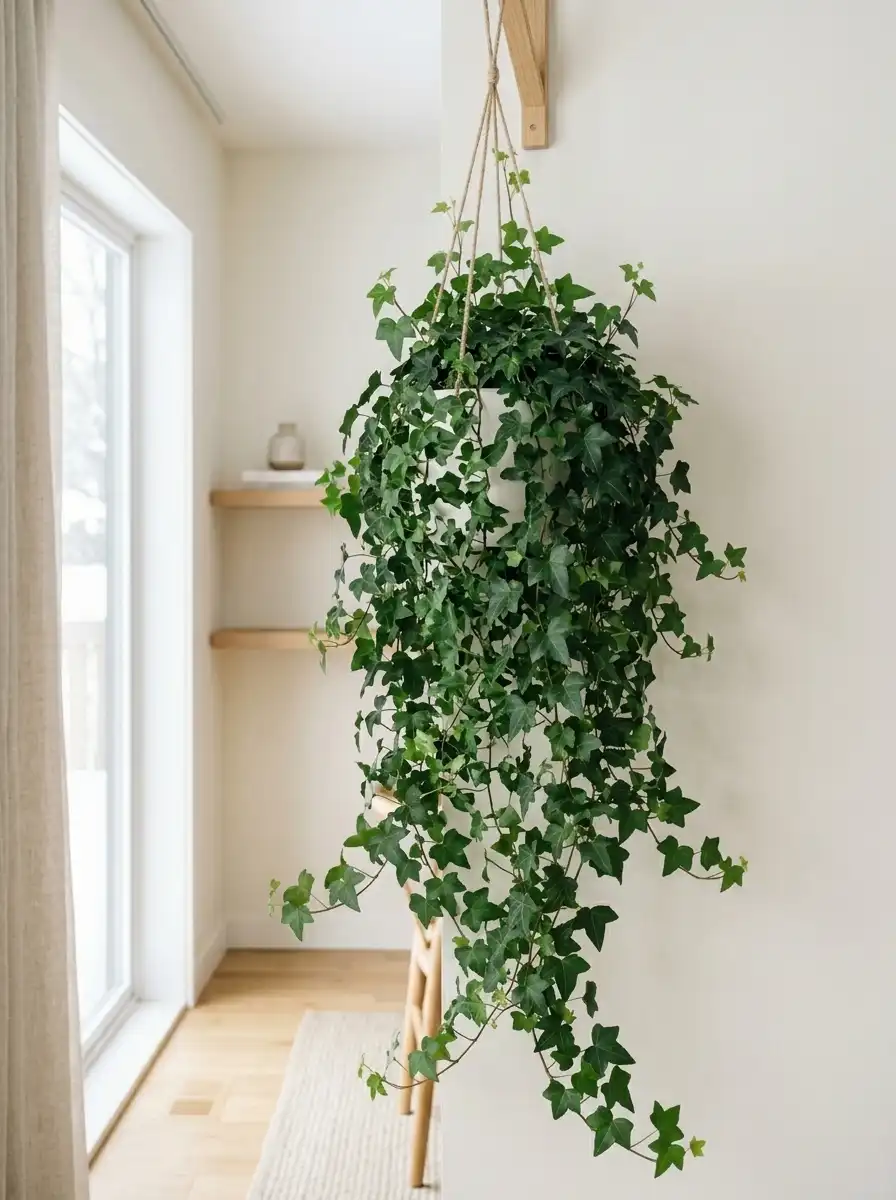
Le lierre anglais (Hedera helix) est l'une des vignes retombantes classiques des foyers canadiens — feuilles lobées élégantes, croissance retombante généreuse. Mais c'est aussi la plante d'intérieur la plus ciblée par les tétranyques en hiver canadien (air sec du chauffage = paradis pour eux).
Ce guide couvre tout ce qui est spécifique à la culture du lierre anglais dans un foyer canadien — pourquoi il préfère les pièces fraîches (la plupart des plantes d'intérieur préfèrent la chaleur), comment combattre les tétranyques, et l'avertissement environnemental crucial pour les jardiniers de la C.-B.
Votre plante reçoit-elle assez de lumière cet hiver ?
Un hiver canadien coupe les heures d'ensoleillement de moitié. Voyez ce que votre ville reçoit ce mois-ci et si une lampe de croissance est nécessaire.
🌿 Fiche d'entretien rapide
Lierre anglais en bref : Préfère pièces FRAÎCHES (13-20 °C), pas les pièces chauffées typiques. Tétranyques sont l'ennemi #1 en hiver canadien — humidité 50 %+ requise. Lumière — vive indirecte. Toxique aux chats/chiens, sève irritante. NE PAS planter dehors en C.-B. — envahissant.
Tétranyques — l'ennemi #1 du lierre anglais au Canada
Le lierre anglais d'intérieur attrape les tétranyques plus que presque toute autre plante. La raison : air sec du chauffage à air pulsé canadien (25-30 % d'humidité hivernale) = paradis pour tétranyques.
Signes de tétranyques
Fines toiles entre les tiges et feuilles. Piqûres ou tachetures pâles. Feuilles ternes et poussiéreuses. Inspectez sous les feuilles régulièrement — où ils se cachent.
Plan de bataille
1) Douchez la plante à fond pour déloger les tétranyques (évier ou douche). 2) Essuyez les feuilles avec un tissu humide. 3) Traitez avec savon insecticide ou neem tous les 3-5 jours. 4) Augmentez l'humidité — humidificateur, plateau à galets, ou déplacez vers salle de bain. 5) Répétez 2-3 semaines pour briser le cycle de vie.
Prévention long terme
Pièce plus fraîche + humidificateur = environnement hostile aux tétranyques. Le lierre anglais préfère naturellement les pièces fraîches (13-20 °C) — l'inverse de la plupart des tropicales. Une chambre d'amis non chauffée ou un sous-sol éclairé sont parfaits.
Pourquoi il préfère les pièces fraîches
Contrairement à la plupart des plantes d'intérieur tropicales (qui préfèrent 18-27 °C), le lierre anglais est natif des forêts tempérées d'Europe — il préfère 13-20 °C. Trop chaud + air sec = stress + tétranyques garantis.
- Emplacements idéaux au Canada : chambres d'amis peu chauffées, vestibules éclairés, sous-sols éclairés, près d'une fenêtre est froide (loin de la vitre mais dans la pièce plus fraîche).
- Évitez : pièces principales chauffées à 22-24 °C, près des bouches de chauffage, fenêtres sud chaudes.
- Bonus : pièces fraîches sont aussi naturellement plus humides — double bénéfice contre les tétranyques.
Comment arroser au Canada
Terreau légèrement et uniformément humide — pas détrempé, pas sec. Vérifiez au toucher tous les 2-3 jours.
Horaire d'arrosage : Été (mai-sept) : tous les 5-7 jours. Automne (oct-nov) : tous les 7-10 jours. Hiver (déc-fév) : tous les 10-14 jours. Printemps (mars-avril) : tous les 5-7 jours. Eau à température ambiante.
Le lierre anglais veut un équilibre — pas sec, pas détrempé. Un humidimètre 3-en-1 trouve l'équilibre exact — enfoncez la sonde pour une lecture instantanée d'humidité, lumière et pH. Aucune pile requise.
Lien affilié — GrowersGuide.ca peut toucher une commission sur les achats admissibles, sans frais supplémentaires pour vous. En savoir plus.
Bouturage (très facile)
L'une des plantes les plus faciles à bouturer. Portez des gants — sève irritante pour la peau.
Plusieurs feuilles. Coupez juste sous un nœud (point où feuille rencontre tige). Retirez les feuilles du bas. Portez des gants.
Verre d'eau sur rebord lumineux. Racines en 2-4 semaines. Empotez quand racines à quelques cm. Plusieurs boutures ensemble = pot plus plein plus vite.
⚠️ Espèce envahissante en Colombie-Britannique
Le lierre anglais est agressivement envahissant sur la côte sud-ouest de la C.-B. (climat doux). Il étouffe les plantes indigènes et endommage les arbres. NE plantez JAMAIS dehors en C.-B. Et ne jetez pas les tailles ou plantes non désirées dans des espaces verts ou compost — mettez aux ordures (sacs scellés). Cultivé en pot à l'intérieur, aucun risque. Dans le reste du Canada, pas rustique pour planter dehors de toute façon.
Soins hivernaux canadiens
Surveillez les tétranyques chaque semaine
L'hiver canadien sec = saison des tétranyques. Inspectez sous les feuilles, cherchez les fines toiles. Plus tôt vous attrapez = plus facile à traiter.
Humidificateur + pièce fraîche
Combinaison gagnante : humidité 50 %+ et pièce 13-20 °C. Décourage les tétranyques + bonne santé de la plante.
Réduisez l'arrosage
Tous les 10-14 jours en hiver. Mais ne laissez jamais sécher complètement (cause de chute de feuilles).
Arrêtez la fertilisation novembre-février
Reprise en mars avec engrais équilibré dilué à demi-force, mensuel jusqu'en septembre.
⚠️ Toxique aux chats et chiens + sève irritante
Toxique aux chats et chiens — cause vomissements, salivation, douleurs abdominales. Le feuillage est plus toxique que les baies. La sève cause aussi de la dermatite chez les humains sensibles. Portez des gants. Comme c'est retombant à portée des animaux, suspendez haut ou évitez. Alternative non-toxique retombante : plante-araignée ou Hoya.
Diagnostic — problèmes courants
Tétranyques (toiles + feuilles tachetées)
Cause : air sec + pièce chaude. Voir plan de bataille ci-dessus. Plante fraîche + humide = prévention.
Feuilles brunes croustillantes
Cause : manque d'eau ou air sec. Vérifiez le terreau, augmentez l'humidité.
Feuilles jaunes
Cause : arrosage excessif. Réduisez la fréquence, vérifiez le drainage.
Panachure perdue
Cause : manque de lumière. Déplacez vers fenêtre est ou ouest. Les nouvelles feuilles seront panachées en meilleure lumière.
Questions fréquentes
Pourquoi mon lierre anglais a-t-il toujours des tétranyques ?
Air sec et chaud des foyers canadiens en hiver = paradis pour tétranyques. Solution : humidificateur, pièce plus fraîche (13-20 °C), traitement régulier avec savon insecticide. Le lierre préfère naturellement les pièces fraîches.
Le lierre anglais est-il toxique pour les chats ?
Oui — toxique aux chats et chiens selon l'ASPCA. Cause vomissements et douleurs abdominales. Suspendez haut ou évitez en présence d'animaux qui mâchouillent.
Puis-je planter le lierre anglais dans mon jardin ?
En C.-B. côtière : NON — envahissant. Ailleurs au Canada : pas rustique de toute façon. À l'intérieur en pot est la seule façon responsable au Canada.
Comment bouturer le lierre anglais ?
Bouture de tige 10-15 cm sous un nœud dans l'eau. Racines en 2-4 semaines. Très facile. Portez des gants — sève irritante.
📖 Autres guides de plantes d'intérieur
Plantes retombantes aux côtés du lierre anglais.
Vous cultivez aussi des légumes ?
Calendriers de plantation gratuits pour 30+ légumes dans toutes les grandes villes canadiennes.