
Growing Coneflowers in Canada
A tough, sun-loving perennial that asks for very little. The one thing most people do wrong is tidy it up in the fall.
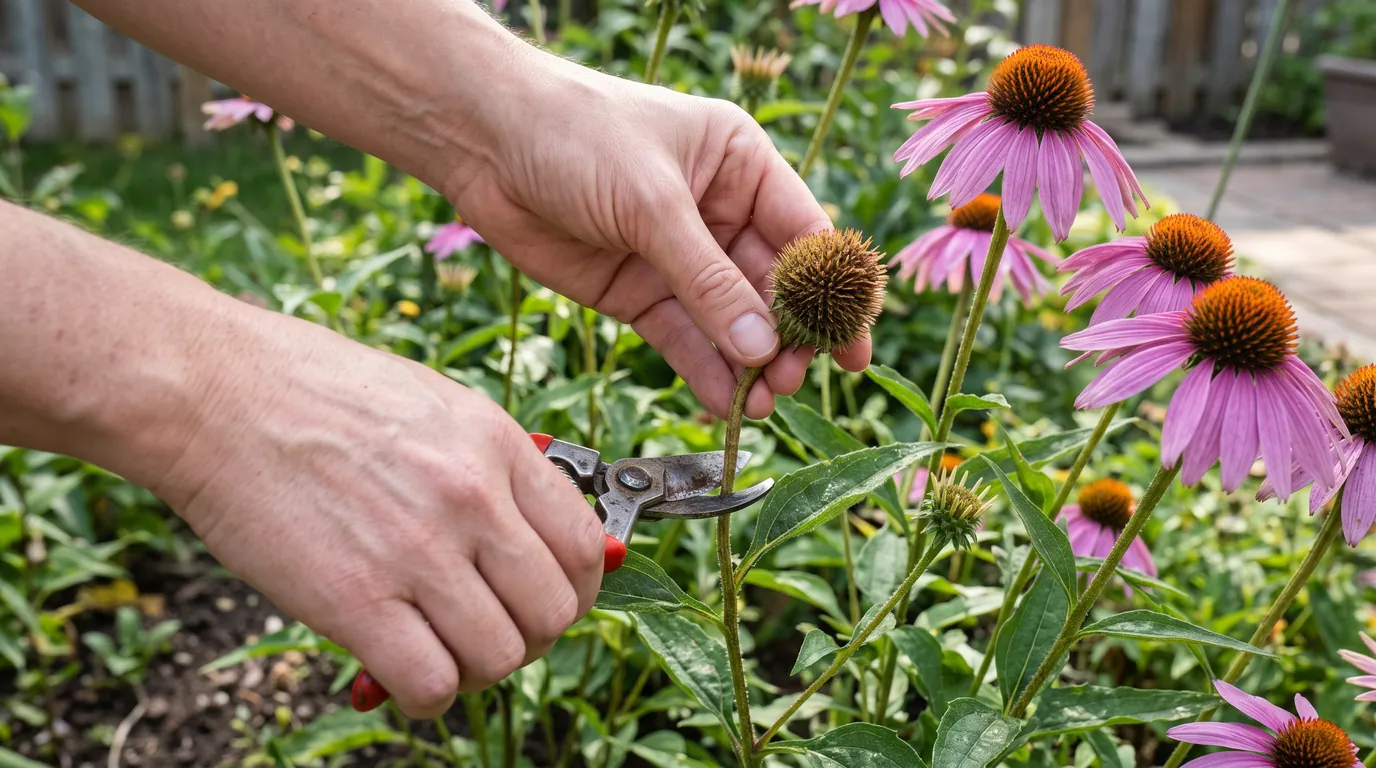
Growing coneflowers in Canada is mostly a matter of picking a sunny, well-drained spot and then leaving the plant alone. Purple coneflower (Echinacea purpurea) is a perennial from the central and eastern United States. NC State Extension describes it as drought tolerant once established, and resistant to deer, heat, humidity and salt.
It blooms from early summer into fall, feeds bees and butterflies, and its seed heads feed birds in winter. This guide covers hardiness for Canadian zones, planting, dividing, the fall clean-up question, and what to do when something goes wrong.
Coneflowers at a glance: plant in full sun (part shade gives fewer flowers) in well-drained soil. Rated to US Zone 3a (NC State) or Zone 4, some varieties Zone 3 (UVM), so check the tag. Divide in early spring or late fall. Leave the stems standing over winter for birds and native bees. Remove any plant with green, twisted flowers: that is aster yellows.
Hardiness: Which Zones Can Grow Coneflowers?
The two sources we checked disagree a little. NC State rates purple coneflower to US Zone 3a. The University of Vermont gives US Zones 4 to 9 for coneflowers, says some varieties are hardy to Zone 3, and tells gardeners to confirm on the plant tag. In practice, the straight species is the safe choice in a cold zone; the many coloured hybrids vary, so read the label.
Those are US (USDA) zones. Canadian zones are calculated differently, so a Canadian Zone 4 is not the same thing as a US Zone 4. See USDA vs Canadian zones, or look up your own with the zone finder. The table below shows the Canadian zone and frost dates for one city in each region.
| Region | City | Canadian zone | Average last spring frost | Average first fall frost |
|---|---|---|---|---|
| BC coast | Vancouver | 9a | March 26 | November 4 |
| BC Interior | Kelowna | 7a | May 16 | September 23 |
| Alberta | Calgary | 4a | May 26 | September 10 |
| Saskatchewan | Saskatoon | 3a | May 22 | September 15 |
| Manitoba | Winnipeg | 3b | May 24 | September 22 |
| Southern Ontario | Toronto | 7a | May 4 | October 9 |
| Eastern Ontario | Ottawa | 5a | May 7 | October 2 |
| Northern Ontario | Thunder Bay | 3b | June 3 | September 15 |
| Quebec | Montreal | 5b | April 29 | October 9 |
| Quebec | Quebec City | 5a | May 11 | October 1 |
| Atlantic | Halifax | 6b | May 8 | October 17 |
| Newfoundland | St. John's | 6a | June 1 | October 15 |
Zones are NRCan 1991–2020; frost dates are Environment and Climate Change Canada 1991–2020 normals (the date frost has passed in half of years).
Sun and Soil
NC State lists full sun to part shade and a preference for moist, well-drained loam, while noting the plant adapts to many soils, including clay and sandy or rocky ones. UVM says coneflowers bloom best in full sun and give fewer flowers in lower light. So give them the sunniest spot you have, and avoid places where water sits.
Coneflowers grow 60 cm to 1.2 m (2 to 4 feet) tall and 30 to 60 cm wide, according to UVM. Space them so air can move between plants. If you are not sure what your soil needs, UVM's advice is a soil test rather than a guess at fertilizer.
Planting and Growing from Seed
Most people buy potted plants. Spring planting, once the soil can be worked, gives them a full season to root. If you plant in fall, use the rule UVM gives for fall division: leave enough time for the roots to settle before the ground freezes. Water new plants through their first summer; once established, NC State says they handle dry spells well.
Growing from seed suits a Canadian winter well. UVM explains that coneflower seed germinates better after a cold, moist period, and that seed sown outdoors in fall comes up the next spring. A Canadian winter does that job for you.
West Coast Seeds, a Canadian seed company in BC, sells flower seed by mail. Sow coneflower seed outdoors in the fall and let the winter do the cold treatment.
🌼 Shop flower seeds at West Coast Seeds →Affiliate link — we may earn a commission on qualifying purchases, at no extra cost to you.
Fall Clean-Up: Leave the Stems Standing
This is the step where coneflowers differ from a tidy border. UVM says you can cut back at the end of the season or wait until spring, and that waiting lets birds feed on the dried seed heads while native bees nest in the upright stems. NC State goes further: cut dead stems back to 30 to 60 cm (12 to 24 inches) and leave them standing until they fall apart on their own, because native bees nest in the hollow stems.
The one exception is disease. A plant with aster yellows should come out entirely, not just be cut back (see the table below).
Coneflower stems turn stiff and woody by spring. Sharp bypass pruners cut them cleanly at the 30 to 60 cm height NC State suggests, so the stubs stay standing for nesting bees instead of being crushed or torn. The same pruners handle deadheading in summer.
Affiliate link — GrowersGuide.ca may earn a commission on qualifying purchases, at no extra cost to you. See our affiliate disclosure.
Dividing Coneflowers
UVM gives two windows. In early spring, while the plant is still dormant, dig the clump of fibrous roots and divide it, keeping several inches of root on each piece. In late fall, wait until the plant has stopped flowering and started going dormant, and leave enough time for the roots to settle before the ground freezes. Replant or pot each piece right away and water it well. In the Prairies, where the first fall frost comes early (see the table above), spring is the safer of the two.
Troubleshooting Coneflowers
| What you see | Likely cause | What to do |
|---|---|---|
| Flowers green, twisted or sprouting tufts; leaves yellow | Aster yellows, spread by leafhoppers (UMN) | No cure. Remove the whole plant, roots and all, and destroy it. Do not compost it. |
| Few flowers, stems leaning | Too much shade (UVM) | Move the plant to full sun in spring or fall. |
| White powder on the leaves | Powdery mildew (UVM) | Give plants more space and air. Water the soil, not the leaves. |
| Drooping leaves in a heat wave | Dry soil (UVM) | Water deeply. Established plants recover quickly. |
| Leaves chewed to lace in summer | Japanese beetles (NC State, UVM) | Pick them off by hand into a bucket of soapy water, as UVM suggests. |
| Clusters of tiny insects on buds | Aphids (UVM) | Knock them off with a strong spray from the hose. |
| Young shoots bitten off | Rabbits, chipmunks or groundhogs (UVM) | Fence young plants. Deer usually leave coneflowers alone. |
| Seedlings everywhere | Self-seeding (NC State) | Cut off some spent flowers before they ripen; pull or share extra seedlings. |
Pets
We do not make safety claims about plants and pets. Check the ASPCA list of toxic and non-toxic plants, and call your veterinarian if your pet eats part of a plant.
Frequently Asked Questions
Are coneflowers hardy in Canada?
Most are hardy across much of southern Canada. NC State rates purple coneflower (Echinacea purpurea) to US Zone 3a. The University of Vermont gives US Zones 4 to 9 for coneflowers in general, with some varieties hardy to Zone 3, and advises checking the tag of the variety you buy. Named hybrids can be less hardy than the species, so in the coldest parts of the Prairies, choose plants rated for your zone.
Should I cut back coneflowers in the fall?
You can, but leaving them is usually better. UVM says you can cut back at the end of the season or wait until spring, and that waiting lets birds eat the seed heads and gives native bees a place to nest in the upright stems. NC State suggests cutting dead stems to 30 to 60 cm (12 to 24 inches) and leaving them standing until they break down.
When should I divide coneflowers?
In early spring while the plant is still dormant, or in late fall after it has stopped flowering and begun to go dormant, according to UVM. In fall, leave enough time for the roots to settle before the ground freezes. Keep several inches of root on each piece and replant right away.
Why are my coneflower blooms green and twisted?
That is the classic sign of aster yellows, a disease spread by leafhoppers. The University of Minnesota says an infected plant never recovers and should be removed and destroyed. The disease survives in the crown and roots of perennials, so leaving the plant in place keeps it available to spread.
Do coneflowers grow in shade?
In part shade, yes, but with fewer flowers. NC State lists full sun to part shade, and UVM says lower light gives fewer blooms. For the best show, give them a sunny spot.
Do coneflowers spread or self-seed?
They self-seed. NC State says the plant reseeds itself in the garden, and UVM notes that seed sown outdoors in fall comes up the next spring because it needs a cold, moist period first. Cut off some of the spent flowers if you do not want seedlings, and leave others for the birds.
Are coneflowers safe for cats and dogs?
We do not make safety claims about plants and pets. Check the ASPCA list of toxic and non-toxic plants, and ask your veterinarian if your pet has eaten part of a plant.