
Growing Daylilies in Canada
One of the toughest perennials you can grow. The choices that matter in Canada are where you buy them and when you divide them.
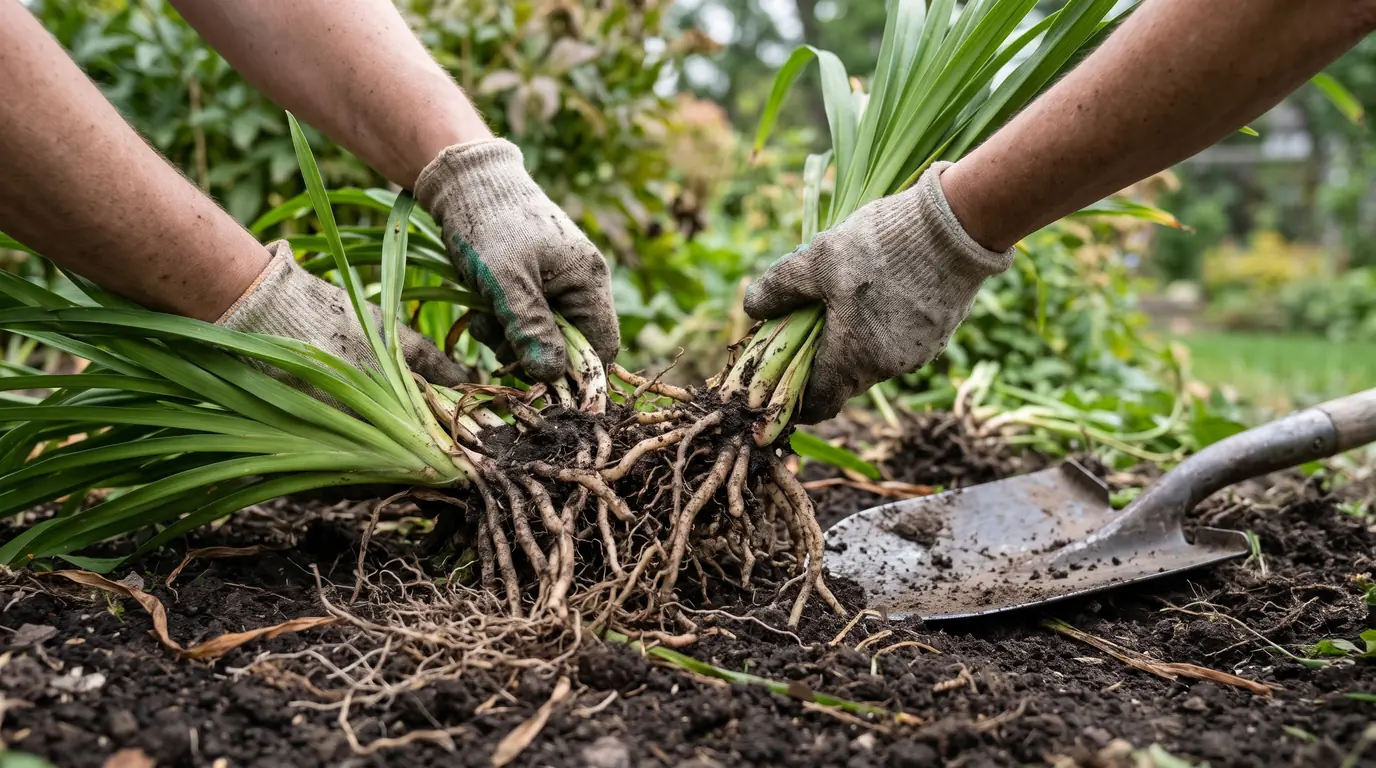
Growing daylilies in Canada is about as close to foolproof as perennials get. The University of Minnesota Extension calls them rugged, adaptable and vigorous, able to last many years with little care and to come through cold winters with little or no injury. NC State rates them to US Zone 3a.
Daylilies (Hemerocallis) are not true lilies. The name means “beauty for a day”: each flower lasts one day, but an established clump can produce 200 to 400 of them over a 30- to 40-day season, the University of Minnesota says.
Daylilies at a glance: give them 6+ hours of sun, away from tree roots. Plant with the crown 2.5 cm (1 inch) below the surface. Divide every 3 to 5 years, in early spring or right after flowering. Buy cultivars proven in a cold climate; rebloomers often fail to rebloom in a short season. Toxic to cats (NC State).
Sun, Soil and Spacing
The University of Minnesota says daylilies flower best with at least 6 hours of direct sun and tolerate light shade; a little shade in the hottest part of the day keeps the flowers fresh. They adapt to most soils but do best in slightly acidic, moist, well-drained soil that is high in organic matter.
Do not plant them directly under trees or shrubs, which compete for water and food. On a slope, they fill in to a dense ground cover within a few years. Plants range from 30 cm to 1.2 m tall, depending on the cultivar.
Planting Daylilies
The University of Minnesota says you can plant daylilies as soon as the soil can be worked in spring. Loosen the soil deeply, mix in compost or well-rotted manure, and dig a hole wide enough for the roots to spread without bending.
Set the crown (where the leaves meet the roots) 2.5 cm (1 inch) below the soil line. Both the University of Minnesota and NC State give this depth. Backfill, firm the soil lightly, and water until the soil around the roots is soaked.
Choosing Daylilies for a Canadian Season
There are more than 35,000 registered cultivars, and the University of Minnesota points out that most new ones are bred in the southern United States. It calls daylilies “regional performers” that do well across about three hardiness zones. Its advice: buy from a local nursery or one in a neighbouring region, visit gardens that grow daylilies, or ask a daylily society which cultivars suit your area.
Reblooming cultivars are the trap. The University of Minnesota says rebloomers are not successful there because the growing season is too short. Check how long the frost-free season is where you live:
| Region | City | Zone | Last spring frost | First fall frost | Frost-free days |
|---|---|---|---|---|---|
| BC coast | Vancouver | 9a | March 26 | November 4 | 224 |
| BC Interior | Kelowna | 7a | May 16 | September 23 | 130 |
| Alberta | Calgary | 4a | May 26 | September 10 | 106 |
| Alberta | Edmonton | 4a | May 22 | September 11 | 110 |
| Saskatchewan | Saskatoon | 3a | May 22 | September 15 | 116 |
| Manitoba | Winnipeg | 3b | May 24 | September 22 | 119 |
| Southern Ontario | Toronto | 7a | May 4 | October 9 | 156 |
| Northern Ontario | Thunder Bay | 3b | June 3 | September 15 | 104 |
| Quebec | Montreal | 5b | April 29 | October 9 | 161 |
| Quebec | Quebec City | 5a | May 11 | October 1 | 141 |
| Maritimes | Halifax | 6b | May 8 | October 17 | 159 |
| Newfoundland | St. John's | 6a | June 1 | October 15 | 137 |
Zones are NRCan 1991–2020; frost dates and season lengths are Environment and Climate Change Canada 1991–2020 normals.
Where the season is short, plant a mix of early, mid and late cultivars for a long show rather than relying on one cultivar to flower twice. 'Stella de Oro' still earns its place for the number of buds it carries on each stem, the University of Minnesota notes, even where it does not rebloom. In Minnesota, peak bloom is July to early August.
Care Through the Season
In early spring, before growth starts, pull off last year's dead leaves and any weeds; the University of Minnesota warns that grasses rooted inside a clump are hard to get out later. Mulch helps with weeds. About 2.5 cm (1 inch) of water a week is ideal, more on sandy soil. Daylilies tolerate drought but flower better with steady moisture.
Pick off faded flowers so the plant does not set seed, which the University of Minnesota says can mean fewer flowers the next year. A spring top-dressing of compost or manure is enough food.
Daylily jobs are small cuts done often: snipping spent flower stalks at the base once a stem has finished, and cutting the leaves of new divisions back to 13 to 15 cm, as the University of Minnesota recommends. A sharp bypass pruner cuts the tough stalks cleanly instead of tearing them.
Affiliate link — GrowersGuide.ca may earn a commission on qualifying purchases, at no extra cost to you. See our affiliate disclosure.
Dividing Daylilies
Daylilies grow fast enough to divide every three to five years, according to the University of Minnesota, and division brings more flowers. The two sources give different windows:
- University of Minnesota: early spring, or right after flowering. Spring divisions may not bloom that same summer.
- NC State: fall or spring.
In a short-season area, dividing right after flowering leaves the most time for roots to settle before the ground freezes. Dig the whole clump and pull it apart into pieces with two or three fans of leaves and their roots. Cut the leaves back to 13 to 15 cm (5 to 6 inches), replant at the same 2.5 cm depth, and water well. A straw or shredded-leaf mulch the first winter protects divisions that are not yet established.
Troubleshooting Daylilies
| What you see | Likely cause | What to do |
|---|---|---|
| Lots of leaves, few flowers | Under 6 hours of sun, or tree roots nearby (UMN) | Move the clump to a sunnier spot away from trees. |
| Fewer flowers each year, crowded clump | Overdue for division (UMN) | Divide right after flowering or in early spring. |
| No flowers the summer after dividing | Divided in spring (UMN) | Normal. It will flower the next year. |
| A "reblooming" cultivar flowers only once | Season too short to rebloom (UMN) | Expected in short seasons. Add early and late cultivars instead. |
| Southern cultivar weak or dying out | Not suited to your climate (UMN) | Replace with a cultivar from a local or nearby nursery. |
| Damaged or streaked flower buds | Aphids or thrips (UMN) | A strong spray of water knocks them off; usually no other treatment is needed. |
| Leaves and buds eaten off | Deer (NC State) | Fence or net the bed. NC State notes deer often damage daylilies. |
| Grass growing inside the clump | Weeds left in spring (UMN) | Dig and divide the clump, pulling the grass roots out as you go. |
Daylilies and Cats
NC State says daylilies are toxic to cats, which may show vomiting, loss of appetite, lethargy, kidney failure and even death after eating them. If you have a cat that goes outside or chews plants, keep this in mind, and check the ASPCA list of toxic and non-toxic plants. If a cat eats any part of a daylily, call a veterinarian right away.
Frequently Asked Questions
Are daylilies hardy in Canada?
Yes, across most of the country. NC State rates Hemerocallis to US Zone 3a, and the University of Minnesota says daylilies survive Minnesota winters with little or no injury. Most new cultivars are bred in the southern United States, though, so the University of Minnesota recommends buying from a local or nearby nursery whose plants are proven in a cold climate.
How deep do you plant daylilies?
Set the crown, where the leaves meet the roots, about 2.5 cm (1 inch) below the soil surface. Both the University of Minnesota and NC State give that depth.
When should I divide daylilies in Canada?
The University of Minnesota says early spring or right after flowering, every three to five years, and warns that plants divided in spring may not bloom that summer. NC State gives fall or spring. In a short Prairie or northern season, right after flowering leaves the most time for roots to settle before freeze-up.
Do reblooming daylilies rebloom in Canada?
Often not. The University of Minnesota says reblooming cultivars are not successful there because the growing season is too short. In the shorter-season parts of Canada, expect one flush of bloom and choose a mix of early, mid and late cultivars instead.
Do daylilies need to be dug up for winter?
No. NC State says it is not usually necessary to lift them. The University of Minnesota suggests a winter mulch of straw or shredded leaves only for plants that are not yet established.
Why are my daylilies not blooming?
The usual causes are too little sun, competition from trees, and an old crowded clump. The University of Minnesota says daylilies flower best with at least 6 hours of direct sun, should not be planted near trees and shrubs, and bloom better after division every few years.
Are daylilies toxic to cats?
Yes. NC State says daylilies are toxic to cats, which may show vomiting, loss of appetite, lethargy, kidney failure and even death after eating them. Check the ASPCA plant list, and call a veterinarian right away if a cat has eaten any part of the plant.