
Growing Alliums in Canada
Ornamental onions: big purple globes that bridge the gap between the tulips and the summer perennials, and that deer and squirrels leave alone.
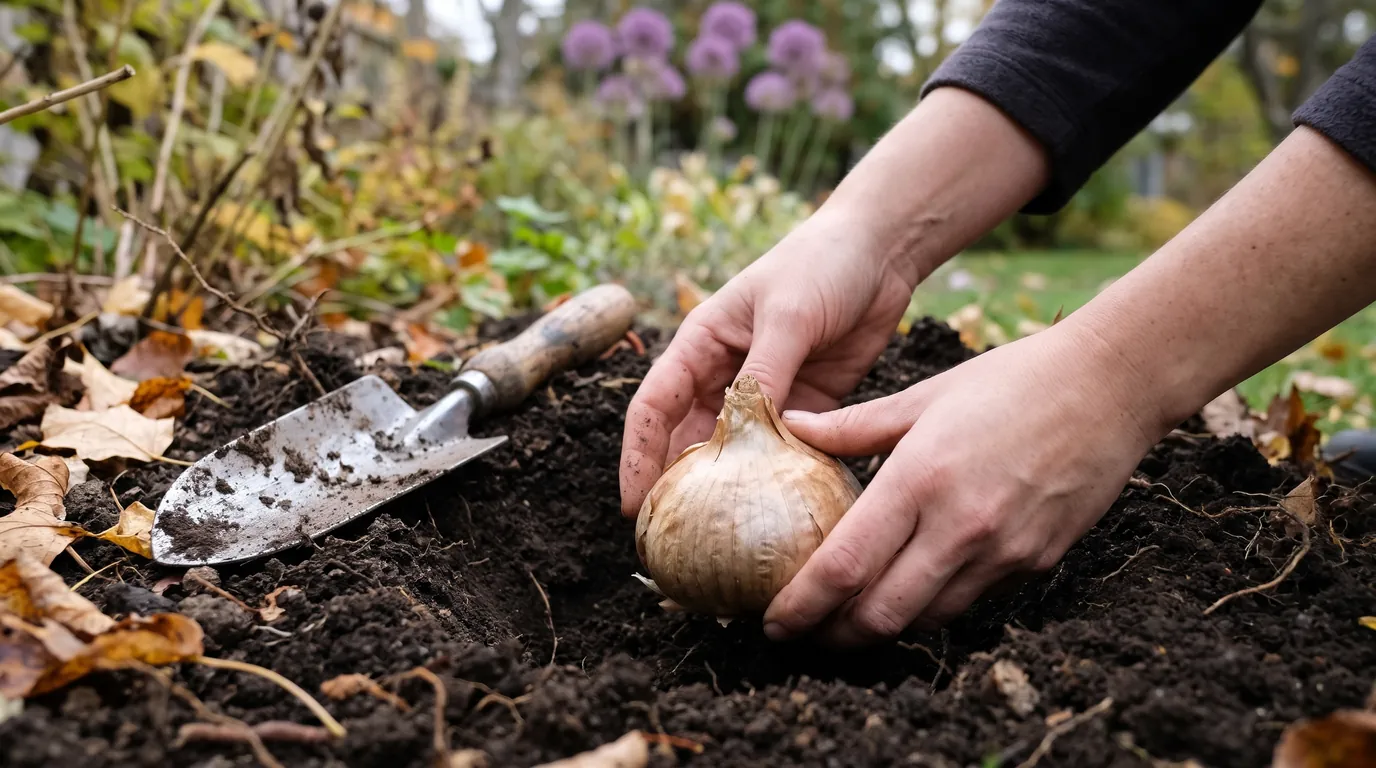
Growing alliums in Canada fills a gap most gardens have in late spring and early summer. These are the ornamental relatives of onions and garlic, grown for their flowers rather than to eat. The University of Missouri says most flower in May, June or early July, after the tulips and before many summer perennials.
Their onion smell is a practical advantage. Iowa State says deer and rabbits rarely browse them, and the University of Missouri says they seem to be shunned by deer and rodents too. The one thing they will not forgive is wet soil.
Alliums at a glance: plant bulbs in fall, 15 to 20 cm deep for large bulbs and 7.5 to 10 cm for small ones, in full sun and soil that drains well, especially in winter. Leave the leaves until they turn brown, and plant perennials in front to hide them. Deer and squirrels mostly leave them alone. NC State lists giant allium as a problem for cats and dogs.
Which Alliums to Grow
| Allium | Height | Bloom | Notes |
|---|---|---|---|
| Giant allium (A. giganteum) | About 1 m stems (Iowa State); up to 1.8 m (MU) | Late spring | Pale purple heads about 15 cm across. UMN lists it for zones 3–4; NC State rates it to US Zone 4a. Tall stems may need staking. |
| 'Globemaster' | 60 to 90 cm | Early summer | Softball- to volleyball-sized heads. Iowa State calls it one of the most reliable alliums you can plant. |
| 'Purple Sensation' (A. aflatunense) | 50 to 75 cm (Iowa State); about 90 cm (MU) | Late spring to early summer | Grapefruit-sized violet heads. UMN lists purple allium for zones 3–4. |
| Star of Persia (A. christophii) | 30 to 50 cm | Late spring | Loose heads 25 to 30 cm across that dry to silvery tan on the stem. |
| Drumstick allium (A. sphaerocephalon) | About 50 cm | Early summer | Small maroon-to-purple heads. Reseeds and forms colonies. |
| 'Millenium' and similar clump hybrids | Compact clumps | Mid to late summer | Glossy leaves stay green all season, unlike bulb alliums. MU calls it perhaps the most popular ornamental allium. |
Heights and bloom times from Iowa State and the University of Missouri, which sometimes differ; both are shown where they do.
Hardiness in Canada
The University of Minnesota lists purple allium and giant allium among the bulbs for its coldest zones, 3 and 4. NC State is more cautious about giant allium and rates it to US Zone 4a. Those are US zones, which are calculated differently from Canadian ones (see USDA vs Canadian zones).
In the coldest regions, start with purple allium and buy bulbs rated for your zone. In every region, drainage matters more than cold: the University of Missouri says alliums need well-drained soil especially in winter and tend to be short-lived where it is poor.
When to Plant Alliums in Fall
Plant allium bulbs with the other spring bulbs. Iowa State says October there; the University of Minnesota says mid-September to mid-October for bulbs in a cold climate, so they root before the ground freezes; the University of Wisconsin says you can keep planting until a couple of weeks before the ground freezes. The University of Missouri adds that potted alliums or divisions planted in spring usually flower the first year.
Fall arrives at very different times across Canada. Where the first frost comes early, plant at the start of the window:
| Region | City | Zone | Average first fall frost | Frost-free days |
|---|---|---|---|---|
| BC coast | Vancouver | 9a | November 4 | 224 |
| BC Interior | Kelowna | 7a | September 23 | 130 |
| Alberta | Calgary | 4a | September 10 | 106 |
| Alberta | Edmonton | 4a | September 11 | 110 |
| Saskatchewan | Saskatoon | 3a | September 15 | 116 |
| Manitoba | Winnipeg | 3b | September 22 | 119 |
| Southern Ontario | Toronto | 7a | October 9 | 156 |
| Eastern Ontario | Ottawa | 5a | October 2 | 152 |
| Quebec | Montreal | 5b | October 9 | 161 |
| Quebec | Quebec City | 5a | October 1 | 141 |
| Nova Scotia | Halifax | 6b | October 17 | 159 |
| Newfoundland | St. John's | 6a | October 15 | 137 |
Zones are NRCan 1991–2020; frost dates and season lengths are Environment and Climate Change Canada 1991–2020 normals. For a planting window worked out city by city, see the crocus guide, which uses the same fall-bulb timing.
How to Plant Alliums
Site: full sun. Iowa State says many alliums tolerate part sun, but shade gives floppy flowers. The soil should be moist but well drained; if yours is heavy, the University of Missouri suggests working in organic matter first.
Depth: Iowa State says larger bulbs go 15 to 20 cm (6 to 8 inches) deep and smaller ones 7.5 to 10 cm (3 to 4 inches). NC State plants giant allium at the deep end, 20 cm (8 inches), and 30 cm apart, about one bulb per square foot. The University of Minnesota's general rule for bulbs is two to three times as deep as the bulb is wide.
Placement: NC State suggests planting giant allium near the back of the border in groups of five to nine, with daylilies and low grasses in front. That is not just looks: on many large alliums the leaves start to die as the flowers open, and the perennials hide them.
Large allium bulbs go 15 to 20 cm down, which is a lot of trowel work for a group of seven. A steel bulb planter cuts a plug to a marked depth in one push, so each bulb sits at the depth Iowa State and NC State give, and the plug goes straight back on top.
Affiliate link — GrowersGuide.ca may earn a commission on qualifying purchases, at no extra cost to you. See our affiliate disclosure.
Watering and Feeding
The sources lean different ways. The University of Missouri says alliums are drought tolerant and should be grown on the dry side with infrequent watering. NC State says giant allium tolerates summer drought but should be kept moist while it is growing. A middle course that fits both: water in a dry spring while the leaves are up, and let the bed stay dry in summer once the bulbs go dormant. Iowa State says fertilizer is unnecessary, apart from a light all-purpose feed every few years in early spring if a soil test shows a need.
After Flowering: Leaves, Seed Heads and Dividing
Leave the leaves until they are completely brown, Iowa State says. Some alliums, drumstick allium among them, reseed heavily; deadhead those as soon as the flowers fade. Others, such as Star of Persia, dry on the stem and stay ornamental for the rest of the season. Iowa State notes that the heads can also be cut for vases, and many dry well.
Alliums need dividing now and then. The University of Missouri lifts the clump in late summer, after the leaves die back, removes the small outer bulbs to grow on in pots, discards damaged ones and replants the sound bulbs. Iowa State says clump-forming types can be divided in early spring or early fall, and that offsets of large-bulb types can be separated in fall.
Troubleshooting Alliums
| What you see | Likely cause | What to do |
|---|---|---|
| Bulbs did not come back, or rotted | Wet or heavy soil (Iowa State, MU, NC State) | Replant in a sunny, well-drained spot; add organic matter to heavy soil. |
| Black rot on leaves or bulbs | Overly damp conditions (NC State) | Improve drainage and do not overwater. |
| Floppy flower stems | Too much shade (Iowa State), or very tall stems | Move to full sun; stake giant allium (NC State). |
| Yellow, dying leaves just as it flowers | Normal for many large alliums (Iowa State, NC State) | Leave them until brown; hide them behind perennials. |
| Fewer, smaller flowers each year | Crowded clump (MU) | Lift and divide in late summer after the leaves die back. |
| Seedlings spreading through the bed | A reseeding type such as drumstick allium (Iowa State) | Deadhead as the flowers fade. |
| Bulbs rotting with tiny pests on them | Bulb mites and bulb rot (NC State) | Discard affected bulbs and replant sound ones elsewhere. |
Pets
NC State lists giant allium as a problem for cats and dogs, and as poisonous to people if eaten, with low severity: nausea, vomiting and diarrhea. Check the exact plant on the ASPCA list of toxic and non-toxic plants, keep bulbs away from dogs that dig, and call a veterinarian if a pet eats any part of the plant.
Frequently Asked Questions
When do you plant allium bulbs in Canada?
In fall, like tulips and daffodils, so the bulbs root before the ground freezes. Iowa State says October there; the University of Minnesota says mid-September to mid-October for bulbs in a cold climate. Potted alliums from a garden centre can go in like other perennials in spring or early fall, Iowa State says.
How deep do you plant allium bulbs?
It depends on the bulb size. Iowa State says larger bulbs go 15 to 20 cm (6 to 8 inches) deep and smaller ones 7.5 to 10 cm (3 to 4 inches). NC State plants giant allium (Allium giganteum) 20 cm (8 inches) deep and 30 cm (12 inches) apart, about one bulb per square foot.
Are alliums hardy in Canada?
Many are. The University of Minnesota lists purple allium (Allium aflatunense) and giant allium (Allium giganteum) among bulbs for its coldest zones, 3 and 4. NC State rates giant allium to US Zone 4a. The difference matters most in the Prairies and the North, so buy from a nursery that rates the bulbs for your zone.
What do I do with allium leaves after flowering?
Leave them until they are completely brown, Iowa State says. On many large alliums the leaves start yellowing as the plant flowers, so plant them among perennials that grow up and hide the fading leaves. NC State suggests daylilies and low grasses.
Do deer and squirrels eat alliums?
Rarely. Iowa State says the onion smell means deer and rabbits seldom browse them, and the University of Missouri says alliums seem to be shunned by deer and rodents.
Why did my alliums not come back?
Usually wet soil. Iowa State says bulbs may rot in soggy soil, the University of Missouri says alliums in poorly drained soil tend to be short-lived, and NC State warns that damp conditions bring black rot and bulb rot. Plant them where water drains away, especially over winter.
Are ornamental alliums toxic to pets?
NC State lists giant allium as a problem for cats and dogs, and as poisonous to people if eaten, with low severity (nausea, vomiting and diarrhea). Check the ASPCA plant list, and call a veterinarian if a pet eats any part of the plant or bulb.
Sources
- Iowa State University Extension — All About Ornamental Onions
- University of Missouri Extension — Alliums have some of the most striking flowers around the globe
- NC State Extension Gardener Plant Toolbox — Allium giganteum
- University of Minnesota Extension — Planting bulbs, tubers and rhizomes
- Wisconsin Horticulture, UW-Madison Extension — Plant bulbs now for spring colour