
Growing Crocus in Canada
The first flowers of spring are planted in fall. Here is when to plant them where you live, and how to keep squirrels from eating them.
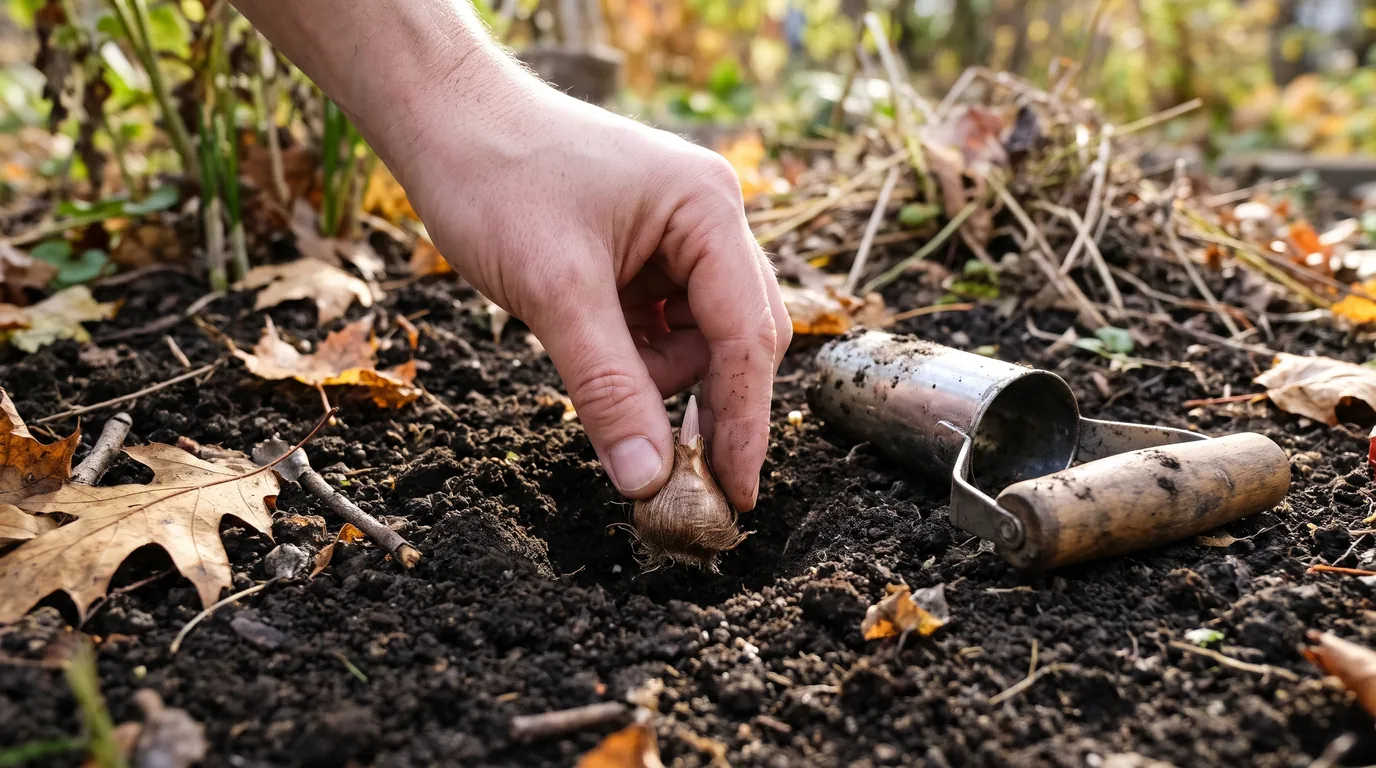
Growing crocus in Canada is a fall job with a spring payoff. Crocus grow from corms that need to make roots before the ground freezes, then flower as the snow leaves. NC State rates them to US Zone 3a, and the University of Minnesota lists snow crocus (Crocus chrysanthus) among the bulbs for its coldest zones.
They are cheap, small and best planted by the handful. Iowa State suggests drifts of at least 25 corms and says they look best in groups of 50 or more. The University of Missouri notes they are an important early food source for bees, when little else is in flower.
Crocus at a glance: plant corms in fall, several weeks before your first frost and well before the ground freezes. Plant 6 to 10 cm deep, pointed end up, in sun or light shade and soil that drains. Cover with chicken wire against squirrels. Leave the leaves for about six weeks after bloom.
When to Plant Crocus in Fall, by Region
Every source agrees on the goal: get the corms in early enough to root before the ground freezes. They differ on how to say it:
- University of Missouri: several weeks before the first frost.
- University of Minnesota: mid-September to mid-October in a cold climate; buy in August or September and plant as soon as you can.
- Colorado State: September and October; bulbs planted later may not root well.
- University of Wisconsin: once the soil cools to about 10 to 13 °C (50 to 55 °F), and up until a couple of weeks before the ground freezes.
- Iowa State: October is ideal there, and late planters can go as late as December if the ground is still unfrozen.
Canada's fall frost dates span more than two months, so the same advice lands on very different calendar dates. The last column below is our reading of Missouri's “several weeks before the first frost” as two to five weeks before each city's average first fall frost. Treat it as the comfortable target; Wisconsin's and Iowa State's advice means a late planting can still work while the ground is open.
| Region | City | Zone | Average first fall frost | Target planting window |
|---|---|---|---|---|
| BC coast | Victoria | 9a | November 5 | October 1–22 |
| BC coast | Vancouver | 9a | November 4 | September 30–October 21 |
| BC Interior | Kelowna | 7a | September 23 | August 19–September 9 |
| Alberta | Calgary | 4a | September 10 | August 6–27 |
| Alberta | Edmonton | 4a | September 11 | August 7–28 |
| Saskatchewan | Saskatoon | 3a | September 15 | August 11–September 1 |
| Manitoba | Winnipeg | 3b | September 22 | August 18–September 8 |
| Southern Ontario | Toronto | 7a | October 9 | September 4–25 |
| Eastern Ontario | Ottawa | 5a | October 2 | August 28–September 18 |
| Northern Ontario | Thunder Bay | 3b | September 15 | August 11–September 1 |
| Quebec | Montreal | 5b | October 9 | September 4–25 |
| Quebec | Quebec City | 5a | October 1 | August 27–September 17 |
| New Brunswick | Fredericton | 5a | September 24 | August 20–September 10 |
| Nova Scotia | Halifax | 6b | October 17 | September 12–October 3 |
| PEI | Charlottetown | 5b | October 17 | September 12–October 3 |
| Newfoundland | St. John's | 6a | October 15 | September 10–October 1 |
Zones are NRCan 1991–2020; first fall frost is the Environment and Climate Change Canada 1991–2020 normal (frost has come by then in half of years). Other cities: first frost dates in Canada.
Which Crocus to Buy
The University of Illinois sorts spring crocus into three groups, and the University of Missouri describes the species that suit lawns:
Snow crocus (Crocus chrysanthus)
Flowers very early, with small flowers in yellow, white and blue. The University of Minnesota lists it for its coldest zones.
Dutch or giant crocus (Crocus vernus)
The most popular group, with the largest flowers. Most named crocus cultivars belong here, according to the University of Illinois.
“Tommies” (Crocus tommasinianus) and other species
Small, lilac-purple, early. The University of Missouri says tommies are more resistant to squirrels than other crocus because the corms taste slightly bitter, which makes them a good pick for city yards.
Some crocus species flower in fall instead of spring, and the plant sold as “autumn crocus” is often Colchicum, a different genus. Colorado State says autumn crocus is normally planted in midsummer, not with the spring bulbs. Check the label.
How to Plant Crocus
Site: full sun to part shade, in gritty, well-drained soil; NC State says sandy loam with compost is best and heavy clay should be avoided. The University of Missouri finds crocus more adaptable, growing in clay as long as it does not stay soggy. Colorado State warns that a south-facing spot against a foundation can make bulbs come up too early.
Depth: the sources disagree by a few centimetres. NC State says about 6 cm (2.5 inches) deep and 5 cm apart. Iowa State and the University of Missouri say 7.5 to 10 cm (3 to 4 inches) deep and about 7.5 to 10 cm apart. Iowa State measures from the base of the corm. The University of Minnesota's rule for all bulbs is two to three times as deep as the bulb is wide, a little deeper in sandy soil and a little shallower in clay.
Steps: dig the whole area to depth if you are planting a drift (Iowa State's tip for mass plantings), set the corms pointed end up, cover, and water. Mulch is where sources split: the University of Minnesota spreads 5 to 7.5 cm of leaves or straw right after planting, while Colorado State waits until the ground has frozen and then adds about 7.5 cm to stop freezing and thawing from breaking roots. Either way, mulch evens out winter soil temperatures.
Crocus go in by the dozen, and a trowel is slow work for 50 corms. A steel bulb planter pulls a plug of soil at a marked depth, so every corm sits at the 6 to 10 cm the extension guides give, then you drop the plug back on top.
Affiliate link — GrowersGuide.ca may earn a commission on qualifying purchases, at no extra cost to you. See our affiliate disclosure.
Squirrels, Chipmunks and Rabbits
NC State says squirrels are particularly good at finding and eating newly planted corms. The University of Wisconsin notes that squirrels avoid daffodils and hyacinths, but not crocus or tulips. The fix every source agrees on is a barrier: lay chicken wire or hardware cloth flat over the bed after planting and pin it down with landscape staples or bricks. Iowa State says to lift it as soon as the leaves come up. In spring, rabbits can eat the leaves and buds; Iowa State's answer is a short chicken-wire fence around the planting until the flowers open, noting that repellents work less well than fencing.
Crocus in the Lawn
The University of Missouri recommends crocus lawns: plant the corms in fall, 7.5 to 10 cm deep, and they bloom early and die back quickly, coming back year after year. Most spring species work. The catch is mowing: the University of Illinois says crocus can naturalize in lawns only if the foliage is allowed to ripen, so leave those patches unmown until the leaves turn yellow.
After Flowering
Keep the leaves for about six weeks after bloom, NC State says, because they make the food for next year's flowers. Water in a dry spring while the plants are growing. NC State suggests dividing clumps about every four years. Iowa State suggests planting crocus near perennials such as daylilies and hostas, whose leaves grow up later and hide the fading bulb foliage.
Troubleshooting Crocus
| What you see | Likely cause | What to do |
|---|---|---|
| Small holes in the bed the day after planting | Squirrels or chipmunks digging corms (NC State, UMN) | Replant and pin chicken wire over the bed. Try tommies next year (MU). |
| Leaves and buds eaten off in spring | Rabbits (Iowa State) | Put up a low chicken-wire fence until the flowers open. |
| Corms pushed up out of the soil | Freezing and thawing of late, unrooted corms (CSU) | Press them back in and mulch after the ground freezes; plant earlier next year. |
| Fewer flowers each spring in the lawn | Leaves mown before they ripened (Illinois) | Leave the patches unmown until the leaves yellow. |
| Fewer flowers in a crowded clump | Overcrowding (NC State) | Lift and divide; NC State suggests every four years. |
| Shoots up too early near the house | Warm south-facing foundation (CSU) | Usually fine: Iowa State says bulb foliage tolerates cold. Plant away from the wall next time. |
| Corms soft and rotten when dug | Wet, heavy soil (NC State) | Replant in a better-drained spot or a raised bed. |
| Flowers stay closed | Cloudy or cool day (NC State) | Normal. Crocus close at night and in dull weather and open in sun. |
Pets
We do not make safety claims about plants and pets. Spring crocus and the plants sold as autumn crocus are different, so check the exact plant on the ASPCA list of toxic and non-toxic plants, and call your veterinarian if your pet eats any part of a bulb.
Frequently Asked Questions
When do you plant crocus bulbs in Canada?
In fall, so the corms can grow roots before the ground freezes. Sources give slightly different windows: the University of Minnesota says mid-September to mid-October in a cold climate, Colorado State says September and October, and the University of Missouri says several weeks before the first frost. The University of Wisconsin says you can keep planting until a couple of weeks before the ground freezes, and Iowa State says late planters can go as late as December if the ground is still unfrozen. In practice: early in the Prairies and the North, later on the BC coast.
How deep do you plant crocus?
About 6 to 10 cm (2.5 to 4 inches), measured from the bottom of the corm. NC State gives about 6 cm (2.5 inches) and 5 cm apart; Iowa State and the University of Missouri give 7.5 to 10 cm (3 to 4 inches) and 7.5 to 10 cm apart. In sandy soil go a little deeper, in clay a little shallower, as the University of Minnesota advises.
How do I stop squirrels digging up crocus?
Lay chicken wire or hardware cloth flat over the planted area and pin it down, as the University of Minnesota, Iowa State and the University of Wisconsin all suggest. Iowa State says to remove it when the leaves come up in spring. You can also plant Crocus tommasinianus, which the University of Missouri says is more resistant to squirrels because its corms taste slightly bitter.
Can I plant crocus in my lawn?
Yes. The University of Missouri says most crocus species work in a lawn and that their leaves die back quickly after an early bloom. The University of Illinois adds that the leaves must be allowed to ripen properly, so hold off mowing those patches until the foliage has yellowed.
Do I cut crocus leaves after they bloom?
No. NC State says to keep the foliage for about six weeks after flowering, because the leaves make the food for next year's flowers.
Is it too late to plant crocus once there has been a frost?
Not necessarily. A light frost does not freeze the ground. The University of Wisconsin says you can keep planting until a couple of weeks before the ground freezes, and Iowa State says as late as December where the ground stays unfrozen. Colorado State cautions that very late bulbs may not root well and can be pushed up by freezing and thawing, so mulch late plantings once the ground freezes.
Are crocus safe for cats and dogs?
We do not make safety claims about plants and pets. Check the ASPCA list of toxic and non-toxic plants, and ask your veterinarian if your pet has eaten part of a plant.
Sources
- NC State Extension Gardener Plant Toolbox — Crocus
- University of Minnesota Extension — Planting bulbs, tubers and rhizomes
- Iowa State University Extension — Selecting and planting spring-blooming bulbs
- University of Missouri Extension — Plant crocus in lawn now for new season
- Wisconsin Horticulture, UW-Madison Extension — Plant bulbs now for spring colour
- Colorado State University Extension — Fall-planted bulbs and corms
- University of Illinois Extension — Spring-flowering bulbs