
Growing Delphiniums in Canada
Tall blue spikes that like a cool Canadian summer. They need stakes, food and a sharp cut after the first bloom.
Growing delphiniums in Canada has one advantage over much of the United States: our summers are cooler. Delphiniums are perennials in the buttercup family. NC State Extension says the main garden species, Delphinium elatum, comes from woodlands and meadows from Europe to Mongolia, wants cool, moist summers, and does poorly in high humidity.
They are also, in NC State's words, a high-maintenance plant. This guide covers hardiness, where to plant, staking, cutting back for a second bloom before fall frost, feeding, and the problems that shorten their lives.
Delphiniums at a glance: rated to US Zone 3a (NC State). Full sun, fertile soil that drains well, shelter from wind. Stake early: the spikes are hollow and snap. Feed in early spring and again later. Right after the first bloom, cut the stalks down to the basal leaves for a smaller second bloom in late summer. Short-lived: 2 to 5 years. Toxic to people and pets.
Hardiness and the Second Bloom
NC State rates Delphinium elatum to US Zone 3a, and gives US Zones 3a to 9b for the genus, adding that delphiniums are hard to grow in humid summer climates south of US Zone 7. Cold is rarely the problem in Canada; heat, humidity and wet soil are. These are US (USDA) zones, calculated differently from Canadian zones; see USDA vs Canadian zones, or look up yours with the zone finder.
In Canada the fall frost date matters as much as the zone, because it decides whether you get the second bloom. Iowa State says most hybrids bloom from early to mid-summer and rebloom in late summer or early fall if cut back right after flowering. Where the first fall frost comes early, that second flush has little time.
| Region | City | Canadian zone | Average first fall frost | Frost-free days |
|---|---|---|---|---|
| BC coast | Victoria | 9a | November 5 | 205 |
| BC north | Prince George | 4b | September 1 | 92 |
| Alberta | Calgary | 4a | September 10 | 106 |
| Alberta | Edmonton | 4a | September 11 | 110 |
| Saskatchewan | Saskatoon | 3a | September 15 | 116 |
| Manitoba | Winnipeg | 3b | September 22 | 119 |
| Southern Ontario | Toronto | 7a | October 9 | 156 |
| Northern Ontario | Thunder Bay | 3b | September 15 | 104 |
| Quebec | Quebec City | 5a | October 1 | 141 |
| Atlantic | Moncton | 5a | September 28 | 126 |
| Atlantic | Halifax | 6b | October 17 | 159 |
| Newfoundland | St. John's | 6a | October 15 | 137 |
Zones are NRCan 1991–2020; frost dates and season length are Environment and Climate Change Canada 1991–2020 normals.
Where to Plant
NC State asks for full sun and fertile, medium-moist soil that drains well; delphiniums tolerate alkaline soil. Plants in full sun generally resist powdery mildew better. Drainage is the part not to skip: NC State says crown rot will develop in poorly drained soil or if plants are set too deep, so keep the crown at soil level.
Shelter matters too. NC State suggests a spot protected from strong wind and heavy rain, such as along a fence. Choose height to match the site: NC State groups the hybrids as short (90 to 150 cm), medium (120 to 165 cm) and tall (over 1.8 m). Iowa State points to shorter options: Belladonna types at 90 to 120 cm, 'Dwarf Pacific' hybrids at about 60 cm, Chinese delphinium (60 to 90 cm), and 'Blue Butterfly' at about 38 cm.
Staking: Do It Early
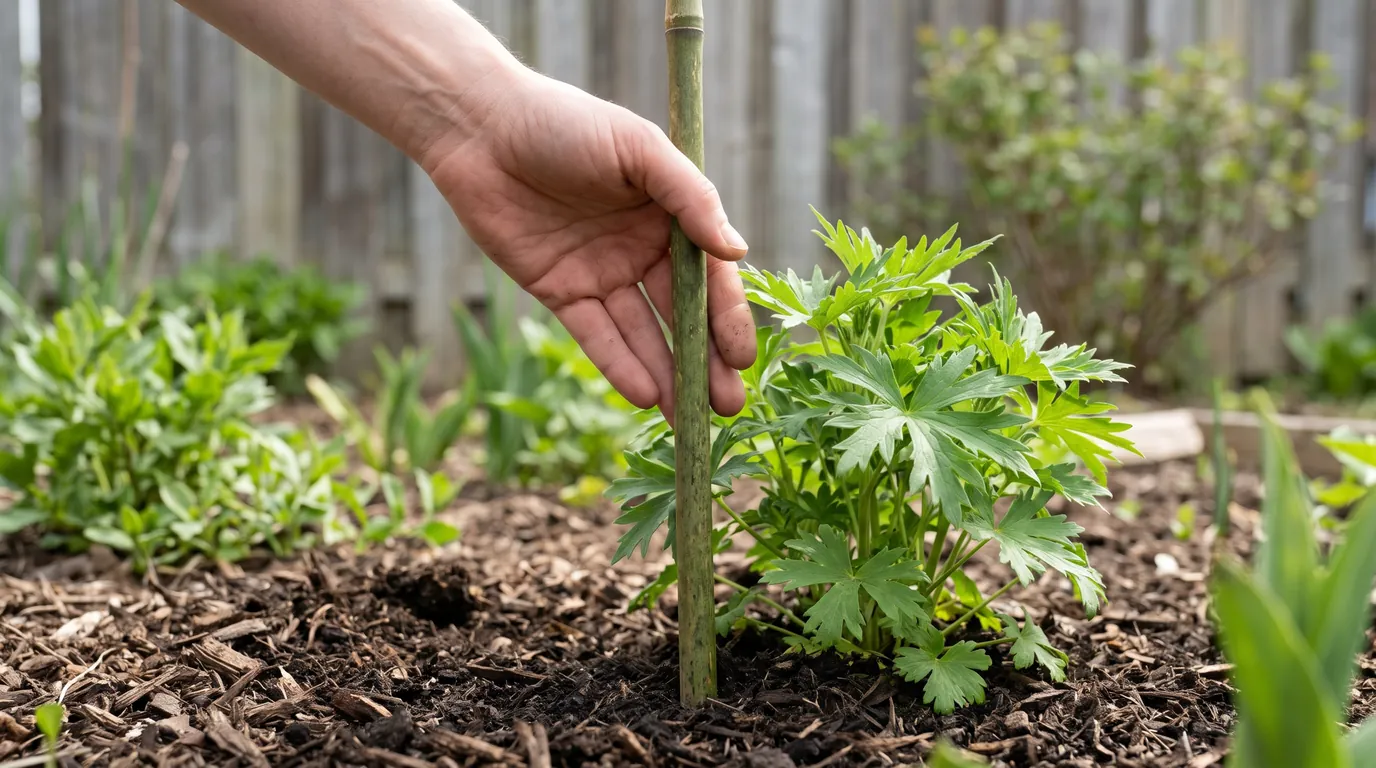
Iowa State explains why tall hybrids need stakes: the flower spikes are hollow and brittle, and wind and rain on a heavy, flower-laden spike will snap it. Put the stakes in early in the season, it says, both to avoid damaging the roots later and to give support from the start. NC State agrees that staking is necessary to hold the plant upright. Planting along a fence, as NC State suggests, adds shelter from wind as well.
Cutting Back for a Second Bloom
This is the step that doubles the season. Iowa State says to cut off the old flower stalk immediately after flowering, to encourage more flowers in late summer or early fall. NC State gives the same advice in more detail: cut spent flowers back promptly to the basal foliage, the leaves at the bottom of the plant. Both warn about what to expect: Iowa State says the second spikes will not be as large or full as the first.
Timing matters in a short Canadian season. Check your first fall frost in the table above. If you garden where frost comes in early to mid-September, cut the moment the first spikes fade rather than waiting for a tidy-up later in July.
A delphinium flower stalk is thick and hollow, and it has to come off right after bloom, down at the basal leaves, for the second flush Iowa State and NC State describe. Sharp bypass pruners cut it cleanly at that height without crushing the stem or disturbing the crown.
Affiliate link — GrowersGuide.ca may earn a commission on qualifying purchases, at no extra cost to you. See our affiliate disclosure.
Feeding and Life Span
Iowa State calls delphiniums heavy feeders: fertilize in early spring and again later in the season. Stunted growth and yellow leaves are signs the plant wants more. NC State also says frequent feeding is needed to support the growth and heavy bloom.
Even well grown, delphiniums do not last. Iowa State says most last only 2 or 3 years; NC State says 3 to 5. Plan to replace a few plants every couple of years rather than expecting a permanent clump.
Troubleshooting Delphiniums
| What you see | Likely cause | What to do |
|---|---|---|
| Flower spikes snapped after a storm | Hollow, brittle stems (Iowa State) | Stake early next season; plant out of the wind. |
| Plant collapses, crown soft and dark | Crown rot (NC State) | Improve drainage; never set the crown below soil level. |
| White powder on leaves | Powdery mildew (NC State) | Full sun and good air movement. |
| Spotted or blighted leaves | Leaf spot or botrytis blight (NC State) | Space plants for air; full sun. |
| Young shoots eaten in spring | Slugs and snails (NC State) | Hand-pick them as shoots emerge. |
| Stunted plants, yellow leaves | Hungry plant (Iowa State) | Fertilize in early spring and again later. |
| No second bloom | Stalks not cut, or cut too late before frost (Iowa State, NC State) | Cut to the basal leaves right after the first bloom. |
| Clump gone after a few years | Short life span (Iowa State, NC State) | Normal. Replace with new plants. |
Toxic to People and Pets
NC State says delphinium is toxic to humans and pets and lists it as a problem for cats, dogs and horses. Iowa State says all parts of delphinium and larkspur are poisonous and cautions gardeners with small children. Plant them away from where pets and children play, and call your veterinarian or a poison centre if any part is eaten. The ASPCA list of toxic and non-toxic plants has more detail.
Frequently Asked Questions
Are delphiniums hardy in Canada?
Yes, in most of the country. NC State rates Delphinium elatum, the parent of most garden hybrids, to US Zone 3a, and the genus to Zone 3a as well. Delphiniums prefer cool summers, which suits much of Canada better than the hot, humid south of the United States.
How do I get delphiniums to bloom a second time?
Cut the spent flower stalks back right after the first bloom. Iowa State says to cut off the old stalk immediately after flowering; NC State says to cut down to the basal leaves. A second, smaller bloom follows in late summer or early fall. In short-season areas, cut early so it has time before the first fall frost.
When should I stake delphiniums?
Early in the season, before the plants are tall. Iowa State says delphinium flower spikes are hollow and brittle and snap in wind and rain, and that stakes should go in early to avoid damaging the roots and to give support from the start.
Why do my delphiniums only last a few years?
They are short-lived. Iowa State says most last 2 or 3 years; NC State gives 3 to 5. Crown rot, which NC State says will develop in poorly drained soil or when plants are set too deep, shortens that further.
Do delphiniums need fertilizer?
Yes. Iowa State calls them heavy feeders and suggests fertilizing in early spring and again later in the season. Stunted growth and yellow leaves are signs they need more.
Are delphiniums poisonous to dogs and cats?
Yes. NC State says the plant is toxic to humans and pets and lists it as a problem for cats, dogs and horses. Iowa State says all parts of delphinium and larkspur are poisonous. Plant them away from where pets and small children play, and call your veterinarian or a poison centre if any part is eaten.