
Growing Lupins in Canada
A cool-summer perennial that lives only a few years, seeds itself readily, and can leave the garden if you let it.
Growing lupins in Canada suits the cooler parts of the country best. Lupines (Lupinus) are members of the bean family with tall, dense spikes of pea-like flowers in late spring and early summer. NC State Extension says most species are native to the western United States and need a cool climate. The large-leaved lupine (Lupinus polyphyllus) is native to Canada too: the BC government records it in southwestern and south-central British Columbia, on moist meadows, stream banks, clearings and roadsides.
This guide covers where lupins grow well, sowing seed, their short life, deadheading, and the question of spread.
Lupins at a glance: full sun, cool summers, steady moisture. Rated to US Zone 4a by NC State. They are short-lived (2 to 5 years), so keep new plants coming from seed, sown in fall. Scratch the hard seed coat first. Deadhead spent spikes for more bloom and to stop seed spreading: large-leaved lupine escapes gardens outside its native range.
Where Lupins Grow Well in Canada
NC State rates the genus to US Zone 4a and says lupines dislike heat and humidity. In hot summers they appreciate light afternoon shade, and a mulch around the plants keeps the roots cool. Give them full sun elsewhere, soil rich in organic matter, and steady watering. So in Canada, summer heat can matter as much as the winter zone: the hotter your July, the more that afternoon shade and mulch help.
The US zone is a guide, not a Canadian zone; the two are calculated differently. See USDA vs Canadian zones, or find yours with the zone finder. The table shows the Canadian zone and frost season for one city per region, with the fall frost date as a guide for fall sowing.
| Region | City | Canadian zone | Average last spring frost | Average first fall frost |
|---|---|---|---|---|
| BC coast | Vancouver | 9a | March 26 | November 4 |
| BC north | Prince George | 4b | May 30 | September 1 |
| Alberta | Edmonton | 4a | May 22 | September 11 |
| Saskatchewan | Saskatoon | 3a | May 22 | September 15 |
| Manitoba | Winnipeg | 3b | May 24 | September 22 |
| Southern Ontario | Toronto | 7a | May 4 | October 9 |
| Northern Ontario | Thunder Bay | 3b | June 3 | September 15 |
| Quebec | Quebec City | 5a | May 11 | October 1 |
| New Brunswick | Fredericton | 5a | May 16 | September 24 |
| Nova Scotia | Halifax | 6b | May 8 | October 17 |
| PEI | Charlottetown | 5b | May 18 | October 17 |
| Newfoundland | St. John's | 6a | June 1 | October 15 |
Zones are NRCan 1991–2020; frost dates are Environment and Climate Change Canada 1991–2020 normals.
Native Lupin or Garden Escape?
The BC government describes large-leaved lupine's natural range as running from California into British Columbia, mainly in the southwest and south-central parts of the province, less often farther north, and as far as southeastern Alaska. In BC it is a native plant.
Outside that range, it is a garden plant that does not always stay in the garden. The University of Minnesota says bigleaf (large-leaved) lupine has been planted in many home gardens there, has escaped cultivation and is spreading in the wild, mostly on uplands, fields and roadsides. It is not listed as a noxious weed in Minnesota, but the university says it threatens ecosystems by outcompeting native plants, and it asks people to report escaped plants.
We looked for a provincial, university or botanical-garden page on its status in eastern Canada, where roadside lupins are a familiar sight, and could not open one, so we make no claim either way. What applies everywhere outside its native range: deadhead before the pods ripen, do not scatter seed along roadsides or into natural areas, and check with your province's invasive species council before planting near a field or woodland edge.
Growing Lupins from Seed
NC State recommends planting lupine seed in the fall. Lupin seed has a hard coat. In tests on large-leaved lupine, the BC government found that scarifying the seed (scratching or nicking the coat so water can get in) seemed to help, while two months of cold storage at 5 °C did not help at cooler germination temperatures. In its tests, the first seeds germinated in about 8 days. Seed kept cool and dry stayed viable for at least two years.
Lupins are short-lived perennials: NC State gives a life span of 2 to 5 years even in good conditions. Sowing a few new plants every couple of years keeps a planting going. Like other legumes, large-leaved lupine forms root nodules with nitrogen-fixing bacteria, the BC government notes.
Deadheading for More Flowers
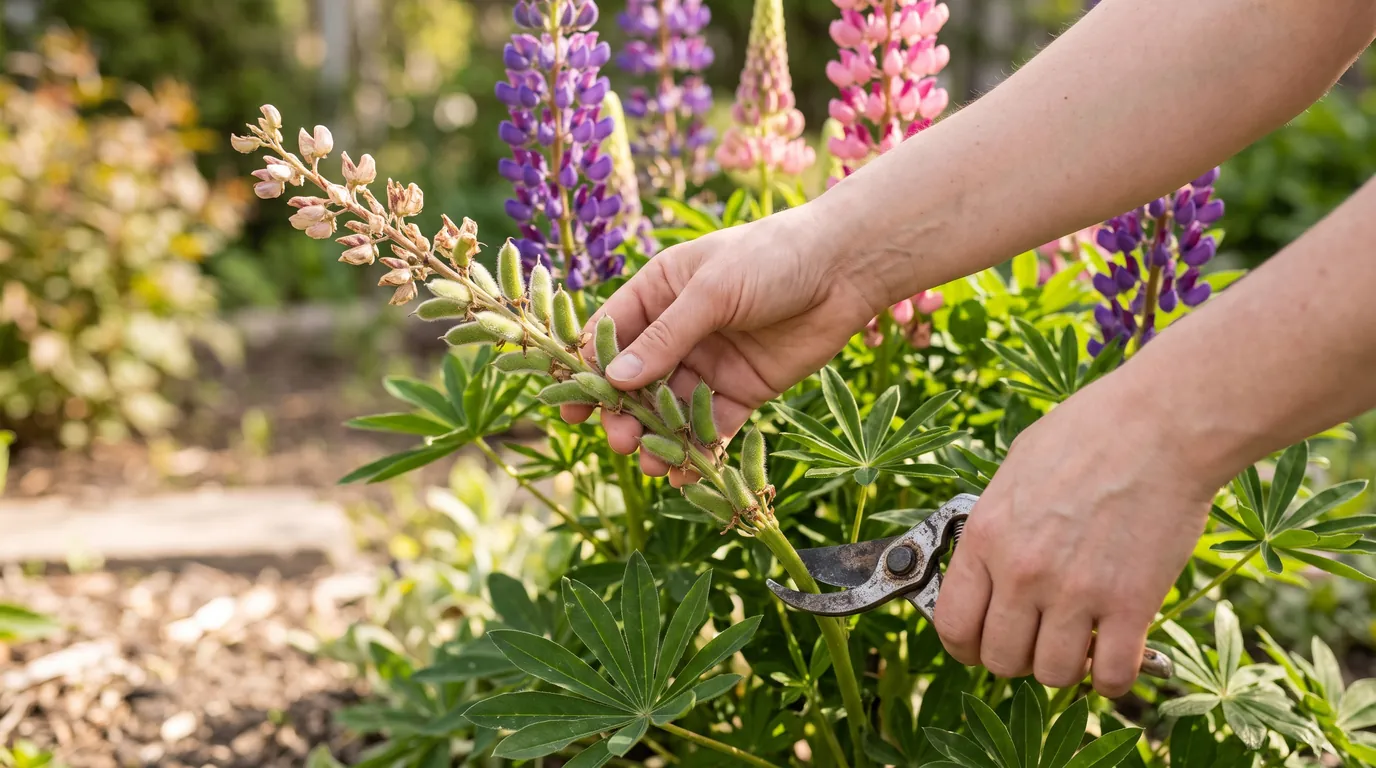
NC State says deadheading spent flower spikes encourages more bloom. Cut each spike back once most of its flowers have faded and before the pods swell and turn dark. That gives you more flowers and fewer seedlings, and it keeps seed from leaving your garden.
Lupin flower spikes are thick and hollow at the base. Sharp bypass pruners cut them cleanly just above the leaves when the flowers fade, before the seed pods ripen, without crushing the stem or tearing the crown.
Affiliate link — GrowersGuide.ca may earn a commission on qualifying purchases, at no extra cost to you. See our affiliate disclosure.
Troubleshooting Lupins
| What you see | Likely cause | What to do |
|---|---|---|
| Plants decline in a hot summer | Heat and humidity (NC State) | Light afternoon shade, mulch over the roots, steady water. |
| Plant gone after a few years | Short life span of 2–5 years (NC State) | Normal. Sow replacements from seed. |
| Seed did not come up | Hard seed coat (BC government) | Scarify the seed before sowing. |
| Leaves chewed, slime trails | Slugs and snails (NC State) | Hand-pick them. |
| White powder on leaves | Powdery mildew (NC State) | Give plants room for air. |
| Clusters of insects on the spikes | Aphids (NC State) | Knock them off with a strong spray of water. |
| Seedlings in the lawn or beyond the fence | Self-seeding (UMN) | Deadhead before pods ripen; pull unwanted seedlings. |
Children and Pets
NC State lists lupine seeds as poisonous to humans, with low severity: toxic only if large quantities are eaten. Keep the pods away from small children. We do not make safety claims about plants and pets; check the ASPCA list of toxic and non-toxic plants, and call your veterinarian if your pet eats part of a plant.
Frequently Asked Questions
Are lupins invasive in Canada?
Large-leaved lupine (Lupinus polyphyllus) is native to southwestern and south-central British Columbia, according to the BC government. Outside its native range it escapes gardens. The University of Minnesota says it has spread from home gardens into the wild there and threatens ecosystems by outcompeting native plants. We could not open a provincial or university source on its status in eastern Canada, so we do not state one; deadhead your plants before the seed ripens if you garden near fields, roadsides or natural areas.
Do lupins come back every year?
For a few years. NC State says lupines are short-lived perennials, lasting 2 to 5 years even in good conditions. Plan to replace them from seed.
When should I sow lupin seeds?
NC State recommends planting lupine seed in the fall. The BC government found that scarifying the hard seed coat helped germination of large-leaved lupine, while two months of cold storage did not help in its tests.
Why are my lupins dying in summer?
Heat is the usual reason. NC State says lupines need a cool climate and dislike heat and humidity; in hot areas they do best with light afternoon shade and a mulch to keep the roots cool. They also need consistent watering.
Should I deadhead lupins?
Yes. NC State says deadheading spent flower spikes encourages more bloom, and removing spikes before the pods ripen also stops the plant from seeding into places you do not want it.
Are lupins poisonous?
NC State lists lupine seeds as poisonous to humans, with low severity, toxic only if large quantities are eaten. Keep seed pods away from small children. For cats and dogs, check the ASPCA list of toxic and non-toxic plants and call your veterinarian if your pet eats part of a plant.