
Fungus Gnats in Plants: How to Get Rid of Them
The tiny black flies of a Canadian winter. Why they come from the soil, and how to stop the next generation.
GrowersGuide.ca is reader-supported. When you buy through links on this page, we may earn an affiliate commission — at no extra cost to you. See our affiliate disclosure.
Fungus gnats in plants are the tiny dark flies that drift up from a pot when you water it, walk across the soil and gather at the window. They are annoying, but in most homes they do little harm to the plant.
The flies you see are the last stage. The problem is the larvae in the damp soil underneath, and that is where the fix goes.
Let the top 2 to 3 cm of mix dry before you water again, water from the bottom and empty the saucer, catch the adults on yellow sticky traps, and if they hang on, treat the soil with a labelled Bti product. Give it three to four weeks, the length of one life cycle.
What Fungus Gnats Look Like
Adults: dark grey to black flies, about 2 to 3 mm long, with long thin legs, long antennae and clear or smoky wings. UC IPM describes them as delicate, mosquito-like and weak fliers: they stay close to the pots, run across the soil and rest on leaves, and because they are drawn to light they collect at windows. The University of Saskatchewan adds that grow lights and screens attract them too.
Fungus gnat larvae (the "baby fungus gnats"): slender, legless worms up to about 6 mm long, white or nearly clear, with a shiny black head. They live in the top few centimetres of moist potting mix. In a very wet pot you may see thin, shiny slime trails on the soil surface, which UC IPM says the larvae leave.
Tiny bugs that jump rather than fly, white or grey and about 1 mm long, are more likely springtails. University of Minnesota Extension describes them as scavengers in damp, peaty mix that rarely harm plants; drier soil handles them too.
Fungus Gnats or Fruit Flies?
University of Wisconsin-Madison notes the two are often mistaken for each other. Where they gather is the quickest tell.
| Fungus gnats | Fruit flies | |
|---|---|---|
| Look | Dark grey to black, thin, long legs and antennae, like a tiny mosquito | Stockier, tan to yellowish brown, often with red eyes (UC IPM) |
| Where | On and around potted plants, on the soil, at the window | Around fruit, the compost bin, the sink and recycling |
| Breeds in | Damp potting mix | Ripe or fermenting fruit and food scraps |
| Fruit-fly traps | Do not work on them, says Wisconsin | Made for them |
If the flies are at the fruit bowl rather than the plants, deal with the fruit and scraps; nothing on this page will help.
The Life Cycle: Why the Larvae Are the Real Problem
A female lays up to 200 eggs in cracks in damp potting mix, according to Colorado State University Extension. UC IPM gives the timing at about 24 °C:
- Eggs hatch in about 3 days.
- Larvae feed in the soil for about 10 days.
- Pupae sit in the soil for about 4 days.
- Adults emerge, mate and lay eggs. Wisconsin says they live about a week.
So most of a fungus gnat's life is spent in the soil, and UC IPM says the most effective control targets those stages rather than the short-lived flies. Swatting adults or trapping them alone does not stop the larvae already in the pot. Colorado State puts egg to adult at three to four weeks at room temperature, which is why any fix takes about that long to show.
Do they hurt the plant? The adults do not bite people or feed on plants. The larvae eat mostly fungi and decaying matter, but in large numbers they chew roots. UC IPM says that matters most for seedlings, cuttings and young plants, and that a wilting houseplant is far more often root rot from overwatering than gnat damage. If you are starting seeds indoors, take fungus gnats more seriously.
Why Fungus Gnats Show Up in Winter
Colorado State University Extension says fungus gnats are most noticeable in late fall and winter, and gives the reasons. Every one of them fits a Canadian house:
- The soil stays wet longer. Short days and cool rooms slow plant growth and water use. Keep the summer watering routine and the mix stays damp, which is exactly what egg-laying females look for.
- Plants came in from outside. A pot that spent the summer on the balcony can bring gnats in with it in September.
- Old potting mix holds more water. As mix breaks down it stays wetter, so a plant that has not been repotted in years is a likely source.
- A new bag or a new plant. The University of Saskatchewan says they most likely arrive in potting mix or compost. Holiday plants and winter purchases count.
In short, fungus gnats in the house in January almost always mean overwatering for the season. Our winter houseplant care guide covers how much to cut back.
How to Get Rid of Fungus Gnats, Step by Step
- Find the source pot. Gnats flying up when you water, or larvae and slime trails on the surface, show which pots are breeding them. Move those away from your other plants.
- Let the top of the soil dry. Oregon State University Extension says the larvae live in the top centimetre or so of mix and need moisture, and advises checking that the top 2 to 3 cm is dry before watering. Colorado State calls drying the surface between waterings the most important step: dry mix kills eggs and young larvae and stops being attractive to females. Do not let the plant wilt.
- Water from the bottom. Oregon State suggests it to keep the surface dry. Stand the pot in a bowl of water for 15 to 20 minutes, let it drain, and do not leave water in the saucer.
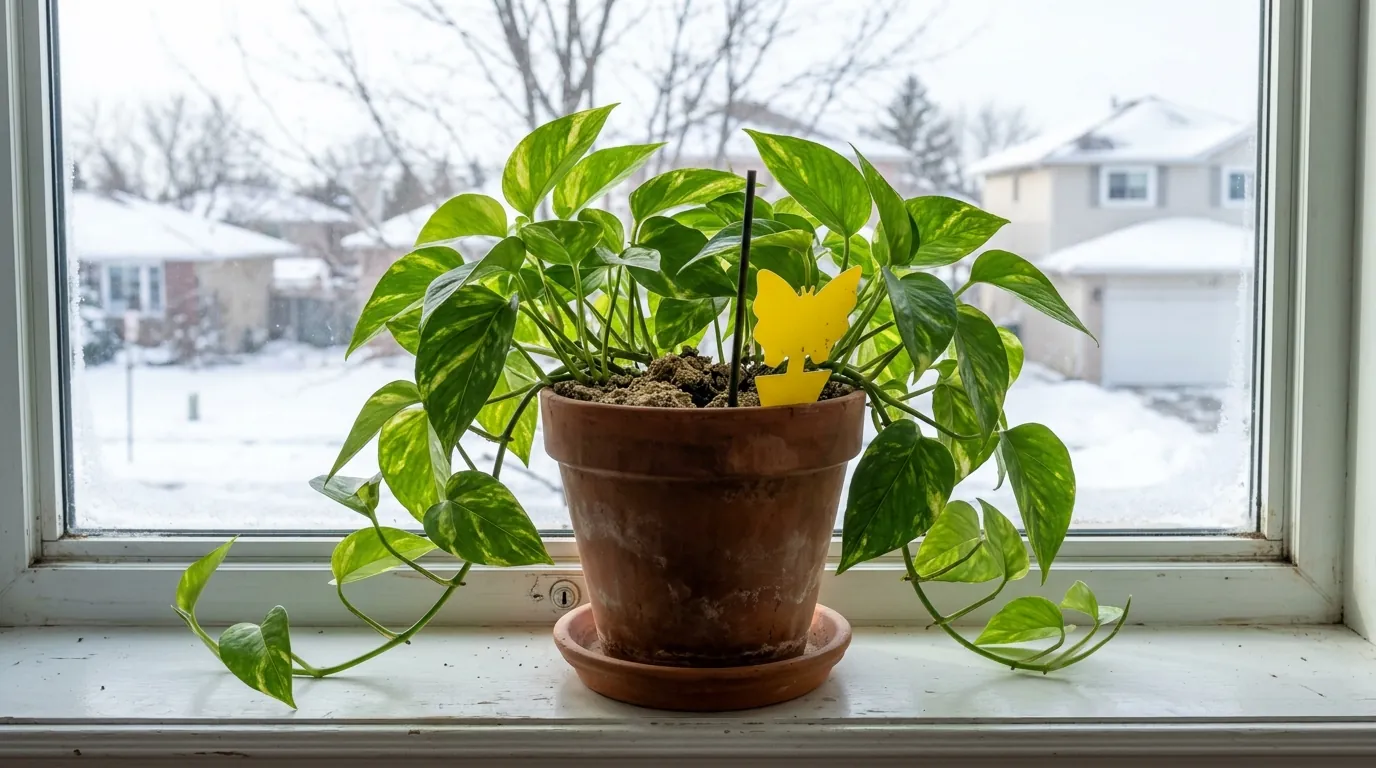
- Catch the adults with yellow sticky traps. UC IPM and Oregon State both suggest small yellow cards on a stake pushed into the pot. They catch egg-laying females and show you whether numbers are falling. Minnesota is clear that traps help you monitor and should not be the only thing you do. Replace them every few days.
- Treat the soil with Bti if they persist. See the section below. It kills larvae, not adults, and usually needs repeating.
- Repot into fresh mix if the old mix is broken down and stays soggy. Minnesota suggests washing the old soil off the roots and repotting into fresh mix in a clean pot; Colorado State recommends repotting every so often for the same reason. Use a pot with a drainage hole, no bigger than needed.
- Clean up the surface. Fallen leaves, dropped flowers and rotting bits on the soil feed the larvae, says UC IPM. Pick them off.
UC IPM says insecticides are rarely warranted for fungus gnats in the home. The steps above, done for three to four weeks, clear most infestations.
Small yellow cards on a stake, pushed into the pot just above the soil. They catch the adults as they come up and show you, week by week, whether the drier watering is working. They do not reach the larvae, so use them with the steps above.
Affiliate link — GrowersGuide.ca may earn a commission on qualifying purchases, at no extra cost to you. See our affiliate disclosure.
Bti and Mosquito Dunks for Fungus Gnat Larvae
Bti (Bacillus thuringiensis subspecies israelensis) is a bacterium that kills fly larvae, including fungus gnat larvae, and does not touch the adults. It is the ingredient in mosquito dunks and mosquito bits, which is why people search for "mosquito dunks for fungus gnats". UC IPM names Mosquito Bits and Gnatrol as Bti products home gardeners can use, and Oregon State notes that Bti products are labelled for mosquito control in standing water and often sit in the pond section of garden stores.
- Read the label for your use. A product sold for ponds and rain barrels is labelled for that. In Canada, choose a Bti product registered by Health Canada whose label lists fungus gnats, potted plants or houseplants, and use it the way the label says. The box below explains how to check.
- It goes on the soil, as a drench. Oregon State and UC IPM describe mixing it with water and pouring it onto the mix.
- Expect to repeat it. UC IPM says Bti does not persist indoors, so repeat applications about five days apart are often needed. Follow the interval on your label.
- It is not the Bt for caterpillars. UC IPM points out that Bt sold for cabbage worms is a different subspecies and does not work on fly larvae. Check for israelensis on the label.
UC IPM also lists Steinernema feltiae nematodes, mail-ordered live and watered into the mix, as a biological control for the larvae.
Any product, in Canada: registered, and used as its label says
A product sold to kill an insect or mite, insecticidal soap included, is a pest control product. In Canada it must be registered by Health Canada’s Pest Management Regulatory Agency (PMRA), and a registered product carries a registration number with “Pest Control Products Act” on its label. Check that the label names houseplants and the pest you have, and follow it exactly: the rate, the number of sprays and the days between them. You can look a product up in Health Canada’s pesticide label search. Do not mix your own soap from dish detergent: University of Minnesota Extension warns that homemade soap mixes can burn plants.
Bti is the ingredient that kills fungus gnat larvae in the soil, the stage the sticky traps cannot reach. Before you buy, check the label for a Canadian registration number and for fungus gnats or potted plants in the list of uses.
Affiliate link — GrowersGuide.ca may earn a commission on qualifying purchases, at no extra cost to you. See our affiliate disclosure.
Pets while you treat
The product label says what precautions to take around children and pets and how long to keep them away; read it before you spray. The simplest approach is to treat the plant in another room or in the bathtub with the door shut, and put it back once the leaves are dry. Keep rubbing alcohol and used swabs out of reach, and place sticky traps where a cat cannot brush against them.
How to Keep Fungus Gnats Out
- Check new plants. Oregon State suggests keeping new plants apart for a few weeks with a sticky trap in the pot. Look at the soil surface of anything you bring home.
- Use fresh bagged potting mix, never garden soil, and keep open bags closed. UC IPM advises pasteurised mix and storing it in closed containers.
- Water less from November to March. Check the soil with a finger, not the calendar.
- Choose a pot with a drainage hole and empty saucers and cache-pots after watering.
- Go easy on organic additions. UC IPM warns that incompletely composted matter in a mix is often infested, and that heavy organic fertilizers feed fungus gnats.
Not Fungus Gnats?
Tiny bugs on the leaves rather than flies at the soil point to other pests. White fluff at the leaf joints is mealybugs, speckled leaves and fine webs are spider mites, soft green bugs on new growth are aphids, and silvery streaks are thrips. The houseplant pests guide has a table to tell them apart, and the houseplant problems guide covers yellow leaves and drooping.
Fungus Gnats: Frequently Asked Questions
What are the tiny black flies around my houseplants?
Almost always fungus gnats. They are dark, delicate flies about 2 to 3 mm long with long legs and antennae, and they stay close to the pots, run across the soil and fly up when you water. UC IPM describes them as weak fliers that look like tiny mosquitoes. They lay their eggs in damp potting mix.
How do I get rid of fungus gnats in my houseplants?
Target the larvae in the soil, not just the flies. Let the top 2 to 3 cm of mix dry before watering again, water from the bottom and empty the saucer, catch the adults on yellow sticky traps, and if they persist treat the soil with a Bti product whose label covers fungus gnats in potting mix. Repot into fresh mix if the old mix stays soggy. Expect three to four weeks, the length of one life cycle.
What do fungus gnat larvae look like?
Slender, legless worms up to about 6 mm long, white or almost clear, with a shiny black head. They live in the top few centimetres of moist potting mix, and in a damp pot you may see thin, shiny slime trails on the surface, according to UC IPM.
Do fungus gnats hurt plants?
The adults do not: they do not bite people or feed on plants. The larvae mostly eat fungi and decaying matter in the mix, but in large numbers they chew roots, which UC IPM says matters most for seedlings, cuttings and young plants. In most homes they are a nuisance more than a threat.
Do mosquito dunks work for fungus gnats?
Mosquito dunks and bits contain Bti (Bacillus thuringiensis israelensis), a bacterium that kills fly larvae, including fungus gnat larvae, and UC IPM names Mosquito Bits as a Bti product home gardeners can use. A product sold for standing water is labelled for that use, though. In Canada, use a registered Bti product whose label lists fungus gnats or potted plants, and follow the label. It does not kill the adults.
Why do I have fungus gnats in winter?
Because the soil stays wet longer. Colorado State University Extension says fungus gnats are most noticeable in late fall and winter, when plants brought in from outside carry them, short days slow plant growth and water use, and an unchanged watering routine keeps the mix damp.
How can I tell fungus gnats from fruit flies?
Fungus gnats are dark and thin with long legs and stay near potted plants. Fruit flies are stockier, tan to yellowish with red eyes, and gather around fruit and the compost bin. University of Wisconsin-Madison notes the two are often confused, and that the traps used for fruit flies do not work for fungus gnats.
How long does it take to get rid of fungus gnats?
Plan on three to four weeks. Colorado State gives the egg-to-adult cycle as three to four weeks at room temperature, so adults keep emerging from larvae already in the soil for a while after you change your watering. A steady drop on the sticky traps means it is working.
Sources
- UC Statewide IPM Program, Pest Notes: Fungus Gnats and Fruit Flies.
- Oregon State University Extension, I have fungus gnats everywhere. Can you help?
- Colorado State University Extension, Fungus Gnats as Houseplant and Indoor Pests (fact sheet 5.584).
- University of Wisconsin-Madison, Fungus Gnats on Houseplants.
- University of Minnesota Extension, Managing insects on indoor plants (fungus gnats, springtails).
- University of Saskatchewan, Fungus gnats.
- Health Canada, Pesticide label search.