
Croton Care Guide — Canada
How to grow a croton (Codiaeum variegatum) in Canadian homes — the bright light its vivid colours need, even watering, humidity, warmth, and how to stop the leaf drop that defeats most croton owners.
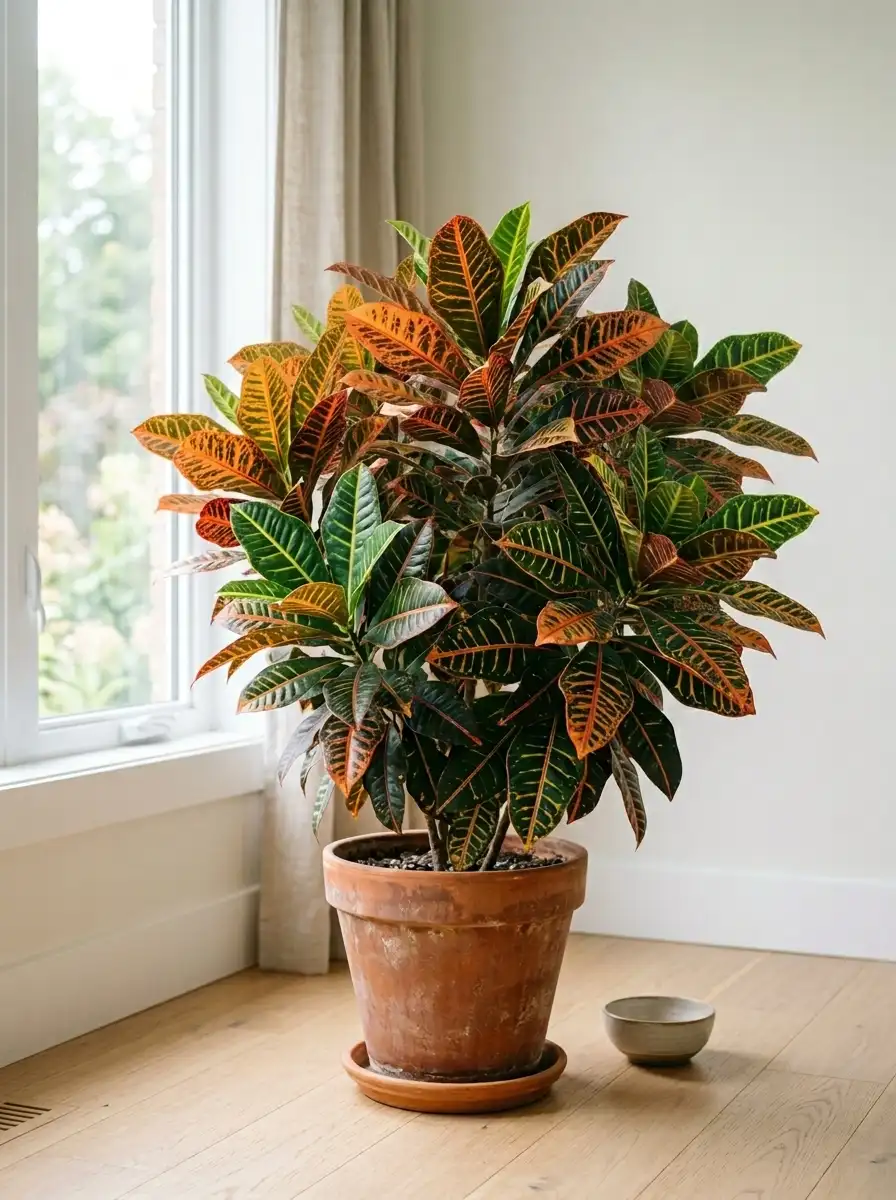
The croton (Codiaeum variegatum) is one of the most spectacularly colourful houseplants you can grow — leaves splashed and veined in red, orange, yellow, and purple, like a tropical sunset on a windowsill. It is also one of the more demanding, with a reputation for dropping leaves dramatically the moment it is unhappy. The good news: croton care comes down to four things — bright light, even moisture, humidity, and warmth — and once those are stable, the plant settles and stops shedding.
This guide covers the complete croton care routine for Canada — why crotons drop leaves and how to stop it, the light its colours depend on, watering, humidity, variety differences, and propagation.
Croton at a glance: Light — very bright, some direct sun; colour depends on it. Water — keep soil evenly moist. Humidity — 40%+, higher is better. Dropping leaves? — cold draft, dry air, a move, or erratic watering. Pet safe — no, toxic to cats and dogs ⚠️
Is your Croton getting enough light this winter?
A Canadian winter cuts daylight roughly in half. See what your city actually gets this month, and whether a grow light is needed.
🌿 Croton Quick Care Card
Why Crotons Drop Leaves in Canada — and How to Stop It
Leaf drop is the croton's signature complaint. The plant is dramatically sensitive to change and stress, and a Canadian home offers plenty of triggers. The fix is almost always about stability — find the right spot and stop changing things.
Cold drafts — the #1 Canadian cause
A croton chilled by a cold draft drops leaves fast. In Canadian homes this happens most from a repeatedly-opened exterior door near the plant, a leaky window, or leaves touching cold winter glass. Keep the croton in a warm spot, well back from cold glass and away from drafty doorways.
Being moved, and dry air
Crotons hate being moved — even to a better spot — and often shed a flush of leaves after relocation or after coming home from the shop. Dry forced-air winter heating also triggers drop. Pick a stable, warm, bright, humid spot and leave the plant there; run a humidifier or use a pebble tray through the heating season.
Erratic watering
Letting the soil go bone dry, or keeping it soggy, both make a croton shed leaves. Keep the soil evenly moist on a consistent rhythm. Note that some loss of the oldest lower leaves as the plant grows taller is normal — it is a sudden flush of leaf drop that signals a problem.
Light — Why Croton Colour Depends On It
Croton colour is the whole point of the plant, and colour is driven by light. Crotons are among the most light-hungry common houseplants — they want bright light with several hours of direct sun. The challenge in Canada is the short, weak winter.
South / West Window — Best
Bright light with several hours of direct sun. Vivid red, orange, and yellow colour and compact growth. The ideal year-round spot in Canada, and essential through winter.
East Window — Borderline
Bright morning light works in summer but is often too weak in a Canadian winter. Colour dulls and growth stretches — supplement with a grow light if needed.
Low / Medium Light — Colour Fades
The plant survives but leaves come in dull green, growth is leggy, and the croton loses the very thing it is grown for. Not recommended.
Croton Varieties at Canadian Garden Centres
All crotons are cultivars of Codiaeum variegatum, bred for wildly different leaf shapes and colour patterns. They all share the same care — bright light, even moisture, warmth, and humidity.
| Variety | Look | Notes |
|---|---|---|
| Petra | Large oval leaves veined in yellow, orange, red, and green | The most common croton in Canada; the classic look |
| Gold Dust | Dark green leaves heavily speckled with gold-yellow | Compact and tidy; one of the more forgiving crotons |
| Mammy | Narrow leaves that curl and twist, in red, orange, and green | Striking sculptural form; widely sold |
| Zanzibar | Long, thin, grass-like leaves in a fountain of colours | Fine-textured, almost ornamental-grass look |
| Mrs Iceton | Oval leaves shifting from yellow to deep pink and red | Rich, sunset-toned colour; a collector favourite |
| Magnificent | Large broad leaves in bold green, yellow, and red mosaic | A big-leaved statement croton; wants the brightest light |
How to Water a Croton in Canada
Keep the soil consistently, evenly moist — water when the top 2–3 cm has dried. A croton is not a succulent: it sheds leaves if the soil dries out fully, and rots if it sits soggy. Consistency matters as much as the amount.
Croton watering schedule — Canada: Summer (May–Sept): every 5–7 days. Fall (Oct–Nov): every 7–10 days. Winter (Dec–Feb): every 10–14 days. Spring (Mar–Apr): every 5–7 days. Always check the top 2–3 cm first, and use room-temperature water. Water thoroughly until drainage; empty the saucer after 30 minutes.
Crotons want soil that stays evenly moist — never dry, never soggy. A 3-in-1 soil meter shows you exactly what the root zone is doing — push the probe in for an instant moisture, light, and pH reading. No batteries needed.
Affiliate link — GrowersGuide.ca may earn a commission on qualifying purchases, at no extra cost to you. Learn more.
The other thing Canadian houseplants run short on all winter is light. From November to March most homes are too dim to keep plants growing — leaves stretch toward the window, variegation fades, and new growth stalls. A small full-spectrum LED grow light on a timer bridges the dark months, even for tough low-light plants that only survive (rather than grow) in a dim room.
Affiliate link — GrowersGuide.ca may earn a commission on qualifying purchases, at no extra cost to you. Learn more.
Why no fixed schedule works: How fast soil dries depends on temperature, light, pot material, room humidity, and plant size. A croton in a bright warm summer window dries far faster than one in lower winter light. The top 2–3 cm finger test automatically accounts for all of these. See what affects soil drying rate →
Humidity — A Real Croton Need in Canadian Winters
Crotons are humidity-loving tropicals that want 40% relative humidity or higher — ideally more. Canadian forced-air heating drops indoor air to 25–30% in winter, and that dry air browns croton leaf edges, worsens leaf drop, and invites spider mites, the croton's most common pest. Run a humidifier near the plant from November through March, set the pot on a wide pebble tray, and group it with other plants to raise the local humidity. A bright bathroom is an excellent winter home. Check the undersides of the leaves regularly for the fine webbing and stippling of spider mites, which thrive in dry heated air — rinse the plant and treat early if you spot them.
A croton drops its lower leaves when winter air gets too dry — and Canadian forced-air heat sits at 25–30% humidity, well below the 40–60% it wants. A small cool-mist humidifier running near the plant is the most effective fix (a pebble tray only adds a few percent). This Levoit 2.5L easily covers a plant corner.
Affiliate link — GrowersGuide.ca may earn a commission on qualifying purchases, at no extra cost to you. Learn more.
Canadian Winter Care
Brightest window, and don't move it
Weak Canadian winter light dulls croton colour. From November through February, give the plant your brightest south or west window — or add a grow light. But find that spot and commit to it: crotons drop leaves when moved, so resist relocating the plant back and forth between seasons. Address a cold draft at the window rather than shuffling the plant around.
Run a humidifier, keep it warm
Dry winter heating is hard on crotons. A humidifier or pebble tray is close to essential through the heating season to prevent brown tips, leaf drop, and spider mites. Keep the plant warm — above 15°C at all times — and well away from cold window glass, drafty doors, and the hot dry blast of heating vents.
Water less, stop fertilising
Growth slows in winter and soil stays moist longer in low light, so stretch watering to every 10–14 days — but never let the soil dry out fully, as that triggers leaf drop. Stop fertilising from October through February and resume a diluted feed in spring when new growth appears.
How to Propagate a Croton
Crotons are propagated by stem cuttings, best taken in spring or summer. Wear gloves — the milky sap irritates skin.
Take a stem-tip cutting
Cut a stem tip 10–15 cm long with three or four leaves, using clean shears. Rinse the milky sap from the cut end and let it sit a few minutes. If the cutting has large leaves, you can trim them down by half to reduce moisture loss while it roots.
Root it warm and humid
Insert the cutting into moist, well-draining soil, or root it in water. Warmth and humidity are key: keep it at 21–27°C, in bright indirect light, under a loose clear cover or in a propagation box. Roots form over about 4–6 weeks. Crotons can be slow and a little sulky to root, so take two or three cuttings to improve your chances.
Aftercare
Once a cutting has rooted, pot it up and move it gradually into brighter light over a week or two. Expect a rooted croton to drop a leaf or two as it adjusts — that is normal. Keep it warm, humid, and stable while it establishes.
Croton Troubleshooting
Dropping leaves
A stress response — in Canada usually a cold draft, dry air, a recent move, or erratic watering. Find a stable, warm, bright, humid spot away from drafts and cold glass, keep watering consistent, and leave the plant there. A newly bought croton dropping leaves is often just adjusting; it settles.
Dull green leaves, no colour
Too little light. Croton colour needs bright light with some direct sun — in a dim spot leaves come in green. Move to your brightest window or add a grow light. Existing dull leaves won't change, but new growth comes in vivid.
Brown, crispy leaf edges
Low humidity, or soil that dried out too far. Raise humidity with a humidifier or pebble tray and keep the soil evenly moist. Very common in dry Canadian winters — trim badly crisped edges with clean scissors.
Fine webbing and stippled leaves
Spider mites — the croton's most common pest, thriving in dry heated air. Rinse the plant thoroughly, wipe the leaves, raise the humidity, and treat with insecticidal soap, repeating every few days. Isolate the plant from others while you treat it.
Frequently Asked Questions
My new croton is dropping leaves — is it dying?
Probably not. A croton brought home from a shop or moved to a new room very commonly drops a flush of leaves from the shock of changed conditions — different light, temperature, and humidity. It is alarming but usually not fatal. Settle the plant into a stable, warm, bright, humid spot away from drafts, keep watering consistent, and don't move it again. New growth resuming is the sign it has adjusted — which can take a few weeks.
Can a croton survive a Canadian winter indoors?
Yes, with attention. Winter is the croton's hardest season in Canada: weak light dulls the colour and dry heated air causes leaf drop and spider mites. To carry one through, give it your brightest window or a grow light, run a humidifier, keep it warm (above 15°C) and away from cold glass and drafts, and water a little less but never let the soil dry out fully. A croton that gets all of that stays colourful through winter.
Can I put my croton outside in summer?
Yes, and many Canadians do — a warm, bright, sheltered spot outdoors in summer suits a croton well and intensifies its colour. Move it out only once nights are reliably above about 15°C, and introduce it to brighter light gradually over a week or two to avoid scorch. Bring it back indoors well before the first fall frost — crotons have no cold tolerance. Expect some adjustment leaf drop each time it moves.
Is the croton hard to care for?
The croton has a reputation as a fussy plant, but it is really just demanding about four specific things: bright light, even moisture, humidity, and warmth — plus a strong dislike of being moved. It is not a good first houseplant or a good choice for a dim apartment. But for someone who can give it a stable, bright, warm, humid spot and leave it there, a croton is rewarding and not genuinely difficult.
Why is my croton dropping leaves?
Croton leaf drop is the most common complaint, and it is almost always a stress response — crotons are dramatic about any sudden change. In Canada the usual triggers are: a cold draft from an exterior door or window (the most common cause — even brief cold exposure causes leaf drop); being moved to a new spot, even a better one; dry air from forced-air heating; and inconsistent watering, either letting the soil go bone dry or keeping it soggy. A newly bought croton often drops some leaves simply from the shock of moving home — that settles. To stop ongoing leaf drop, find a stable, warm, bright, humid spot away from drafts and leave the plant there. Some lower-leaf loss as the plant grows is normal.
How much light does a croton need in Canada?
Crotons need a lot of light — they are one of the most light-hungry common houseplants. They want bright light with several hours of direct sun to develop and hold their vivid red, orange, yellow, and purple leaf colours. A south or west window is ideal in Canada year-round. In low or even medium light, a croton survives but its leaves stay dull green and the plant grows leggy — the colour is the whole point of a croton, and colour needs light. Canadian winters are the hard season: short, weak daylight from November through February dulls croton colour, so give it the brightest window in the house, or add a grow light.
How often should I water a croton in Canada?
Keep a croton's soil consistently, evenly moist — never soggy, but never allowed to dry out completely. In practice that means watering when the top 2–3 cm of soil has dried, roughly every 5–7 days in summer and every 10–14 days in a Canadian winter. Crotons are not succulents: if the soil dries out fully the plant drops leaves, and if it sits in waterlogged soil the roots rot. Water thoroughly until it drains, empty the saucer, and water again before the soil dries past the top few centimetres. Use room-temperature water — cold water shocks this warmth-loving tropical.
Are crotons toxic to cats and dogs?
Yes — crotons (Codiaeum variegatum) are toxic to both cats and dogs. The leaves, stems, and especially the milky sap contain compounds that cause vomiting, drooling, and irritation of the mouth and digestive tract if chewed. The sap also irritates human skin, so wear gloves when pruning or propagating. Reactions in pets are usually unpleasant rather than life-threatening, but the croton is not a pet-safe plant — keep it out of reach of cats and dogs that chew foliage. If you want a colourful pet-safe alternative, a calathea offers bold patterned leaves and is non-toxic.
How do I keep my croton's colours bright?
Croton colour is driven almost entirely by light. The vivid reds, oranges, yellows, and purples develop only when the plant gets bright light with some direct sun — in a dim spot the leaves come in dull green instead. To keep a croton colourful in Canada: give it your brightest window, ideally south or west-facing, and move it even closer to the glass through the dark winter months or add a grow light. New leaves emerge greener or yellow and deepen to their full colour as they mature in good light. Existing dull-green leaves grown in low light will not change colour, but new growth will come in vivid once the light improves.
How do I propagate a croton?
Crotons are propagated by stem cuttings, best taken in spring or summer. Cut a stem tip 10–15 cm long with three or four leaves, using clean shears. Rinse the milky sap off the cut end (wear gloves — the sap irritates skin), then root the cutting in moist, well-draining soil or in water. Warmth and humidity matter: keep the cutting at 21–27°C, in bright indirect light, and under a loose clear cover or in a propagation box to hold humidity while it roots, which takes about 4–6 weeks. Crotons can be slow and sometimes sulky to root, so take two or three cuttings to improve your odds.
🐾 Have pets? See our Pet-Safe Houseplants guide — which common houseplants are toxic to cats and dogs, which are safe, and what to do if a pet eats one.
📖 More Houseplant Guides
Care guides for popular Canadian houseplants.
Also Growing Vegetables?
Free planting calendars for 30+ vegetables across every major Canadian city.