
Air Plant Care Guide — Canada
How to grow air plants (Tillandsia) in Canadian homes — the soak-watering method, drying them properly to prevent rot, light, blooming, and pups. Soil-free and non-toxic to pets.
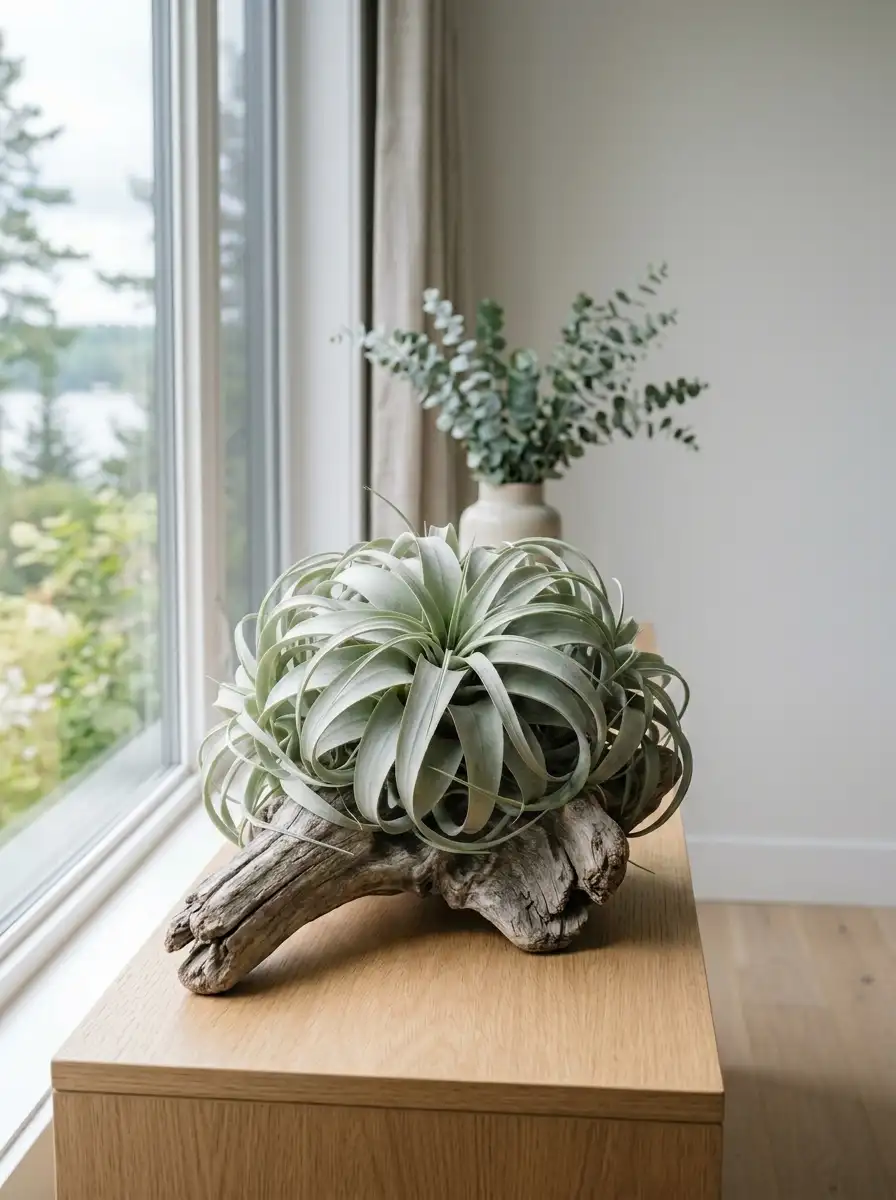
Air plants (Tillandsia) are unlike any other houseplant: they grow with no soil at all. In the wild they are epiphytes, clinging to tree branches and rock and absorbing water and nutrients through tiny silvery scales on their leaves called trichomes. That makes them wonderfully flexible to display — mounted on wood, set in glass, perched on a shelf — and it also means the care is completely different from a potted plant. Master one thing, watering and drying, and air plants are genuinely easy.
This guide covers the complete air plant care routine for Canada — the soak method, how to dry them so they never rot, light, how to display them, blooming and pups, and winter care for dry Canadian homes.
Air plant at a glance: Water — soak 20–60 min about weekly, then dry fully within 3–4 hours. Light — bright indirect, near a window. No soil — display on wood, glass, or shelves. Biggest risk — trapped water rotting the base. Pet safe — non-toxic to cats and dogs ✅
Is your Air Plant getting enough light this winter?
A Canadian winter cuts daylight roughly in half. See what your city actually gets this month, and whether a grow light is needed.
🌿 Air Plant Quick Care Card
How to Water an Air Plant — the Soak Method
Watering is the whole skill of air plant care. Because they have no soil, they cannot draw on a reservoir of moisture — you wet the whole plant, then you must dry it. Get the drying right and air plants are almost impossible to kill.
Step 1 — Soak
Fully submerge the plant in a bowl of room-temperature water for 20–60 minutes. Rainwater, filtered water, or pond/aquarium water is ideal; ordinary tap water is usually fine if you let it sit out a while for the chlorine to dissipate. Never use artificially softened water — its salt content damages and slowly kills air plants.
Step 2 — Shake off the excess
Lift the plant out and gently shake it to fling water out of the base and from between the leaves. This is the step most people skip — and water left pooled in the centre is exactly what causes rot.
Step 3 — Dry fully, upside down
Set the plant upside down or on its side somewhere bright with moving air, and let it dry completely within 3–4 hours. Never let an air plant dry sitting upright in a cup, shell, or closed terrarium — water drains down into the base, sits there, and rots the plant from the centre out. Drying upside down with good airflow is the single most important habit in air plant care.
Misting is a supplement, not a substitute
A light misting between soaks helps in very dry Canadian winter air, but for most species misting alone does not wet the plant thoroughly enough to keep it hydrated. The exception is the very fuzzy xeric species like Tillandsia tectorum, which prefer frequent misting to full soaking.
Air plant watering schedule — Canada: Summer (May–Sept): soak every 7–10 days. Fall (Oct–Nov): every 7 days. Winter (Dec–Feb): every 5–7 days — dry forced-air heating means more frequent soaking. Spring (Mar–Apr): every 7 days. Always dry the plant fully within 3–4 hours after every soak. Curling, greyer leaves mean it is thirsty; soak sooner.
Light Requirements for Air Plants in Canada
Air plants want bright indirect light — within a couple of metres of a window. They also dry faster in good light and air movement, which keeps them healthy. Avoid both dim corners and harsh direct afternoon sun through glass.
Bright Indirect — Best
Near an east window or a couple of metres from a south/west window. Suits all air plants; xeric (silvery) species also take gentle morning sun.
Medium — Acceptable Short-Term
Further from a window. The plant survives a while but dries slowly and slowly declines. Move it brighter, especially in a Canadian winter.
Dim Corner / Harsh Sun — Avoid
Deep shade lets the plant slowly fade and stay damp too long; harsh direct afternoon sun through glass scorches the leaves.
Air plants have no roots to store energy, so they fade fast in a dim Canadian winter — bright light is non-negotiable. When no window is bright enough from November to March, a small full-spectrum LED grow light on a timer keeps them coloured up and healthy. This clip-on model is inexpensive and easy to aim at a shelf display.
Affiliate link — GrowersGuide.ca may earn a commission on qualifying purchases, at no extra cost to you. Learn more.
How to Display an Air Plant
The no-soil habit is what makes air plants so fun to display — and the rule for every display is the same: it must let the plant dry out and breathe. Good options include mounting on a piece of driftwood, cork bark, or a wooden board (tuck the base into a crevice or attach it with a dab of waterproof glue or fishing line, never with copper wire, which is toxic to them); resting in an open glass globe or dish; or simply sitting on a shelf. Avoid anything that traps moisture: closed terrariums, soil, sphagnum moss kept wet around the base, or decorative shells and cups that pool water. If you display an air plant in a globe or on a mount, take it down to soak it and let it dry fully before returning it.
Air Plant Varieties at Canadian Garden Centres
There are hundreds of Tillandsia species. They fall into two broad groups: greener, smoother mesic types (more water, bright indirect light) and silvery, fuzzy xeric types (less water, more sun). All are watered by soaking or misting and dried the same way.
| Variety | Look | Notes |
|---|---|---|
| Tillandsia ionantha | Small, compact rosette; blushes red when blooming | Mesic; the most common and beginner-friendly air plant |
| Tillandsia xerographica | Large, silvery, sculptural curling leaves | Xeric; the “king of air plants”, takes brighter light |
| Tillandsia bulbosa | Bulbous base with twisting tentacle-like leaves | Mesic; striking form, likes bright indirect light |
| Tillandsia caput-medusae | Snaking, medusa-like leaves from a bulbous base | Tough and forgiving; good for beginners |
| Tillandsia stricta | Dense rosette of fine leaves, showy pink bloom | Fast-growing, easy, blooms readily and pups freely |
| Tillandsia tectorum | Extremely fuzzy, frosty silver-white leaves | Very xeric; prefers frequent misting to soaking, bright light |
Blooming and Pups
An air plant's life has a clear arc, and understanding it stops a lot of needless worry about a plant that is simply doing what it is meant to do.
It flowers once
Each air plant blooms a single time in its life, usually as it reaches maturity — sending up an often vivid flower spike, with many species blushing red, pink, or purple in the centre leaves. Bright light encourages blooming. The flowers are the high point of the plant's life.
Then it produces pups
After flowering, the mother plant grows offsets — pups — from around its base, typically two to eight of them. The mother then slowly declines over months or years. This is normal: the plant is not dying of neglect, it is finishing its cycle and the pups carry on.
Separating pups — or leaving a clump
Once a pup is about one-third to one-half the mother's size, gently twist or pull it free and grow it on as its own plant — this is how you propagate air plants. Or leave the pups attached and let them grow into a lush multi-plant “clump.” Either way, one plant becomes many over its lifetime.
Canadian Winter Care
Soak more often in dry winter air
Forced-air heating drops Canadian homes to 25–30% humidity in winter, and air plants dehydrate faster in that dry air. Soak every 5–7 days through the heating season rather than weekly, and watch the leaves — curling and a greyer cast mean it is thirsty. A light misting between soaks helps too.
Still dry them fully — and keep air moving
Plants dry more slowly in cool, still winter air, which raises the rot risk. Keep soaking it brief, shake the plant out well, and dry it in the brightest, airiest spot you have — near a window, not in a closed cabinet. If a room is very still, an occasional gentle fan helps plants dry after their soak.
Keep them warm and off cold glass
Air plants are tropical and cannot survive frost — keep them above about 10°C. The air right against a single-pane or frosty Canadian window can get close to freezing overnight, so keep plants near the light but not touching cold glass, and away from drafty doors. Never leave an air plant in an unheated porch or garage over winter.
Air Plant Troubleshooting
Soft, brown or black base; leaves falling from the centre
Rot from trapped water — the main killer of air plants. Once the core is mushy the plant usually cannot be saved. Prevent it: always dry the plant fully and upside down after soaking, and never display it where water can pool in the base. If a healthy pup is attached, it may survive even if the mother rots.
Wrinkled, deeply curled, crispy leaf tips
Dehydration — the plant needs water more often. Give it a longer soak (up to an hour) and increase the frequency, especially in dry Canadian winter air. The leaves should plump and uncurl somewhat within a day. Trim badly crisped tips with clean scissors.
A few outer leaves drying and browning
Usually normal — air plants shed their oldest outer leaves as they grow. Gently pull dried outer leaves away. It is only soft, dark rot at the core, not dry papery outer leaves, that signals real trouble.
Plant looks dull and pale, never blooms
Often too little light, or hard water salts. Move it to a brighter window, and switch to rainwater or filtered water if you have hard or softened tap water. Remember each plant blooms only once in its life, so an older plant that has already flowered will not bloom again — but its pups will.
Frequently Asked Questions
Can I keep an air plant in a closed glass terrarium?
Not a sealed, closed one — it traps moisture and humidity around the plant and leads to rot. Air plants need air movement to dry out, which is the opposite of what a closed terrarium provides. An open glass globe or dish is fine as a display, as long as you take the plant out to soak it and let it dry fully before putting it back, and never leave water sitting in the bottom of the globe.
Do air plants need fertiliser?
They do not strictly need it, but a little feeding encourages growth and blooming. Use a fertiliser made for air plants or bromeliads, at a weak dilution, mixed into the soak water roughly once a month in spring and summer. Do not use ordinary strong houseplant fertiliser, and do not over-feed — air plants are adapted to lean conditions, and salt buildup harms them.
Can air plants live outdoors in Canada?
Only in summer. Air plants enjoy a spell outdoors in warm weather — a shaded or dappled-light spot on a porch or balcony, where natural humidity and air movement suit them well. But they are tropical and have no frost tolerance whatsoever, so they must come back indoors well before the first fall frost and cannot overwinter outside anywhere in Canada. Watch that outdoor plants don't get harsh direct midday sun.
Which air plant is easiest for a beginner?
Tillandsia ionantha is the classic beginner air plant — small, inexpensive, widely sold, and forgiving. Tillandsia caput-medusae and Tillandsia stricta are also tough and easy, and stricta blooms and pups readily, so you see results. Whichever you start with, the make-or-break habit is the same: soak, shake out, and dry fully upside down. Master that and any air plant is easy.
How do I water an air plant?
The reliable way to water an air plant is the soak method. Fill a bowl with room-temperature water and fully submerge the plant for 20–60 minutes. Then — and this is the step that saves the plant — lift it out, gently shake off the excess water, and set it upside down or on its side somewhere bright and airy so it dries completely within 3–4 hours. Air plants (Tillandsia) have no roots in soil; they absorb water through tiny scales called trichomes on their leaves. Misting can supplement soaking but rarely wets the plant enough on its own. The single most important rule: never leave water sitting trapped in the base or between the leaves, and never let an air plant dry inside a closed container — trapped moisture causes rot, which is what kills most air plants.
How often should I water an air plant in Canada?
Soak an air plant about once a week as a starting point, adjusting for your home and the season. In a dry, forced-air-heated Canadian home in winter, every 5–7 days is often right, and you may need to soak more frequently if the leaf tips curl or dry out. In summer, or in a more humid room, every 7–10 days is usually enough. Greener, smoother (mesic) species need water more often; silvery, fuzzy (xeric) species like Tillandsia tectorum need it less and prefer misting to soaking. Read the plant: soft, slightly curled, greyer leaves mean it is thirsty, and they should perk up and green slightly within a day of a soak. Wrinkled, deeply curled, crispy-tipped leaves mean it is badly under-watered.
Why is my air plant dying and falling apart?
An air plant that goes brown or black at the base, feels soft or mushy there, and starts shedding leaves from the centre has rot — and rot is almost always caused by trapped water. It happens when a plant is not dried properly after soaking, is left in a closed terrarium or globe that holds moisture, or sits in a decorative shell or dish that pools water. By the time the centre is mushy the plant usually cannot be saved. Prevention is everything: after every soak, shake the plant out well and let it dry fully within 3–4 hours in bright, moving air, always upside down or on its side so water drains out of the base. If only the outer leaves have dried and browned, that is normal ageing — gently pull them away; it is only soft, dark rot at the core that is fatal.
Are air plants safe for cats and dogs?
Yes — air plants (Tillandsia) are considered non-toxic to cats and dogs. They are not on the ASPCA toxic plant list and are widely regarded as a pet-safe houseplant. Because they need no soil and are often displayed mounted on wood, in glass, or on shelves, they are easy to keep up out of a pet's reach as well. They are a good pet-safe choice for Canadian homes, alongside spider plants, calatheas, and Boston ferns.
How much light does an air plant need in Canada?
Air plants want bright indirect light — within a couple of metres of a window is ideal, and an east window with gentle morning sun suits most species. Avoid harsh direct afternoon sun through glass, which can scorch them, and avoid dim corners far from any window, where they slowly decline. The silvery, fuzzy (xeric) species such as Tillandsia xerographica and tectorum tolerate brighter light and some direct sun; the greener, smoother (mesic) species prefer bright indirect light only. In a dark Canadian winter, move air plants close to your brightest window — and remember that low light also means the plant dries more slowly after soaking, so give it good air circulation.
Do air plants flower, and what are pups?
Yes — each air plant flowers once in its life. As it matures it sends up a often brightly coloured bloom spike, and many species blush red, pink, or purple in their centre leaves around the same time. Flowering is the peak of the plant's life. Afterward, the mother plant slowly produces offsets called pups from around its base — usually two to eight of them — and then gradually declines over the following months or years. The pups are how air plants propagate: once a pup reaches about one-third to one-half the size of the mother, you can gently twist or pull it free and grow it on as a separate plant, or leave the cluster to grow into a 'clump.' A single air plant can give you a whole collection over its lifetime.
🐾 Have pets? See our Pet-Safe Houseplants guide — which common houseplants are toxic to cats and dogs, which are safe, and what to do if a pet eats one.
📖 More Houseplant Guides
Care guides for popular Canadian houseplants.
Also Growing Vegetables?
Free planting calendars for 30+ vegetables across every major Canadian city.