
Guide d'entretien du Cactus de Noël — Canada
Comment cultiver et entretenir le cactus de Noël (Schlumbergera) dans les foyers canadiens — déclencher la floraison de décembre, prévenir la chute des boutons, arrosage et soins après floraison.
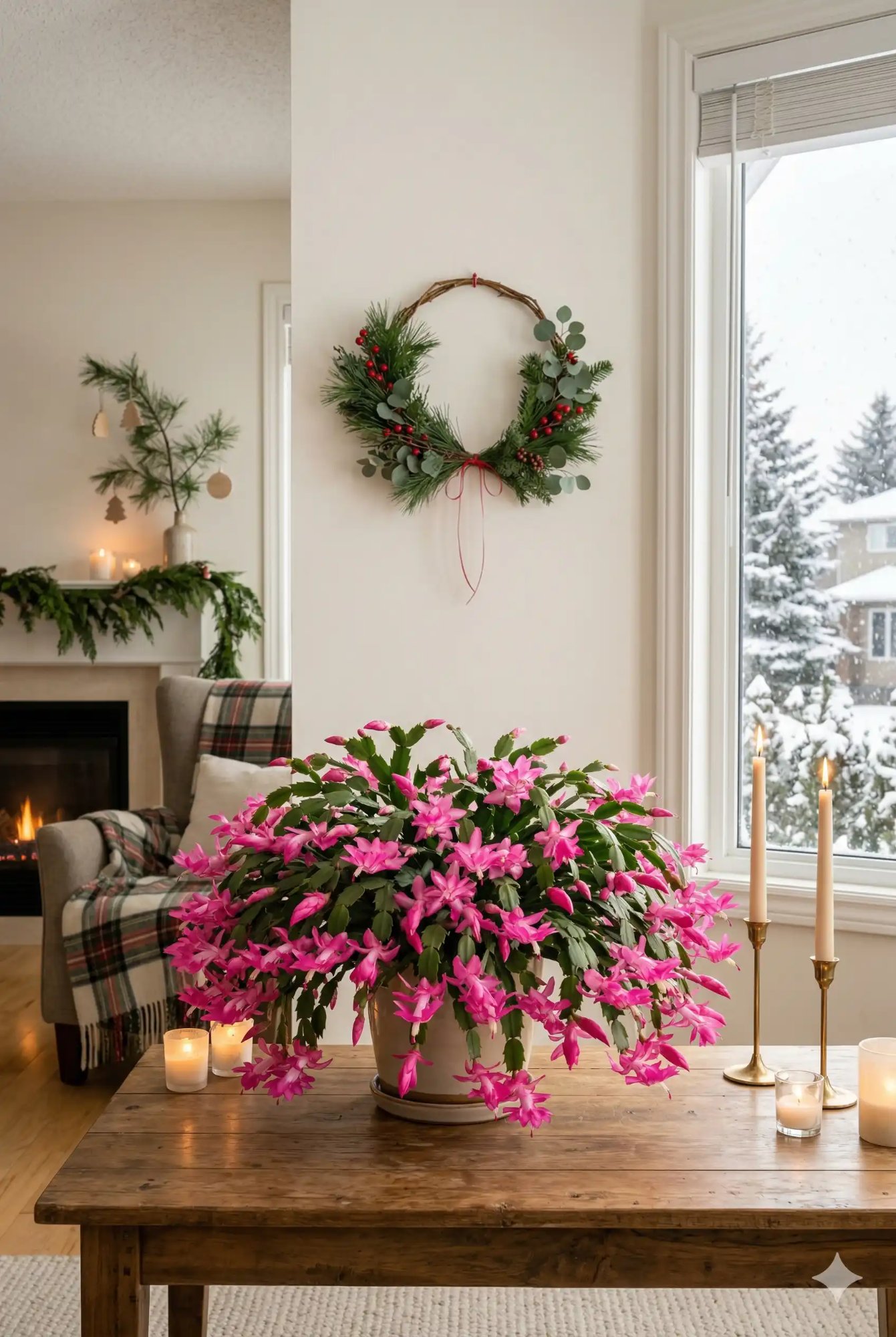
Le cactus de Noël (Schlumbergera) est l'une des plantes d'intérieur à fleurs les plus iconiques de l'hiver canadien — fleurs rouges, roses ou blanches qui apparaissent juste à temps pour les fêtes. C'est aussi une plante de famille qui se transmet sur des générations : un cactus de Noël bien entretenu peut vivre 50-100 ans.
Ce guide couvre tout ce qui est spécifique à la culture du cactus de Noël dans un foyer canadien — pourquoi nos hivers nous donnent un avantage naturel pour la floraison, comment déclencher les fleurs de décembre, et pourquoi les boutons tombent (le problème le plus frustrant).
Votre plante reçoit-elle assez de lumière cet hiver ?
Un hiver canadien coupe les heures d'ensoleillement de moitié. Voyez ce que votre ville reçoit ce mois-ci et si une lampe de croissance est nécessaire.
🌿 Fiche d'entretien rapide
Cactus de Noël en bref : Pour fleurir en décembre — dès le 1er octobre, placez près d'une fenêtre canadienne avec nuits noires complètes (pas de lampes le soir) et fraîches (13-18 °C). Boutons en 6-8 semaines. NE déplacez PAS une fois les boutons apparus — cause de chute. Arrosage — réduit oct-nov pour le déclenchement, reprise normale avec les boutons. Non-toxique chats et chiens.
Comment déclencher la floraison de décembre — l'avantage canadien
Bonne nouvelle : nos hivers canadiens donnent un avantage naturel. Le cactus de Noël a besoin de deux signaux simultanés pour initier des boutons : jours courts (moins de 12 h de lumière) ET nuits fraîches (13-18 °C). Au Canada, près des fenêtres en octobre-novembre, les deux conditions se produisent naturellement.
Fenêtre est ou ouest idéale. Le verre canadien refroidit la nuit, fournissant le signal de température. Le jour, lumière vive indirecte.
C'est l'étape ratée la plus fréquente. Si la plante est dans une pièce où vous allumez des lampes le soir (salon, cuisine), le signal de jours courts est interrompu. Déplacez vers une chambre d'amis ou une pièce sans éclairage du soir. Sinon, couvrez d'une boîte en carton de 18 h à 8 h chaque nuit.
Le léger stress hydrique aide à déclencher la floraison. Arrosez seulement quand le terreau est presque complètement sec — environ une fois toutes les 2 semaines pendant cette période.
Une fois les boutons visibles (petites bosses roses/blanches/rouges au bout des segments), reprenez l'arrosage régulier et arrêtez le traitement de nuits noires. Floraison en décembre.
Pourquoi les boutons tombent — et comment éviter
La chute des boutons est le problème le plus frustrant du cactus de Noël. Vous avez fait tout le travail de déclencher la floraison, puis les boutons tombent sans s'ouvrir. Quatre causes principales au Canada :
Cause #1 : Déplacement de la plante
Le cactus de Noël oriente ses boutons vers la source de lumière. Déplacer la plante (même de 30 cm, ou rotation) après formation des boutons provoque la chute. Choisissez l'emplacement définitif AVANT octobre et ne touchez plus la plante jusqu'à la fin de la floraison.
Cause #2 : Courants d'air froids
Très fréquent au Canada. Une porte extérieure ouverte 30 secondes en novembre, près de la plante, fait tomber les boutons en 1-2 jours. Évitez les emplacements près des entrées, portes-patio ou fenêtres mal isolées.
Cause #3 : Arrosage excessif après formation des boutons
Trop d'eau quand les boutons sont jeunes les fait avorter. Une fois les boutons visibles, reprenez l'arrosage régulier (tous les 10 jours) — pas plus. Vérifiez que le terreau est sec avant d'arroser.
Cause #4 : Air trop sec du chauffage
Le chauffage canadien à 25-30 % d'humidité dessèche les boutons. Placez un plateau à galets avec eau sous le pot ou un humidificateur dans la pièce pendant la formation des boutons.
Comment arroser le cactus de Noël au Canada
Contrairement aux vrais cactus du désert, le cactus de Noël est un cactus de forêt tropicale humide (Brésil). Il a besoin d'arrosage plus fréquent que les cactus ordinaires mais moins que les plantes tropicales typiques.
Horaire d'arrosage : Été (mai-sept) : tous les 7-10 jours. Oct-nov (déclenchement floraison) : tous les 14 jours, presque sec. Déc-jan (floraison) : reprise normale tous les 7-10 jours. Après floraison (fév-mars) : tous les 14 jours. Reprise normale avril.
L'arrosage excessif pendant la formation des boutons fait avorter la floraison. Un humidimètre 3-en-1 confirme que le terreau est sec — enfoncez la sonde pour une lecture instantanée d'humidité, lumière et pH. Aucune pile requise.
Lien affilié — GrowersGuide.ca peut toucher une commission sur les achats admissibles, sans frais supplémentaires pour vous. En savoir plus.
Lumière
Lumière vive indirecte toute l'année, JAMAIS de soleil direct (qui brûle les segments). La clé pour la floraison hivernale est aucune lumière artificielle après le coucher du soleil d'octobre à décembre — c'est le déclencheur de jours courts.
Astuce canadienne : beaucoup de cactus de Noël se trouvent dans des chambres d'amis ou des bureaux peu utilisés en automne — pas par hasard. Ces pièces ont souvent les bonnes conditions naturellement : pas de lumière le soir, fraîches la nuit (chauffage réduit dans pièces non occupées), bonne lumière le jour près de la fenêtre.
Soins après la floraison
Après la chute des fleurs (typiquement février au Canada), la plante entre dans une période de repos puis de croissance active au printemps.
Février-mars : Repos
Réduisez l'arrosage à tous les 2 semaines. Arrêtez la fertilisation. La plante récupère après l'effort de floraison.
Avril-septembre : Croissance active
Reprenez l'arrosage régulier (tous les 7-10 jours). Commencez la fertilisation mensuelle avec un engrais équilibré à demi-force. Déplacez vers une fenêtre lumineuse pour une bonne croissance. Vous verrez de nouveaux segments apparaître au bout des branches.
Été dehors (bonus optionnel)
Beaucoup de jardiniers canadiens placent leur cactus de Noël dehors à l'ombre tachetée de juin à fin août. L'humidité accrue et la lumière améliorée renforcent la plante pour le prochain cycle. Rentrez avant que les nuits ne descendent sous 10 °C — typiquement fin août/début septembre au Canada.
Bouturage — partager votre cactus de Noël
Le cactus de Noël est l'une des plantes les plus faciles à partager. Tradition canadienne : bouturer la plante de grand-maman pour faire vivre la lignée. Meilleur moment : avril à juin.
Tordez doucement à la jonction entre 2 segments — ils se détachent naturellement. Pas besoin de ciseaux. Prenez 2-3 segments attachés ensemble.
Critique : laissez l'extrémité former un cal sec. Sinon, la pourriture s'installe quand mise en terreau humide.
Enfoncez l'extrémité scellée à 2-3 cm dans un terreau pour cactus humide. Lumière vive indirecte. Racines en 3-6 semaines.
Diagnostic — problèmes courants
Boutons qui tombent
Causes par ordre : déplacement de la plante, courants d'air froids, arrosage excessif, faible humidité. Solutions : ne pas déplacer après formation des boutons, éloigner des portes/fenêtres mal isolées, vérifier le terreau avant d'arroser, plateau à galets.
Ne fleurit pas en décembre
Cause : lumière artificielle le soir. Si la plante est dans une pièce avec lampes allumées le soir, le signal de jours courts est interrompu. Déplacez vers une pièce sans éclairage du soir dès le 1er octobre, ou couvrez d'une boîte en carton 18 h-8 h.
Segments qui deviennent rouges ou violets
Cause : trop de soleil direct ou stress. Le cactus de Noël devient rougeâtre en réponse au soleil direct (rare au Canada) ou au stress hydrique. Déplacez en lumière indirecte ou vérifiez l'arrosage.
Segments mous ou plante qui s'affaisse
Cause : pourriture des racines par arrosage excessif. Le cactus de Noël est plus tolérant que les cactus du désert mais déteste être noyé. Vérifiez les racines, taillez le pourri, rempotez dans un terreau pour cactus.
🐾 Sécuritaire pour chats et chiens (mais voir note)
Le cactus de Noël (Schlumbergera) est NON-toxique aux chats et chiens selon l'ASPCA. Beaucoup plus sécuritaire que les poinsettias et amaryllis des fêtes. Manger de grandes quantités peut causer un léger inconfort gastro-intestinal mais aucune toxicité grave.
Questions fréquentes
Comment faire fleurir mon cactus de Noël ?
À partir du 1er octobre : nuits longues et NOIRES (pas de lumière artificielle le soir), nuits fraîches 13-18 °C (naturel près des fenêtres canadiennes), arrosage réduit. Boutons en 6-8 semaines. Au Canada, nos hivers fournissent les conditions naturellement.
Pourquoi mes boutons tombent ?
Cause #1 : déplacer la plante après la formation des boutons. Aussi : courants d'air froids, arrosage excessif, faible humidité. Ne touchez pas la plante d'octobre à fin de floraison.
Le cactus de Noël est-il toxique pour les chats ?
Non — NON-toxique aux chats et chiens selon l'ASPCA. Beaucoup plus sécuritaire que les poinsettias. Une des rares plantes de fêtes vraiment pet-safe.
Combien de temps vit un cactus de Noël ?
Très longtemps — 50 à 100 ans avec de bons soins. C'est pourquoi tant de cactus de Noël canadiens sont des héritages familiaux transmis sur plusieurs générations. Bouturage facile pour partager la lignée.
Comment faire fleurir mon cactus de Noël pour décembre au Canada ?
Le cactus de Noël initie ses boutons en réponse à deux conditions simultanées : journées courtes (moins de 12 heures de lumière) et nuits fraîches (13-18 °C). Au Canada, cela se produit naturellement dès début octobre — les jours raccourcissent et les nuits refroidissent, surtout près des fenêtres. Pour assurer une floraison en décembre : à partir du 1er octobre, placez la plante près d'une fenêtre où elle reçoit la lumière naturelle pendant le jour mais n'est pas exposée à la lumière artificielle le soir (lampes de chambre et plafonniers interfèrent avec le signal de jours courts). Les nuits canadiennes fraîches près de la fenêtre (13-18 °C) fournissent le signal de température. Les boutons devraient apparaître en 6-8 semaines — juste à temps pour la floraison de décembre.
Pourquoi mon cactus de Noël perd-il ses boutons ?
La chute des boutons est le problème le plus frustrant du cactus de Noël et a des causes spécifiques. Déplacer la plante après la formation des boutons est la cause #1 — le cactus de Noël oriente ses boutons vers la source de lumière et le déplacer les fait tomber. Les courants d'air froids des portes extérieures ou fenêtres mal isolées causent aussi la chute en hiver canadien. La faible humidité du chauffage est une autre cause — gardez un plateau à galets près. L'arrosage excessif une fois les boutons formés cause aussi la chute. Une fois les boutons apparus, trouvez l'endroit idéal et ne déplacez pas la plante jusqu'à la fin de la floraison.
Comment arroser un cactus de Noël au Canada ?
Arrosez le cactus de Noël quand les 3 cm supérieurs de terreau sont secs — plus souvent que les vrais cactus du désert mais moins que les plantes tropicales. Tous les 7-10 jours en été et tous les 10-14 jours en automne. Réduisez l'arrosage considérablement d'octobre à novembre pendant le déclenchement de la plante (le léger stress hydrique supporte l'initiation des boutons). Une fois les boutons apparus en novembre, reprenez l'arrosage régulier. Utilisez de l'eau à température ambiante — l'eau froide stresse les racines. Ne laissez jamais dans l'eau stagnante. L'arrosage excessif pendant la formation des boutons est une erreur canadienne fréquente.
Combien de lumière le cactus de Noël a-t-il besoin ?
Lumière vive indirecte toute l'année, et surtout — aucune lumière artificielle après le coucher du soleil du 1er octobre à décembre. Le déclencheur de floraison par jours courts exige une vraie obscurité pendant au moins 12 heures. Si votre plante est dans une pièce où les lumières sont allumées le soir à partir d'octobre, elle peut ne pas initier de boutons. Déplacez vers une pièce avec lumière artificielle minimale le soir, ou couvrez d'une boîte en carton 12 heures chaque nuit. Après formation des boutons en novembre, la restriction de lumière artificielle n'est plus nécessaire.
Le cactus de Noël est-il toxique pour les animaux ?
Le cactus de Noël (Schlumbergera) est considéré comme NON-toxique aux chats et chiens par la plupart des autorités vétérinaires, bien que manger de grandes quantités puisse causer un léger inconfort gastro-intestinal. Il est nettement plus sécuritaire que beaucoup d'autres plantes de fêtes populaires (poinsettia, amaryllis, gui). Si votre animal mâchouille la plante, surveillez les vomissements ou diarrhée et contactez votre vétérinaire si les symptômes persistent.
Comment prendre soin du cactus de Noël après la floraison ?
Après la floraison (typiquement février au Canada), la plante entre dans une période de repos. Réduisez l'arrosage et arrêtez la fertilisation jusqu'en mars. À partir d'avril, reprenez l'arrosage régulier et commencez la fertilisation mensuelle avec un engrais équilibré à demi-force. Déplacez vers une fenêtre lumineuse pour la saison de croissance. En été, certains jardiniers canadiens déplacent le cactus de Noël dehors à l'ombre — l'humidité accrue et la lumière naturelle renforcent la plante pour le prochain cycle de floraison. Rentrez avant que les températures ne descendent sous 10 °C.
📖 Autres guides de plantes d'intérieur
Plantes à fleurs et non-toxiques aux côtés du cactus de Noël dans les foyers canadiens.
Vous cultivez aussi des légumes ?
Calendriers de plantation gratuits pour 30+ légumes dans toutes les grandes villes canadiennes.