
Orchidée — Entretien, Refloraison et Arrosage au Canada
Comment cultiver et entretenir les orchidées phalaenopsis dans les foyers canadiens — arrosage (sans glaçons!), comment faire refleurir grâce aux fenêtres froides d'automne, et soins hivernaux.
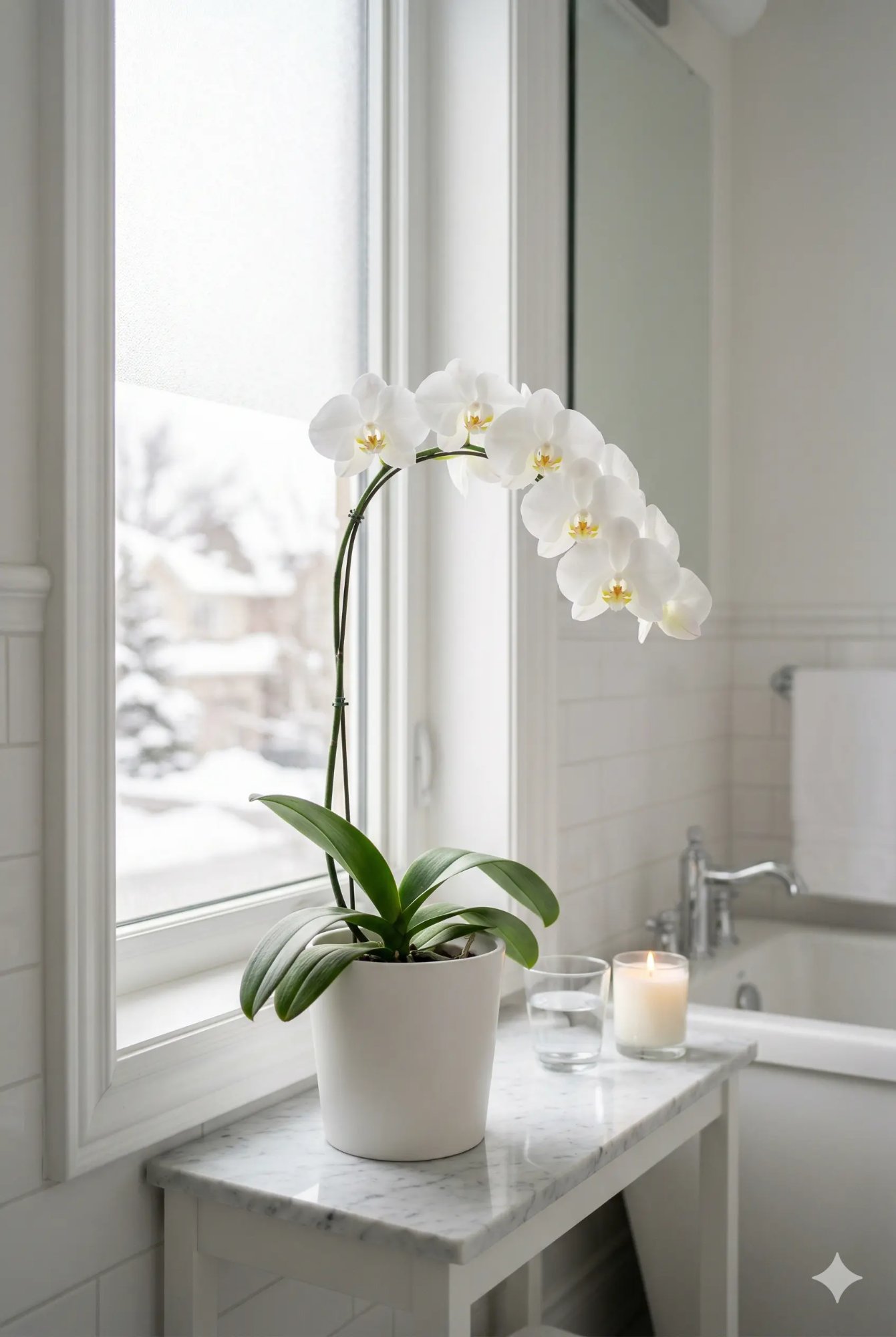
L'orchidée phalaenopsis (Phalaenopsis) est l'une des plantes d'intérieur à fleurs les plus populaires au Canada — abordable, élégante et étonnamment facile à faire refleurir si vous comprenez son cycle. Le secret canadien : nos hivers froids près des fenêtres fournissent naturellement le signal de fraîcheur dont les orchidées ont besoin pour produire de nouvelles tiges florales.
Ce guide couvre tout ce qui est spécifique à la culture des orchidées dans un foyer canadien — pourquoi les glaçons sont un mythe à éviter, comment faire refleurir en utilisant les fenêtres canadiennes d'automne, comment lire les racines à travers le pot transparent, et diagnostic des problèmes courants.
Votre plante reçoit-elle assez de lumière cet hiver ?
Un hiver canadien coupe les heures d'ensoleillement de moitié. Voyez ce que votre ville reçoit ce mois-ci et si une lampe de croissance est nécessaire.
🌿 Fiche d'entretien rapide
Orchidée en bref : Arrosage — JAMAIS de glaçons; à l'évier, à fond, drainer complètement, tous les 7-14 jours. Refloraison — placez à 30 cm d'une fenêtre canadienne en sept-oct, le froid nocturne déclenche la nouvelle tige. Lumière — vive indirecte, fenêtre est ou ouest. Racines — vertes/argent = saines, ridées grises = besoin d'eau. NON-toxique aux animaux.
Comment arroser l'orchidée — le mythe des glaçons
N'utilisez JAMAIS de glaçons. La méthode des glaçons (3 glaçons par semaine) était une astuce de marketing — pas une bonne pratique horticole. L'eau froide choque les racines tropicales et les endommage avec le temps. Les orchidées de la jungle ne reçoivent jamais d'eau glacée.
La méthode correcte est simple : apportez l'orchidée à l'évier, arrosez à fond avec de l'eau à température ambiante jusqu'à ce que l'eau s'écoule par les trous de drainage, laissez égoutter 10-15 minutes, et remettez à sa place. Ne laissez jamais les racines dans une soucoupe d'eau.
Horaire d'arrosage : Été (mai-sept) : tous les 7-10 jours. Automne (oct-nov) : tous les 10-12 jours. Hiver (déc-fév) : tous les 10-14 jours. Printemps (mars-avril) : tous les 7-10 jours. Utilisez de l'eau filtrée ou laissée reposer 24 h (fluor/chlore endommagent les racines).
Lire les racines : les orchidées sont vendues dans des pots transparents pour une raison — vous pouvez voir l'état des racines. Racines vertes ou blanc argenté = saines et hydratées. Racines ridées grises = besoin d'eau (arrosez maintenant). Racines brunes molles = pourriture (arrosage excessif — rempotez urgemment dans de l'écorce fraîche).
Pour les orchidées dans un substrat opaque ou si vous ne pouvez pas voir les racines clairement. L'humidimètre 3-en-1 vous montre exactement quand le milieu est sec — enfoncez la sonde pour une lecture instantanée d'humidité, lumière et pH. Aucune pile requise.
Lien affilié — GrowersGuide.ca peut toucher une commission sur les achats admissibles, sans frais supplémentaires pour vous. En savoir plus.
Comment faire refleurir — l'avantage canadien
C'est la question la plus recherchée pour les orchidées au Canada — et bonne nouvelle : nos hivers nous donnent un avantage. Les orchidées phalaenopsis refleurissent en réponse à un différentiel de température de 5-8 °C entre le jour et la nuit pendant 4-6 semaines. Au Canada, cela se produit naturellement près de nos fenêtres en automne.
Fenêtre est ou ouest idéale. Le verre canadien commence à refroidir significativement la nuit en septembre, créant le différentiel de température nécessaire. NE déplacez PAS pendant 6-8 semaines — la stabilité est critique pour l'initiation de la tige.
Le stress nutritionnel léger combiné au stress thermique aide à déclencher la floraison. Reprenez la fertilisation seulement après l'apparition d'une nouvelle tige.
Une nouvelle tige florale apparaît comme une croissance verte pointue à la base, pas comme une racine ridée. Les tiges florales sont vertes et pointues; les racines sont rondes au bout et argentées/vertes. Une fois la tige visible, vous pouvez reprendre les soins normaux.
La tige grandit sur 8-12 semaines, puis les boutons apparaissent et s'ouvrent. Les fleurs durent 2-3 mois. Maintenez la stabilité — pas de déplacement pendant cette période.
Après la floraison : tailler la tige correctement
Une fois les fleurs tombées, vous avez deux options pour la tige florale :
Option 1 : Tige secondaire (plus rapide)
Coupez 1 cm au-dessus du deuxième nœud à partir de la base (les nœuds sont les bosses sur la tige). Une nouvelle tige secondaire peut émerger d'un nœud restant en 2-3 mois. Floraison plus rapide mais souvent moins de fleurs.
Option 2 : Tige complètement coupée (meilleur cycle)
Coupez la tige complètement à la base. La plante mettra plus de temps mais produira une nouvelle tige plus forte avec plus de fleurs lors du prochain cycle automne. Préférable pour une plante en santé qui a déjà bien fleuri.
Lumière au Canada
La couleur des feuilles vous dit si la lumière est correcte. Feuilles vert vif et fermes = parfait. Feuilles vert foncé et molles = manque de lumière (et l'orchidée ne refleurira pas). Feuilles vert jaunâtre ou rougeâtres = trop de soleil direct (déplacez ou filtrez).
☀️ Vive indirecte (idéal)
Fenêtre est ou ouest, 30 cm-1 m de distance. Lumière naturelle filtrée pour la majorité de la journée. Permet la refloraison fiable.
🪟 Fenêtre sud avec rideau
Fenêtre sud filtrée par un rideau transparent. Trop de lumière directe brûle les feuilles. Le filtre rend cette exposition acceptable.
🌓 Fenêtre nord (à éviter)
Pas assez de lumière pour la refloraison fiable. La plante survit mais ne fleurit pas. Déplacez vers est/ouest si possible.
Soins hivernaux canadiens
Les hivers canadiens sont l'allié de l'orchidée, pas son ennemi. Trois ajustements :
Profitez du différentiel de température près des fenêtres
Le froid nocturne près des fenêtres canadiennes (5-15 °C la nuit, 20+ °C le jour) est exactement le signal dont l'orchidée a besoin pour refleurir. Gardez à 30 cm de la vitre — assez près pour le différentiel, pas assez pour le contact direct (qui causerait des dommages au gel).
Compensez l'air sec du chauffage
Le chauffage à air pulsé canadien fait chuter l'humidité à 25-30 %. Les orchidées préfèrent 50-70 %. Solution : humidificateur près de la plante ou plateau à galets sous le pot. Gardez loin des bouches de chauffage qui soufflent directement.
Réduisez arrosage et arrêtez fertilisation
Passez à toutes les 10-14 jours en hiver. Arrêtez la fertilisation de novembre à février. Ne déplacez pas une orchidée en train de produire une tige florale — la stabilité est cruciale.
Diagnostic — problèmes courants
Racines brunes molles
Cause : pourriture par arrosage excessif. Dépotez immédiatement, taillez toutes les racines pourries avec des ciseaux stérilisés, laissez sécher quelques heures, rempotez dans de l'écorce d'orchidée fraîche bien drainante. Réduisez drastiquement l'arrosage.
Racines ridées grises
Cause : manque d'eau. Arrosez à fond à l'évier; les racines devraient verdir en quelques heures. Si elles restent grises après 2-3 arrosages, vérifiez s'il y a pourriture en surface (vous pouvez avoir des racines vivantes et mortes mélangées).
Feuilles ridées ou molles
Cause : déshydratation (racines mortes ne peuvent plus absorber). Si les feuilles sont molles malgré un arrosage régulier, le problème est aux racines — dépotez et vérifiez. Souvent un signe que la pourriture des racines a causé la mort de la plante mais les feuilles tiennent encore par habitude.
Boutons qui tombent sans s'ouvrir
Cause : changement environnemental. Déplacement, gaz éthylène (de fruits mûrs ou émanations), courant d'air froid, ou arrosage excessif pendant la formation des boutons. Solution : maintenir la stabilité. Ne déplacez pas une orchidée en bouton.
Ne refleurit jamais
Cause principale : pas de signal de température. Si votre orchidée est dans une pièce à 22 °C constants toute l'année, elle ne refleurira jamais. Solution : déplacez à 30 cm d'une fenêtre canadienne en septembre — le différentiel naturel fait le travail.
🐾 Sécuritaire pour chats et chiens
L'orchidée phalaenopsis est listée comme NON-toxique aux chats et chiens par l'ASPCA. C'est l'une des rares plantes d'intérieur à fleurs populaires sécuritaires pour les animaux.
Questions fréquentes
Dois-je vraiment éviter les glaçons ?
Oui — la méthode des glaçons est un mythe de marketing. L'eau froide choque les racines tropicales. Utilisez de l'eau à température ambiante, arrosez à fond à l'évier, drainez complètement.
Comment faire refleurir mon orchidée ?
Placez à 30 cm d'une fenêtre est ou ouest en septembre. Le différentiel naturel de température près des fenêtres canadiennes (jour chaud, nuit fraîche) déclenche une nouvelle tige florale en 6-8 semaines.
Différence entre tige florale et racine ?
Tige florale : verte, pointue, croît verticalement, émerge entre les feuilles à la base. Racine : ronde au bout, vert/argent ou blanche, peut être aérienne (au-dessus du substrat).
L'orchidée est-elle toxique pour les chats ?
Non — l'orchidée phalaenopsis est non-toxique aux chats et chiens selon l'ASPCA. C'est l'une des rares plantes à fleurs sécuritaires pour les animaux.
À quelle fréquence arroser une orchidée au Canada ?
Arrosez les orchidées phalaenopsis tous les 7-10 jours en été et tous les 10-14 jours en automne et hiver. La méthode la plus fiable n'est PAS le mythe des glaçons — ignorez-le. À la place : apportez l'orchidée à l'évier, arrosez à fond jusqu'à ce que l'eau s'écoule par les trous de drainage, laissez égoutter complètement et remettez à sa place. Ne laissez jamais les racines dans l'eau stagnante. Le milieu d'écorce ou de mousse devrait approcher de la sécheresse avant le prochain arrosage. En hiver canadien avec faible lumière, les orchidées ont besoin de moins d'eau — vérifiez les racines à travers le pot transparent : les racines vertes ou blanc argenté sont saines, les racines ridées et grises ont besoin d'eau.
Comment faire refleurir mon orchidée au Canada ?
Les orchidées refleurissent en réponse à une baisse de température de 5-8 °C entre le jour et la nuit pendant 4-6 semaines. Au Canada, cela se produit naturellement près des fenêtres en automne — le verre refroidit la nuit pendant que les températures de jour restent chaudes. Placez votre orchidée à 30 cm d'une fenêtre en septembre et octobre. Arrêtez la fertilisation à l'automne. Une fois qu'une nouvelle tige florale apparaît (croissance verte pointue, pas une racine), reprenez les soins normaux. La plupart des foyers canadiens fournissent ce différentiel de température naturellement de septembre à novembre — c'est en fait un avantage par rapport aux climats sans variations saisonnières marquées.
Pourquoi mon orchidée ne refleurit-elle pas ?
La raison la plus fréquente pour laquelle les orchidées ne refleurissent pas au Canada est un manque de lumière combiné à des températures constantes. Si votre orchidée est dans une pièce qui reste à 20-22 °C toute l'année sans proximité d'une fenêtre, elle n'expérimente jamais le signal de fraîcheur nocturne dont elle a besoin pour initier une nouvelle tige florale. Déplacez-la à 30 cm d'une fenêtre en septembre. Deuxième cause : la tige florale a été coupée trop courte — coupez au-dessus du deuxième nœud à partir de la base pour encourager une tige secondaire. Troisième : la plante a besoin de plus de lumière toute l'année — fenêtre est ou ouest, pas une pièce nord.
Combien de lumière l'orchidée a-t-elle besoin au Canada ?
Les orchidées phalaenopsis ont besoin de lumière vive indirecte — une fenêtre est ou ouest est idéale. Les fenêtres sud fonctionnent si filtrées avec un rideau transparent en été. Les fenêtres nord ne fournissent pas assez de lumière pour une refloraison fiable. En hiver canadien, déplacez votre orchidée le plus près possible de la fenêtre sans toucher la vitre froide. La lumière hivernale réduite est en fait correcte pour l'orchidée pendant sa période de repos — mais elle a besoin de bonne lumière de mars à septembre pour construire les réserves d'énergie qui alimenteront le prochain cycle de floraison. Les feuilles devraient être vert vif, pas vert foncé (trop peu de lumière) ni vert jaunâtre (trop de soleil direct).
Quelle est la meilleure méthode d'arrosage — glaçons ou eau régulière ?
L'eau régulière est correcte — n'utilisez JAMAIS de glaçons. La méthode des glaçons était une astuce de marketing. L'eau froide choque les racines tropicales de l'orchidée et les endommage avec le temps. Utilisez de l'eau à température ambiante. Apportez l'orchidée à l'évier, arrosez à fond, laissez égoutter 10-15 minutes et remettez à sa place. Au Canada, utilisez de l'eau filtrée ou laissée reposer une nuit — le chlore et le fluor dans l'eau du robinet peuvent endommager les racines avec le temps. La clé est un arrosage à fond suivi d'un drainage complet, pas de fréquentes petites quantités. Tous les 7-10 jours en été, tous les 10-14 jours en hiver est le bon rythme.
Comment prendre soin d'une orchidée en hiver canadien ?
Les hivers canadiens sont en fait idéaux pour déclencher la refloraison des orchidées grâce au différentiel naturel de température près des fenêtres. Ajustements clés : déplacez à votre fenêtre la plus lumineuse (est ou ouest, 30 cm du verre); réduisez l'arrosage à tous les 10-14 jours quand la croissance ralentit; arrêtez la fertilisation de novembre à février; et permettez aux températures nocturnes naturellement fraîches près des fenêtres de fournir le signal de refloraison. Gardez loin des bouches de chauffage qui créent un air très sec — les orchidées préfèrent 50-70 % d'humidité et bénéficient d'un plateau à galets ou humidificateur en hiver canadien. Ne déplacez pas la plante une fois positionnée pour l'automne — la stabilité supporte l'initiation des tiges.
📖 Autres guides de plantes d'intérieur
Plantes à fleurs et faciles aux côtés de l'orchidée dans les foyers canadiens.
Vous cultivez aussi des légumes ?
Calendriers de plantation gratuits pour 30+ légumes dans toutes les grandes villes canadiennes.