
Peperomia Care Guide — Canada
How to grow peperomia (the "radiator plant") in Canadian homes — watering this semi-succulent, light, the most popular varieties, very easy leaf-cutting propagation, and why it is a great pet-safe choice.
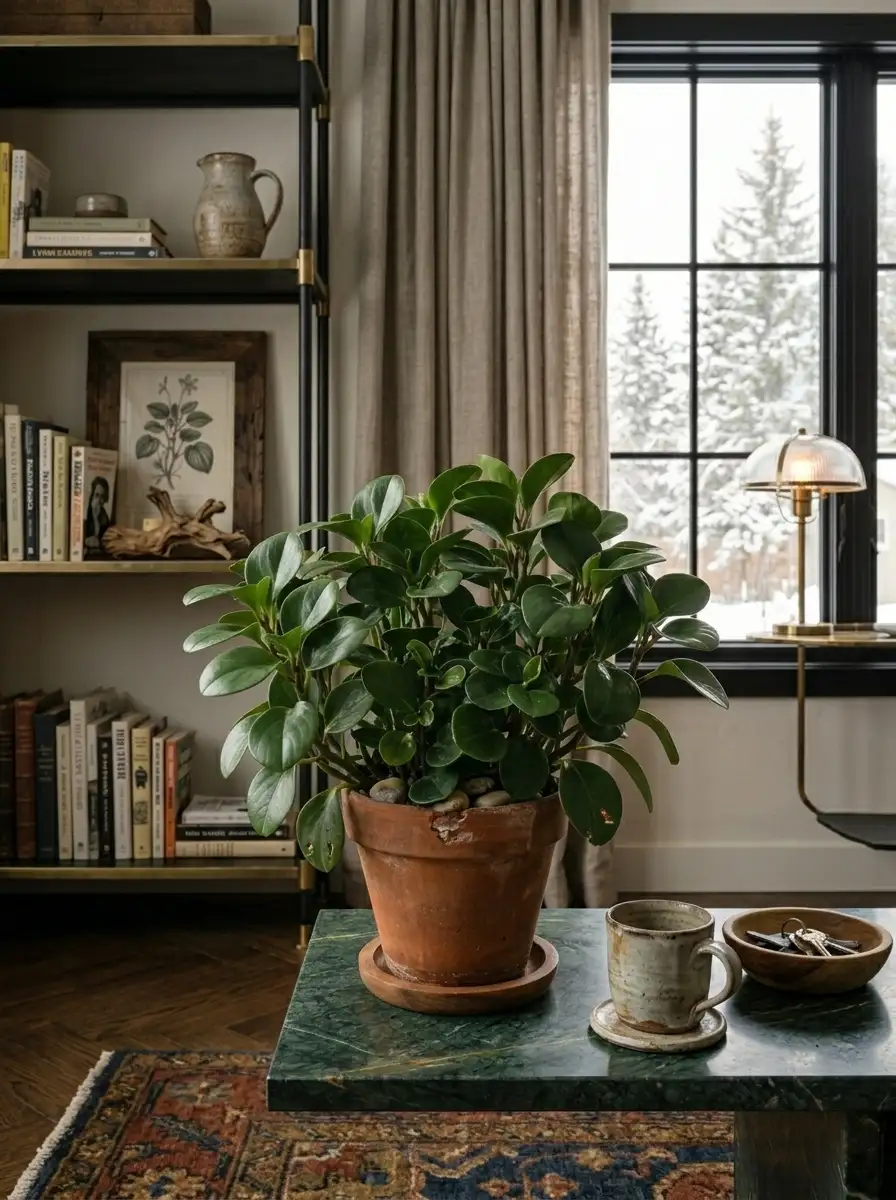
Peperomia care in Canada is refreshingly simple — this is a large genus of compact, semi-succulent foliage plants, often called "radiator plants," that stay small, come in a remarkable range of leaf shapes and colours, and are completely non-toxic to cats and dogs. Because the thick leaves and stems store water, a peperomia forgives a missed watering easily. The one real way to kill it is the opposite mistake: overwatering, which rots the stems and roots.
This guide covers the complete peperomia care routine for Canada — watering it the semi-succulent way, the light it needs, the popular varieties at Canadian garden centres, keeping it healthy through winter, and its standout feature: how easily it propagates from a single leaf.
Peperomia at a glance: Water — when soil is half to three-quarters dry; it's a semi-succulent. Light — medium to bright indirect; no direct sun. Humidity — average household air is fine. Mushy stems — overwatering. Pet safe — yes, non-toxic to cats and dogs ✅
Is your Peperomia getting enough light this winter?
A Canadian winter cuts daylight roughly in half. See what your city actually gets this month, and whether a grow light is needed.
🌿 Peperomia Quick Care Card
How to Water a Peperomia in Canada
The single most important thing to understand about peperomia care is that it is a semi-succulent. The thick, fleshy leaves and stems store water, so the plant is built to ride out dry spells — and is far more often killed by too much water than too little. Water only when the soil is about half to three-quarters dry. Soggy soil rots the roots and turns the stems mushy and black at the base.
Peperomia watering schedule — Canada: Summer (May–Sept): every 10–14 days. Fall (Oct–Nov): every 14–18 days. Winter (Dec–Feb): every 17–24 days. Spring (Mar–Apr): every 10–14 days. Always confirm the soil is at least half dry first, and use room-temperature water. Water thoroughly until drainage; empty the saucer after 30 minutes.
Overwatering rots more peperomias than anything else. A 3-in-1 soil meter shows you exactly when the root zone is dry — push the probe in for an instant moisture, light, and pH reading. No batteries needed.
Affiliate link — GrowersGuide.ca may earn a commission on qualifying purchases, at no extra cost to you. Learn more.
The other thing Canadian houseplants run short on all winter is light. From November to March most homes are too dim to keep plants growing — leaves stretch toward the window, variegation fades, and new growth stalls. A small full-spectrum LED grow light on a timer bridges the dark months, even for tough low-light plants that only survive (rather than grow) in a dim room.
Affiliate link — GrowersGuide.ca may earn a commission on qualifying purchases, at no extra cost to you. Learn more.
Why no fixed schedule works: How fast soil dries depends on temperature, light, pot material, room humidity, and plant size. A peperomia in a warm bright room dries faster than one in a dim corner in a Canadian winter — and in low light the soil can stay wet for three weeks or more. Checking how dry the soil actually is automatically accounts for all of these. See what affects soil drying rate →
Popular Peperomia Varieties at Canadian Garden Centres
Peperomia is a huge genus — well over a thousand species — and the variety range is its great appeal. Care is broadly the same across all of them: treat any peperomia as a semi-succulent. These are the types most often found in Canada.
| Variety | Look | Notes |
|---|---|---|
| Baby rubber plant (P. obtusifolia) | Upright, thick glossy oval leaves; plain or variegated | The most common and easiest; very forgiving |
| Emerald ripple (P. caperata) | Compact mound of deeply rippled heart-shaped leaves | Comes in green, red ('Rosso'), and silver forms |
| Watermelon peperomia (P. argyreia) | Round leaves striped silver and green like a watermelon | Striking; needs good light to keep the pattern crisp |
| String of turtles (P. prostrata) | Trailing strands of tiny patterned turtle-shell leaves | Lovely in a small hanging pot; slow-growing |
| Peperomia 'Hope' | Trailing stems of small round coin-like leaves in threes | Easy trailer; fills a hanging pot quickly |
| Happy bean (P. ferreyrae) | Narrow, curved, bean-like succulent leaves | The most succulent-like; water especially sparingly |
Light — Keeping a Peperomia Compact
Peperomias do best in medium to bright indirect light. They tolerate lower light, but the trade-off shows: in a dim spot the plant grows leggy — long bare stretches of stem between leaves — and variegated and patterned types fade. Bright indirect light keeps the plant compact and the markings crisp.
Bright indirect — ideal
An east window, or a few feet back from a south or west one. Keeps growth compact and colour vivid. Variegated and watermelon types want this.
Medium light — fine
Plain-green types cope well. Growth slows and may stretch a little; pinch back to keep the plant tidy.
Direct sun — avoid
Direct sun scorches the fleshy leaves. Filter any strong south or west window with a sheer curtain.
How to Propagate a Peperomia
Easy propagation is one of the best things about peperomia — most types will grow a whole new plant from a single leaf. Spring and summer are the best times, when the plant is in active growth.
Leaf cuttings
Take a healthy leaf with a short piece of its stalk (petiole) attached, using clean scissors. Stand the petiole in water, or insert it into moist, well-draining mix. Kept warm and in bright indirect light, a tiny plantlet forms at the base of the petiole over several weeks. Once it has a few leaves of its own, pot it up.
Stem cuttings
For trailing and upright types, cut a stem with a few leaves and at least one node. Root it in water or directly in moist soil — the same as a pothos cutting. This is the quickest way to fill out a leggy plant: root the cuttings and replant them into the original pot.
Aftercare
Keep cuttings warm, in bright indirect light, and in lightly moist (never soggy) soil while they root. A loose clear cover helps hold humidity in dry Canadian air. Don't fertilise until you see new growth, which signals the roots have taken hold.
Canadian Winter Care
Water much less from November to February
Growth slows right down and the soil stays moist far longer in low light. Stretch the interval to every 17–24 days and always confirm the soil is at least half dry first. Winter overwatering is the leading cause of peperomia stem and root rot in Canada. Stop fertilising October through February.
Keep it warm and off cold glass
Peperomia dislikes temperatures below about 13°C and reacts to cold with sudden leaf drop. Keep it 30–50 cm back from cold window glass and away from drafty doors, and water with room-temperature water — cold tap water also chills the roots.
Give it the brightest light you have
Weak winter light is what makes peperomias stretch and lose their colour. Move the plant to your brightest window from November through February, or add a small grow light, to keep it compact until the light returns in spring.
Peperomia Troubleshooting
Mushy, black, or soft stems
Overwatering and stem or root rot — the most serious peperomia problem. Stop watering, unpot the plant, cut away every mushy black section with clean scissors, and repot the healthy part in fresh, well-draining mix. Take leaf cuttings from any firm healthy leaves as insurance.
Drooping leaves
Check the soil. Wet soil means overwatering and rot. Bone-dry soil means the semi-succulent has run low on stored water — give it a thorough drink and it should firm up within a day.
Sudden leaf drop
Usually a cold reaction — a draft, contact with cold winter window glass, or cold tap water. Move the plant somewhere consistently warm and water with room-temperature water.
Leggy growth, faded markings
Not enough light. Move to a brighter spot, pinch back the stretched stems to encourage bushiness, and root the cuttings to replant into the same pot for a fuller plant.
Frequently Asked Questions
Is peperomia a succulent?
Peperomia is best described as a semi-succulent. Its thick, fleshy leaves and stems store water like a succulent, so it tolerates dry spells well — but it is a tropical understory plant, not a desert one, and prefers more humidity and slightly more frequent watering than a true cactus or succulent. The practical takeaway for Canada: water it like a succulent (let the soil dry well between waterings) but place it in indirect light rather than blazing sun.
Why is it called a radiator plant?
The common name "radiator plant" was coined by horticulturist L.H. Bailey, who noted that peperomias enjoy the warm, bright conditions of a windowsill above a radiator. It is a fitting name for Canada: peperomias genuinely do like the warmth of a heated home, as long as they get good light and aren't sitting in soggy soil.
Does peperomia flower?
Yes — a healthy peperomia in good light often sends up slender, upright flower spikes that look like pale green or cream-coloured "rat tails" or "mouse tails." They have no scent and no real ornamental value, and the plant is grown entirely for its foliage. You can leave them or snip them off; removing them simply directs the plant's energy back into leaves.
When should I repot a peperomia?
Rarely — every 2–3 years at most. Peperomias have small root systems and actively prefer to be snug in their pots; a too-large pot holds excess wet soil and invites root rot, which is the plant's biggest danger. Repot only when roots clearly fill the pot, in spring, moving up just one pot size into fresh light, airy mix. Many growers find a peperomia is happiest left undisturbed for years.
How often should I water a peperomia in Canada?
Water a peperomia when the soil is about half to three-quarters dry — typically every 10–14 days in summer and every 17–24 days in a Canadian winter. Peperomias are semi-succulents: their thick fleshy leaves and stems store water, so they tolerate a missed watering far better than a soggy pot. Overwatering is the number one way to kill a peperomia — it causes mushy black stems and root rot. Water thoroughly until it drains, empty the saucer, and let most of the soil dry before watering again. In low winter light the soil dries very slowly, so always check by touch. Use room-temperature water.
How much light does a peperomia need in Canada?
Peperomias do best in medium to bright indirect light — an east-facing window, or a few feet back from a south or west one. They tolerate lower light, but in a genuinely dim spot they grow leggy, with long bare stretches of stem between leaves, and variegated types lose their markings. Bright indirect light keeps the plant compact and the colour vivid. Avoid direct sun, which scorches the fleshy leaves. In a dark Canadian winter, move a peperomia to your brightest window, or supplement with a small grow light to keep it from stretching.
Is peperomia safe for cats and dogs?
Yes — peperomia is non-toxic to both cats and dogs according to the ASPCA, making it an excellent pet-safe houseplant for Canadian homes. A pet that chews a leaf will not be poisoned. As with any plant, eating a large quantity of leaves can cause mild, temporary stomach upset simply from the fibre, so it is not intended as a snack — but there are no toxic compounds. Peperomias are compact tabletop plants, which makes them easy to place safely, and the huge range of leaf shapes and colours means a pet owner can build a varied collection entirely from this one pet-safe genus.
How do I propagate a peperomia?
Peperomias are among the easiest houseplants to propagate, and leaf cuttings are the standout method. Take a healthy leaf with a short piece of its stalk (petiole) attached, and either stand it in water or insert the stalk into moist, well-draining soil. Kept warm and in bright indirect light, a tiny new plantlet forms at the base of the petiole over several weeks. Stem cuttings work the same way — cut a stem with a few leaves and a node, and root it in water or soil. Spring and summer are the best times. Because each leaf can become a new plant, one peperomia can be multiplied into many; this is part of why the genus is so popular.
Why is my peperomia drooping or dropping leaves?
A drooping peperomia has two opposite possible causes, and checking the soil tells you which. If the soil is wet, the cause is overwatering and likely root rot — the stems may feel soft or look black at the base; stop watering, unpot the plant, trim any mushy roots and stems, and repot in fresh, well-draining mix. If the soil is bone dry, the semi-succulent has finally run low on stored water — give it a thorough drink and it should firm up within a day. Sudden leaf drop is most often a reaction to cold: a draft, contact with cold winter window glass, or cold tap water. Keep the plant warm and water with room-temperature water.
Why is my peperomia leggy with long bare stems?
Leggy growth — long stretches of bare stem with leaves spaced far apart — means the peperomia is not getting enough light and is stretching toward the brightest spot it can find. It is very common in Canadian winters, when natural light drops by half or more. The fix is more light: move the plant to your brightest window or add a small grow light. To restore a compact shape, pinch or prune the stretched stems back — and rather than discarding the cuttings, root them, since peperomia stem and leaf cuttings propagate readily. Replanting rooted cuttings back into the original pot fills it out into a fuller plant.
🐾 Have pets? Peperomia is one of the safe ones — see our Pet-Safe Houseplants guide for the full list of which common houseplants are toxic to cats and dogs, and which are safe.
📖 More Houseplant Guides
Other easy, pet-safe plants for Canadian homes.
Also Growing Vegetables?
Free planting calendars for 30+ vegetables across every major Canadian city.