
Pilea Care Guide — Canada
How to grow a Pilea — the Chinese money plant — in Canadian homes: watering, bright indirect light, why to rotate it weekly, and how to grow and share the pups that make it the friendship plant. Non-toxic to pets.
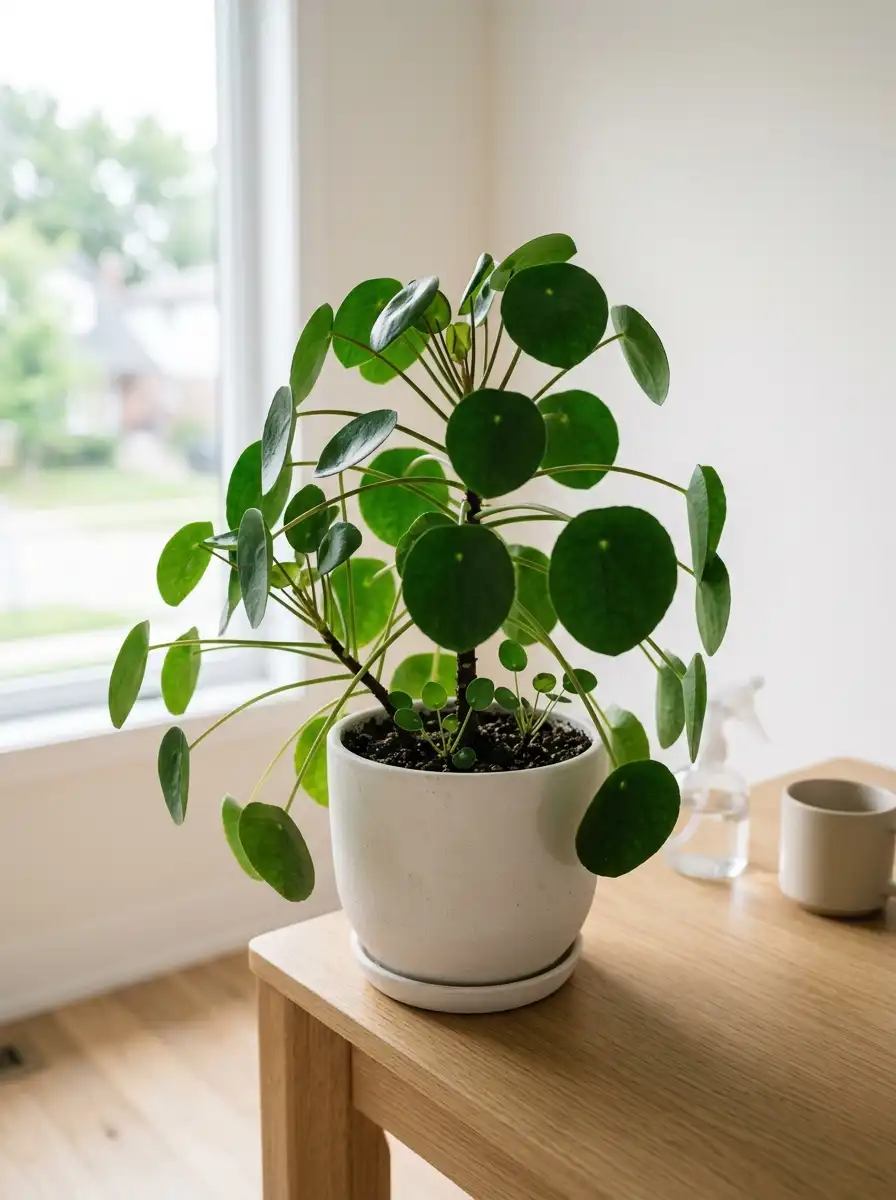
The Pilea (Pilea peperomioides) — better known as the Chinese money plant, pancake plant, or UFO plant — is one of the most loved houseplants in Canada, and one of the easiest. Its round, coin-shaped leaves on slender stalks are unmistakable, it is genuinely pet-safe, and it produces a steady supply of baby plants you can pot up and give away — which is how it earned its other name, the friendship plant or pass-it-on plant.
This guide covers the complete Pilea care routine for Canada — watering, the bright indirect light it needs, why rotating the pot matters, how to grow and share pups, and how to read curling leaves and leggy growth.
Pilea at a glance: Water — when top 2–3cm dry; leaves droop when thirsty. Light — bright indirect, rotate weekly. Humidity — average household air is fine. Pups — separate and share when 5–8cm tall. Pet safe — non-toxic to cats and dogs ✅
Is your Pilea getting enough light this winter?
A Canadian winter cuts daylight roughly in half. See what your city actually gets this month, and whether a grow light is needed.
🌿 Pilea Quick Care Card
How to Grow and Share Pilea Pups
The best thing about a Pilea is that it makes more Pileas. A healthy plant continuously sends up “pups” — baby plants — from its roots and the base of its stem. Separating and sharing them is why it is called the friendship plant, and it is the easiest propagation of any common houseplant.
Root pups (from the soil)
Most pups push up through the soil a short distance from the mother plant, growing from her roots. Once a pup is about 5–8 cm tall, follow its stem down into the soil and cut it free with a sharp, clean knife, keeping as many of its own roots as you can. Pot the rooted pup straight into a small container of moist, well-draining soil. Keep it warm and in bright indirect light, and it establishes within a few weeks.
Stem pups (from the main stem)
Smaller pups sometimes appear directly on the mother's stem. Cut these off cleanly with a small piece of stem attached. Because they have no roots yet, place stem pups in a glass of water in bright indirect light and wait for roots to grow a few centimetres — usually 2–4 weeks — then pot them up into soil.
Keeping the mother plant productive
A Pilea pups most freely when it is healthy, well-lit, and slightly pot-bound. Bright indirect light, consistent watering, and a light feed in spring and summer all encourage pups. You can leave pups in place for a fuller, clustered pot, or remove them regularly to share — either way the mother keeps producing more.
Pilea Varieties at Canadian Garden Centres
The classic Chinese money plant is Pilea peperomioides, but it has a few variegated cultivars, and the wider Pilea genus includes several other popular foliage houseplants. All share easy, similar care.
| Variety | Look | Notes |
|---|---|---|
| Chinese Money Plant (P. peperomioides) | Round, flat, coin-shaped green leaves on tall stalks | The classic; pups freely, pet-safe |
| Pilea 'Mojito' | Coin leaves splashed and speckled with dark green | Variegated peperomioides; wants bright light to keep its pattern |
| Pilea 'White Splash' / 'Variegata' | Coin leaves marked with cream-white variegation | Slower-growing; needs bright indirect light |
| Aluminum Plant (P. cadierei) | Pointed leaves with raised metallic-silver patches | A bushier relative; likes a little more humidity |
| Moon Valley (P. involucrata) | Deeply textured, quilted bronze-green leaves | Compact, bushy; prefers higher humidity |
| Baby Tears / Tiny Pilea (P. depressa) | Tiny round leaves on trailing stems | A trailing relative; good for hanging pots and terrariums |
How to Water a Pilea in Canada
Water when the top 2–3 cm of soil has dried. Pilea is one of the more communicative houseplants — its leaves droop visibly when it is thirsty and lift back up within hours of watering — but you should water on the soil test rather than waiting for a deep droop every time. Overwatering, not underwatering, is the usual cause of trouble.
Pilea watering schedule — Canada: Summer (May–Sept): every 7–10 days. Fall (Oct–Nov): every 10–12 days. Winter (Dec–Feb): every 10–14 days. Spring (Mar–Apr): every 7–10 days. Always check the top 2–3 cm first. Water thoroughly until it drains; empty the saucer after 30 minutes.
Overwatering kills more Pileas than anything else. A 3-in-1 soil meter shows you exactly when the root zone is dry — push the probe in for an instant moisture, light, and pH reading. No batteries needed.
Affiliate link — GrowersGuide.ca may earn a commission on qualifying purchases, at no extra cost to you. Learn more.
The other thing Canadian houseplants run short on all winter is light. From November to March most homes are too dim to keep plants growing — leaves stretch toward the window, variegation fades, and new growth stalls. A small full-spectrum LED grow light on a timer bridges the dark months, even for tough low-light plants that only survive (rather than grow) in a dim room.
Affiliate link — GrowersGuide.ca may earn a commission on qualifying purchases, at no extra cost to you. Learn more.
Why no fixed schedule works: How fast soil dries depends on temperature, light, pot material, room humidity, and plant size. A Pilea in a bright room at 23°C dries faster than one in a shaded corner in a Canadian winter — sometimes twice as fast. The top 2–3 cm finger test automatically accounts for all of these. See what affects soil drying rate →
Light Requirements for Pilea in Canada
Pilea wants bright indirect light — enough for compact growth and round, flat leaves, but no harsh direct sun, which scorches and bleaches them. Pilea leans strongly toward the light, so rotate the pot a quarter turn every week to keep it growing straight and even.
Bright Indirect — Best
An east window, or near a south or west window behind a sheer curtain. Compact growth, big round leaves, plenty of pups.
Medium — Acceptable
A few metres from a window. The plant survives but grows slower, leans more, and may stretch — move it brighter in winter.
Low Light / Direct Sun — Avoid
Deep shade causes leggy, sparse growth; unscreened direct sun scorches the leaves. Avoid both extremes.
Canadian Winter Care
Move it to your brightest window
Short, weak Canadian winter daylight is the main reason Pileas stretch and grow leggy. From November through February, move the plant to the brightest south or west window you have, and keep rotating it weekly so it doesn't lean badly toward the glass. Good winter light also keeps it producing pups.
Water less, and stop fertilising
Growth slows from November through February, and soil stays wet longer in low light. Stretch the watering interval to every 10–14 days and always confirm the top 2–3 cm is dry first — winter overwatering is the leading cause of Pilea root rot in Canada. Stop fertilising from October through February and resume a diluted feed in spring.
Keep away from cold drafts
Pilea handles the dry air of a heated Canadian home well, so humidity is not a worry — but it dislikes sudden cold. Keep it away from drafty exterior doors, single-pane windows, and unheated entryways, and pull the leaves back from cold winter glass. Cold drafts cause leaf curling and drop.
Pilea Troubleshooting
Yellow, mushy lower leaves
Overwatering — the most common Pilea problem. Let the soil dry out more between waterings and make sure the pot drains freely. The occasional yellowing of a single old lowest leaf is natural ageing; many yellow leaves at once points to soggy soil and possible root rot.
Curling or cupping leaves
Usually a light or temperature issue — leaves cupping upward often mean too little light or a temperature swing; curling downward can mean too much direct sun. Move to bright indirect light, away from cold drafts and heating vents. New growth comes in flat once conditions are right.
Leggy stem, leaves only at the top
Too little light, common in Canadian winters. Move to a brighter window. To fix the look, cut off the leggy top, root it in water, and replant it deeper for a compact plant; the stump usually resprouts pups. Full step-by-step: Fix a Leggy Pilea — Make It Full Again.
White spots on the leaves
Small white specks, especially on the undersides, are usually harmless mineral deposits (cystoliths) that the plant produces naturally — not a pest or disease. White crusty patches on the soil or pot rim are mineral salts from hard tap water; flush the soil occasionally. Genuine pests like spider mites are uncommon on Pilea.
Frequently Asked Questions
Why is my Pilea leaning to one side?
Pilea leans hard toward its light source — it is one of the most phototropic common houseplants. The fix is simple: rotate the pot a quarter turn every week or so. Over a few weeks the plant straightens up and grows evenly. A Pilea that is leaning badly and stretching is also telling you the light is too weak, so a brighter spot helps on both counts.
Why isn't my Pilea producing pups?
Pileas pup most freely when they are healthy, mature, well-lit, and slightly pot-bound. A young plant simply may not be old enough yet. If an established plant has stopped pupping, the usual cause is too little light — move it to a brighter window — or it may be in too large a pot. Consistent watering and a light feed through spring and summer also encourage pups.
Does a Pilea need high humidity?
No — and that makes it an easy plant for Canada. Pilea peperomioides is comfortable in average household humidity and tolerates the dry air of a forced-air-heated Canadian home far better than a calathea or a fern. You don't need a humidifier or pebble tray for it. The related Moon Valley and Aluminum Plant Pileas appreciate a little more humidity, but the classic Chinese money plant does not.
When should I repot my Pilea?
Repot a Pilea every 1–2 years in spring, moving up just one pot size, when roots fill the pot or push out the drainage holes. Pilea actually pups more freely when slightly pot-bound, so there is no rush to size up. Use a fresh well-draining mix with perlite, and take the opportunity to remove and pot up any pups while the plant is out of its container.
How often should I water a Pilea in Canada?
Water a Pilea when the top 2–3 cm of soil has dried out — typically every 7–10 days in summer and every 10–14 days in a Canadian winter. Pilea peperomioides is helpfully expressive about water: when it gets thirsty the leaves droop noticeably, and they perk back up within hours of watering, so the plant tells you when it needs a drink. Don't wait for severe drooping every time, though — water when the top few centimetres are dry. Overwatering is the bigger risk: soggy soil rots the roots and causes yellow, mushy lower leaves. Water thoroughly until it drains, empty the saucer, and let the surface dry before watering again. Use room-temperature water.
Why are my Pilea leaves curling?
Curling or cupping leaves on a Pilea are usually a light or temperature signal. Leaves that dome or cup upward often mean too little light or a sudden temperature swing; leaves that curl downward can mean too much direct sun. Other contributors are overwatering, cold drafts from a Canadian winter window, and a sharp change in conditions after moving the plant. Start by checking light — most Pileas want bright indirect light and curl in a spot that is too dim. Move it to a brighter window, away from cold glass and heating vents, and keep watering consistent. New growth that comes in flat confirms the fix. Some minor leaf cupping is normal and not a cause for worry.
How do I propagate a Pilea and grow pups?
Pilea peperomioides is famous for its 'pups' — baby plants that sprout on their own from the roots and the base of the stem, which is why it is nicknamed the friendship or pass-it-on plant. To propagate, wait until a pup is about 5–8 cm tall, then follow its stem down into the soil and cut it cleanly with a sharp knife, taking some roots if the pup has rooted (root pups) or just the stem (stem pups). Pot root pups straight into moist soil; place stem pups in water until roots form, then pot them up. Keep new pups warm, in bright indirect light, and lightly moist while they establish. A healthy Pilea produces pups continuously, giving you a steady supply of plants to share.
Are Pileas safe for cats and dogs?
Yes — Pilea peperomioides is non-toxic to both cats and dogs. It is not on the ASPCA toxic plant list and is widely regarded as a pet-safe houseplant, making it an excellent choice for Canadian homes with curious cats or dogs, unlike pothos, philodendron, dracaena, and ZZ plant, which are all toxic. As with any plant, a pet eating a large amount of foliage may still get a mild upset stomach, but Pilea poses no toxic risk.
How much light does a Pilea need in Canada?
Pilea peperomioides wants bright indirect light — bright enough for compact growth and those distinctive round coin-shaped leaves, but with no harsh direct sun, which scorches and bleaches the leaves. An east window, or a spot near a south or west window with a sheer curtain, is ideal. Pilea leans hard toward its light source, so rotate the pot a quarter turn every week or so to keep it growing evenly and upright. In a dim Canadian winter, move it to your brightest window — too little light makes a Pilea stretch into a leggy, bare-stemmed plant.
Why does my Pilea have a leggy bare stem?
A tall, bare stem with leaves only at the top is the classic sign a Pilea has had too little light — common in dim Canadian winters. Pilea naturally drops its oldest lower leaves as it grows, so some bare stem is normal on a mature plant, but rapid stretching with widely-spaced leaves is etiolation from low light. Move the plant to your brightest window. To fix the look, you can cut the leggy top off, root it as a cutting, and replant it deeper for a compact plant; the remaining stump will usually sprout new pups. Rotating the pot weekly also keeps growth even and upright rather than leaning and sparse.
🐾 Have pets? See our Pet-Safe Houseplants guide — which common houseplants are toxic to cats and dogs, which are safe, and what to do if a pet eats one.
📖 More Houseplant Guides
Care guides for popular Canadian houseplants.
Also Growing Vegetables?
Free planting calendars for 30+ vegetables across every major Canadian city.