
Guide d'entretien du Pothos Satin — Canada
Comment cultiver et entretenir le pothos satin (Scindapsus pictus) dans les foyers canadiens — arrosage rare, lumière vive indirecte pour les marques argentées, et comment il diffère du vrai pothos.
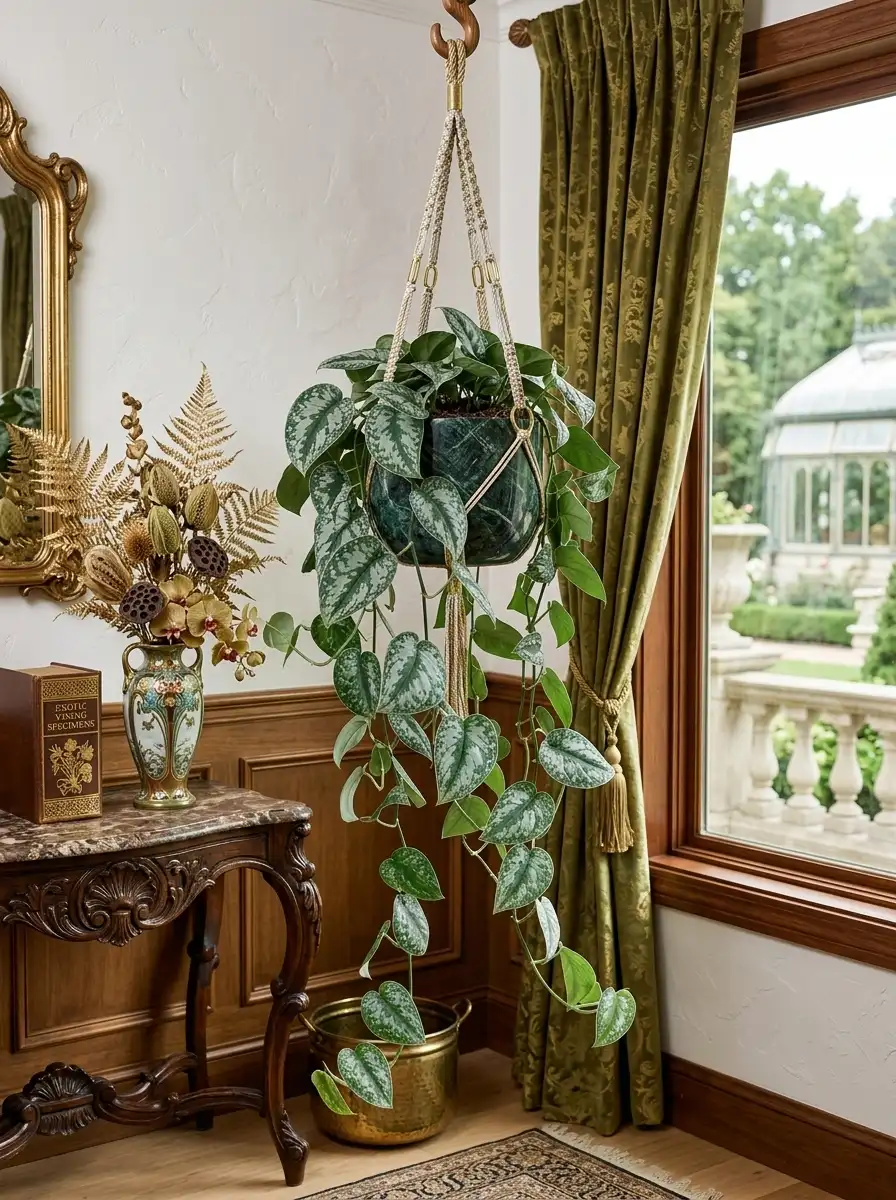
Le pothos satin (Scindapsus pictus) est l'une des plantes d'intérieur les plus élégantes — feuilles épaisses veloutées vert foncé parsemées de motifs argentés scintillants. Malgré son nom, ce n'est PAS un vrai pothos : c'est un Scindapsus, une plante apparentée mais distincte avec des soins légèrement différents.
Ce guide couvre tout ce qui est spécifique à la culture du pothos satin dans un foyer canadien — comment le distinguer du vrai pothos, garder les marques argentées vives avec assez de lumière, et bouturage facile.
Votre plante reçoit-elle assez de lumière cet hiver ?
Un hiver canadien coupe les heures d'ensoleillement de moitié. Voyez ce que votre ville reçoit ce mois-ci et si une lampe de croissance est nécessaire.
🌿 Fiche d'entretien rapide
Pothos satin en bref : PAS un vrai pothos — Scindapsus pictus distinct, feuilles veloutées avec argent satiné. Lumière vive indirecte pour garder les marques argentées. Arrosage — quand 3-5 cm sec, tolérant à la sécheresse. Bouturage facile par tige dans l'eau. Toxique aux chats et chiens — gardez en hauteur.
Pothos satin vs vrai pothos — la confusion
Malgré son nom commun, le pothos satin n'est PAS un vrai pothos. Tableau comparatif :
| Caractéristique | Pothos satin (Scindapsus pictus) | Vrai pothos (Epipremnum aureum) |
|---|---|---|
| Texture feuilles | Mate, veloutée, semi-succulente | Brillante, lisse |
| Panachure | Argent satiné scintillant | Marbrure jaune ou blanche |
| Vitesse croissance | Plus lente | Plus rapide |
| Fenestrations | Jamais (feuilles toujours entières) | Parfois en maturité |
| Soins | Plus de lumière requise pour panachure | Tolère plus de faible lumière |
Lumière = marques argentées
La caractéristique signature du pothos satin — son éclat argenté — dépend entièrement de la lumière. En lumière trop faible, les nouvelles feuilles émergent plus simples, sans argent. La règle : plus de lumière = plus d'argent (mais jamais soleil direct qui brûle les feuilles).
☀️ Vive indirecte (idéal)
Fenêtre est ou 1-2 m d'une fenêtre ouest filtrée. Marques argentées éclatantes, croissance saine.
🪟 Moyenne (acceptable)
2-3 m d'une fenêtre. Croissance lente, panachure réduite mais présente.
✖ Faible (panachure perdue)
Fenêtre nord ou loin. Les nouvelles feuilles sortent vert uni — perte de la signature de la plante.
Comment arroser au Canada
Feuilles semi-succulentes — tolère la sécheresse mieux que l'arrosage excessif. Arrosez quand les 3-5 cm supérieurs sont secs.
Horaire d'arrosage : Été (mai-sept) : tous les 7-10 jours. Automne (oct-nov) : tous les 10-14 jours. Hiver (déc-fév) : tous les 14-21 jours. Printemps (mars-avril) : tous les 10-14 jours. Feuilles enroulées molles = soif (sûr). Jaunes = trop d'eau (danger).
L'arrosage excessif est la cause #1 de mort du pothos satin. Un humidimètre 3-en-1 confirme que le terreau est sec — enfoncez la sonde pour une lecture instantanée d'humidité, lumière et pH. Aucune pile requise.
Lien affilié — GrowersGuide.ca peut toucher une commission sur les achats admissibles, sans frais supplémentaires pour vous. En savoir plus.
Bouturage (facile)
Aussi facile à bouturer que le vrai pothos. Bouture de tige dans l'eau ou directement dans le terreau.
Vigne avec 2-3 feuilles, coupée juste sous un nœud (petite bosse où feuille rencontre tige). Souvent avec petite racine aérienne déjà présente.
Rebord de fenêtre lumineux. Changez l'eau chaque semaine. Racines en 3-5 semaines. Empotez quand racines à quelques centimètres. Astuce : plantez plusieurs boutures ensemble pour pot plus plein plus vite.
Soins hivernaux canadiens
Maximisez la lumière (pour l'argent)
Déplacez vers fenêtre plus lumineuse en hiver canadien sombre. Sinon les nouvelles feuilles sortent sans marques argentées.
Réduisez l'arrosage drastiquement
Tous les 14-21 jours en hiver. Le terreau sèche bien plus lentement en faible lumière.
Loin des vitres froides
Min 15 °C. Gardez 15 cm des vitres canadiennes. Évitez courants d'air des portes extérieures.
Arrêtez la fertilisation
Aucune fertilisation novembre-février. Reprise mars-avril avec engrais équilibré à demi-force.
⚠️ Toxique aux chats et chiens
Toxique comme le vrai pothos. Cristaux d'oxalate de calcium causent brûlure buccale et vomissements. Comme c'est retombant, gardez bien haut hors de portée. Alternative non-toxique retombante : plante-araignée ou Hoya.
Diagnostic — problèmes courants
Feuilles enroulées
Cause : soif ou air sec. Vérifiez le terreau, arrosez si sec, humidificateur si air sec hivernal.
Feuilles jaunes
Cause : arrosage excessif. Vérifiez terreau et drainage. Réduisez fréquence.
Marques argentées s'estompent
Cause : manque de lumière. Déplacez vers fenêtre est ou ouest. Feuilles existantes ne récupèrent pas — seulement les nouvelles.
Bords bruns croustillants
Cause : air sec ou sels d'eau du robinet. Humidificateur en hiver. Eau filtrée si chronique.
Questions fréquentes
Pothos satin = vrai pothos ?
Non. Pothos satin = Scindapsus pictus. Vrai pothos = Epipremnum aureum. Apparenté mais distinct. Feuilles satin sont veloutées avec argent; pothos vrais sont brillantes avec jaune/blanc.
Pourquoi mon pothos satin perd son argent ?
Manque de lumière. Les marques argentées exigent lumière moyenne à vive indirecte. Déplacez vers fenêtre plus lumineuse — les nouvelles feuilles arriveront bien marquées.
Le pothos satin est-il toxique pour les chats ?
Oui — toxique aux chats et chiens comme le vrai pothos. Cristaux d'oxalate de calcium. Suspendez haut.
Comment bouturer le pothos satin ?
Boutures de tige avec nœud dans l'eau ou terreau humide. Très facile, racines en 3-5 semaines. Printemps/été idéal.
À quelle fréquence arroser un pothos satin au Canada ?
Arrosez un pothos satin quand les 3-5 cm supérieurs de terreau ont séché — typiquement tous les 7-10 jours en été et tous les 14-21 jours en hiver canadien. Le Scindapsus pictus a des feuilles épaisses semi-succulentes et stocke un peu d'eau, donc il tolère bien mieux la sécheresse que de rester mouillé. L'arrosage excessif est la cause de mort #1 — terreau détrempé pourrit les racines et fait jaunir les feuilles. Arrosez à fond jusqu'au drainage, videz la soucoupe, et attendez que la surface du terreau soit bien sèche avant d'arroser à nouveau. En faible lumière hivernale, le terreau reste mouillé bien plus longtemps, donc vérifiez toujours au toucher. Feuilles légèrement enroulées et molles = soif (facile à corriger). Jaune = trop d'eau (difficile).
Combien de lumière le pothos satin a-t-il besoin au Canada ?
Le pothos satin prospère mieux en lumière moyenne à vive indirecte — près d'une fenêtre est, ou à un ou deux mètres d'une fenêtre sud ou ouest. Une bonne lumière fait ressortir sa caractéristique signature : les marques argentées scintillantes sur les feuilles. En faible lumière la plante survit mais pousse lentement, les feuilles sortent plus petites et le motif argenté est réduit; en lumière vive indirecte la panachure est à son maximum. Évitez le soleil direct qui brûle les feuilles et blanchit l'argent. Dans un hiver canadien sombre, déplacez la plante près de votre fenêtre la plus lumineuse pour garder la nouvelle croissance bien marquée.
Le pothos satin est-il le même que le pothos régulier ?
Non — malgré le nom, le pothos satin n'est PAS un vrai pothos. Le vrai pothos est Epipremnum aureum; le pothos satin est Scindapsus pictus, une plante apparentée mais séparée. Ils se ressemblent et ont des soins similaires de vigne retombante facile, ce qui explique pourquoi le nom commun est resté. Les différences : le pothos satin a des feuilles plus épaisses, mates, presque veloutées avec un éclat argenté satiné et des taches argentées, là où le vrai pothos a des feuilles plus brillantes habituellement marbrées de jaune ou blanc. Le pothos satin pousse aussi plus lentement avec des feuilles plus petites à l'intérieur, et ses feuilles ne développent jamais les fentes (fenestrations) qu'un pothos mature peut avoir. Les deux sont toxiques aux animaux.
Le pothos satin est-il toxique pour les chats et chiens ?
Oui — le pothos satin (Scindapsus pictus) est toxique aux chats et chiens selon l'ASPCA. Comme le vrai pothos et le philodendron, il contient des cristaux d'oxalate de calcium insolubles; mâcher les feuilles cause irritation buccale, brûlure de la bouche et des lèvres, salivation et vomissements. Les réactions sont généralement douloureuses plutôt que mortelles, mais le pothos satin n'est pas une plante sécuritaire. Comme c'est une vigne retombante dont les tiges pendent à portée, gardez-le bien haut hors de portée des chats et chiens qui mâchouillent le feuillage — étagère haute ou suspendu. La plante-araignée est une alternative retombante non-toxique.
Comment bouturer un pothos satin ?
Le pothos satin est très facile à bouturer par boutures de tige. Coupez une longueur de vigne avec deux ou trois feuilles, en taillant juste sous un nœud — la petite bosse où une feuille rencontre la tige, souvent avec une minuscule racine aérienne, où les racines se forment. Placez la bouture dans un verre d'eau sur un rebord de fenêtre lumineux, en rafraîchissant l'eau chaque semaine; les racines apparaissent en 3-5 semaines. Une fois les racines à quelques centimètres, empotez la bouture dans un terreau humide bien drainant. Les boutures s'enracinent aussi directement dans le terreau gardé légèrement humide. Printemps et été sont les meilleurs moments, et planter plusieurs boutures enracinées ensemble donne un pot plein plus rapidement.
Pourquoi les feuilles de mon pothos satin s'enroulent ou perdent leur argent ?
Les feuilles enroulées sur un pothos satin signifient généralement qu'il a soif ou que l'air est très sec — vérifiez le terreau, arrosez si les quelques centimètres supérieurs sont secs, et ajoutez un peu d'humidité si votre foyer est sec à cause du chauffage à air pulsé. Les feuilles qui perdent leurs marques argentées, ou les nouvelles feuilles qui sortent plus petites et plus simples, signifient presque toujours trop peu de lumière : la panachure argentée a besoin de lumière moyenne à vive indirecte pour se développer pleinement. Déplacez la plante près d'une fenêtre plus lumineuse. Les feuilles ternes existantes ne retrouveront pas leur argent, mais la nouvelle croissance arrivera bien marquée une fois la lumière améliorée.
📖 Autres guides de plantes d'intérieur
Vignes retombantes aux côtés du pothos satin.
Vous cultivez aussi des légumes ?
Calendriers de plantation gratuits pour 30+ légumes dans toutes les grandes villes canadiennes.