
Guide d'entretien du Palmier de Salon — Canada
Comment cultiver et entretenir le palmier de salon (Chamaedorea elegans) dans les foyers canadiens — l'une des meilleures plantes de faible lumière, frondes tropicales arquées, et l'un des rares palmiers NON-toxiques aux animaux.
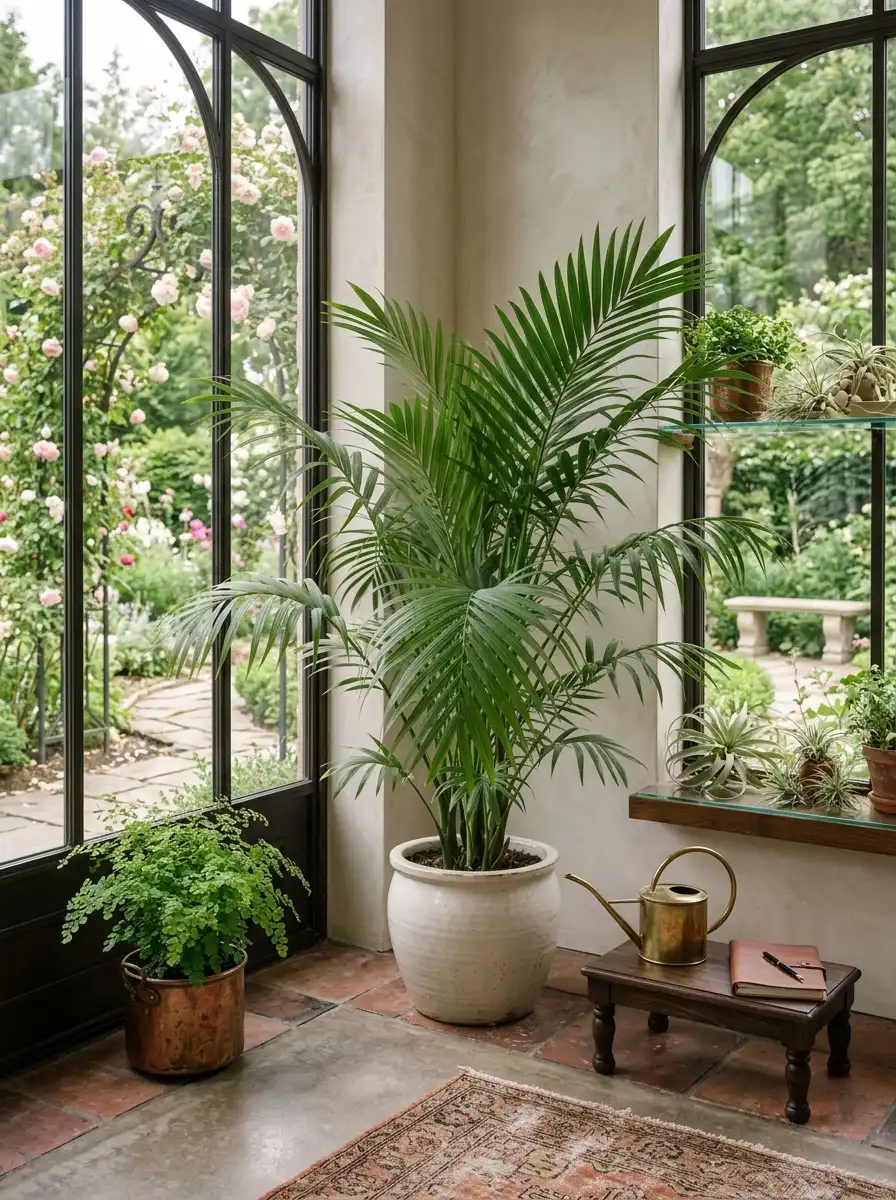
Le palmier de salon (Chamaedorea elegans) est l'une des plantes d'intérieur les plus précieuses pour les foyers canadiens : il tolère la faible lumière où la plupart des palmiers échouent, et il est NON-toxique aux chats et chiens — l'un des rares palmiers vraiment pet-safe. Cultivé dans les salons victoriens sombres (d'où son nom), il continue de prospérer dans les coins sombres canadiens.
Ce guide couvre tout ce qui est spécifique à la culture du palmier de salon dans un foyer canadien — pourquoi il prospère dans les pièces sombres (le rare exploit tropical), comment combattre les tétranyques et les pointes brunes hivernales, et pourquoi vous ne pouvez PAS le bouturer.
Votre plante reçoit-elle assez de lumière cet hiver ?
Un hiver canadien coupe les heures d'ensoleillement de moitié. Voyez ce que votre ville reçoit ce mois-ci et si une lampe de croissance est nécessaire.
🌿 Fiche d'entretien rapide
Palmier de salon en bref : Tolère la faible lumière — l'un des rares palmiers qui prospère dans les coins sombres. NON-toxique aux chats et chiens — rare pour un palmier d'intérieur. Pas de bouturage — pousse d'un seul point. Pointes brunes = air sec ou eau du robinet (chauffage canadien). Tétranyques en hiver — humidité prévient.
Le palmier de salon est-il sécuritaire pour les chats et chiens ?
Oui — le palmier de salon (Chamaedorea elegans) est NON-toxique aux chats et chiens selon l'ASPCA, ce qui en fait l'une des meilleures plantes d'intérieur sécuritaires pour animaux qu'on puisse cultiver au Canada. Un animal qui mâchouille une fronde ne sera pas empoisonné. Comme avec n'importe quelle plante, manger une grande quantité de matière foliaire fibreuse peut quand même causer un léger inconfort gastro-intestinal temporaire, donc ce n'est pas fait pour être mangé — mais aucun composé toxique. Les frondes douces arquées du palmier de salon et sa taille au sol en font un choix populaire pet-safe pour foyers avec animaux, et il donne un look tropical de palmier que très peu de plantes non-toxiques peuvent égaler.
Champion de la faible lumière (rare pour un palmier)
La plupart des palmiers exigent une lumière vive. Le palmier de salon est l'exception — il a évolué sur le sol ombragé des forêts d'Amérique centrale et préfère réellement la lumière faible à moyenne indirecte. Les Victoriens le cultivaient dans des salons sombres, d'où le nom "palmier de salon".
🪟 Lumière moyenne (idéal)
2-3 m d'une fenêtre est ou ouest. Croissance saine, frondes denses, look tropical complet.
🌓 Faible (toléré!)
Fenêtres nord, coins sombres, salons victoriens. Pousse plus lentement mais reste en santé. Sa spécialité.
✖ Soleil direct (à éviter)
Brûle les frondes, jaunit les feuilles. Aucun soleil direct, jamais.
Comment arroser au Canada
Arrosez quand les 2-3 cm supérieurs sont secs. Évitez les deux extrêmes — sec complet (pointes brunes) ou détrempé (pourriture des racines).
Horaire d'arrosage : Été (mai-sept) : tous les 7-10 jours. Automne (oct-nov) : tous les 10-14 jours. Hiver (déc-fév) : tous les 14-17 jours. Printemps (mars-avril) : tous les 7-10 jours. En faible lumière, le terreau sèche très lentement — vérifiez toujours au toucher.
Le palmier de salon en faible lumière garde l'humidité du terreau longtemps. Un humidimètre 3-en-1 confirme quand arroser — enfoncez la sonde pour une lecture instantanée d'humidité, lumière et pH. Aucune pile requise.
Lien affilié — GrowersGuide.ca peut toucher une commission sur les achats admissibles, sans frais supplémentaires pour vous. En savoir plus.
Pourquoi les pointes brunissent
Les pointes brunes sont la plainte #1 du palmier de salon au Canada. Trois causes :
Cause #1 : Air sec du chauffage
25-30 % d'humidité hivernale = pointes brunes garanties. Solution : humidificateur, plateau à galets, ou groupement de plantes.
Cause #2 : Arrosage irrégulier
Alternance sec/détrempé stresse la plante. Établissez une routine — vérifiez le terreau le même jour chaque semaine.
Cause #3 : Fluor et sels d'eau du robinet
Les palmiers sont modérément sensibles au fluor canadien. Passez à eau filtrée ou de pluie si chronique. Rincez le terreau 2-3×/an pour évacuer les sels d'engrais.
Bouturage — la chose importante à savoir
⚠️ Le palmier de salon NE PEUT PAS être bouturé à partir de feuilles ou tiges
Contrairement au pothos ou philodendron, chaque palmier pousse d'un seul point de croissance et n'a pas de nœuds qui peuvent re-enraciner. Tentatives de bouture = échec garanti.
La seule option pratique : la division au rempotage. Les palmiers de salon sont vendus en groupes de plusieurs semis dans un pot. Au printemps lors du rempotage, vous pouvez séparer doucement le groupe en plus petits groupes, en gardant plusieurs tiges et des racines saines dans chaque division. Si le groupe ne se sépare pas facilement, laissez-le tel quel — l'aspect plein fait partie du charme.
Tétranyques — ennemi hivernal canadien
Les palmiers de salon attrapent les tétranyques en hiver canadien (air sec du chauffage). Plan de bataille :
- Identifiez : fines toiles entre frondes, piqûres pâles, points qui bougent sur le dessous des feuilles.
- Douchez la plante entière à l'eau tiède pour déloger physiquement les tétranyques.
- Savon insecticide tous les 5-7 jours pendant 3 semaines (brise le cycle de reproduction).
- Augmentez l'humidité — les tétranyques détestent l'air humide. Humidificateur = traitement + prévention.
- Isolez des autres plantes jusqu'à élimination complète.
Soins hivernaux canadiens
Humidificateur ou plateau à galets
Solution combinée pointes brunes + tétranyques. 50 %+ d'humidité = palmier en santé.
Réduisez l'arrosage
Passez à tous les 14-17 jours en hiver. En faible lumière + croissance ralentie, le terreau sèche très lentement.
Inspectez chaque semaine pour tétranyques
Plus tôt vous attrapez = plus facile à traiter. Sous les frondes, où ils se cachent.
Arrêtez la fertilisation novembre-février
Reprise mars-avril avec engrais équilibré dilué à demi-force, mensuel jusqu'en septembre.
🐾 Sécuritaire pour chats et chiens — rare pour un palmier
Le palmier de salon est NON-toxique aux chats et chiens selon l'ASPCA. C'est l'un des SEULS palmiers d'intérieur véritablement pet-safe — beaucoup de palmiers populaires (comme le palmier-sago) sont au contraire TRÈS toxiques. Si vous voulez un look de palmier dans un foyer avec animaux, c'est le choix sécuritaire.
Diagnostic — problèmes courants
Pointes brunes
Causes : air sec, arrosage irrégulier, fluor. Humidificateur + routine d'arrosage + eau filtrée. Taillez les pointes à un angle.
Frondes jaunes
Cause : arrosage excessif. Réduisez la fréquence, vérifiez le drainage. Aussi possible : soleil direct.
Tétranyques (toiles + tachetures pâles)
Cause : air sec d'hiver canadien. Plan de bataille ci-dessus. Humidité = traitement + prévention.
Aucune croissance
Cause : croissance naturellement lente, surtout en hiver. Pas un problème. Reprend au printemps avec plus de lumière.
Questions fréquentes
Le palmier de salon tolère-t-il la faible lumière ?
Oui — c'est l'un des rares palmiers qui prospère en faible lumière. Cultivé dans les salons victoriens sombres, d'où son nom. Excellent pour pièces nord canadiennes.
Le palmier de salon est-il toxique pour les chats ?
Non — NON-toxique aux chats et chiens selon l'ASPCA. Rare exception parmi les palmiers (beaucoup d'autres comme le palmier-sago sont très toxiques).
Comment bouturer un palmier de salon ?
Vous ne pouvez PAS — les palmiers ne se bouturent pas par feuille ou tige. Seule option : division au rempotage si vendu en groupe de plusieurs semis.
Pourquoi mon palmier a-t-il des pointes brunes ?
Air sec du chauffage canadien (#1), arrosage irrégulier, ou fluor de l'eau du robinet. Humidificateur + routine d'arrosage + eau filtrée résolvent la plupart des cas.
À quelle fréquence arroser un palmier de salon au Canada ?
Arrosez un palmier de salon quand les 2-3 cm supérieurs de terreau ont séché — typiquement tous les 7-10 jours en été et tous les 10-17 jours en hiver canadien. Le palmier de salon aime son terreau légèrement et uniformément humide, mais jamais détrempé : il se situe entre les plantes tolérantes à la sécheresse et celles qui aiment l'humidité. L'arrosage excessif pourrit les racines et fait jaunir les frondes, tandis que laisser sécher complètement brunit les pointes et est difficile à corriger. Arrosez à fond jusqu'au drainage, videz la soucoupe, et vérifiez le terreau au toucher avant d'arroser à nouveau. En faible lumière hivernale le terreau sèche bien plus lentement, donc testez toujours plutôt que de suivre un horaire fixe. Eau à température ambiante.
Combien de lumière le palmier de salon a-t-il besoin au Canada ?
Le palmier de salon est l'une des meilleures plantes d'intérieur de faible lumière pour le Canada — il a évolué sur le sol ombragé des forêts d'Amérique centrale et est véritablement heureux en lumière faible à moyenne indirecte, incluant une pièce orientée nord ou un endroit bien reculé d'une fenêtre. Cette tolérance à l'ombre est exactement pourquoi les Victoriens le cultivaient dans des salons sombres, ce qui explique son nom. Il poussera plus vite en lumière vive indirecte mais doit être gardé hors du soleil direct, qui brûle et jaunit les frondes. Dans un hiver canadien sombre, il ralentit simplement — il ne déclinera pas comme la plupart des plantes en faible lumière.
Le palmier de salon est-il sécuritaire pour les chats et chiens ?
Oui — le palmier de salon (Chamaedorea elegans) est NON-toxique aux chats et chiens selon l'ASPCA, ce qui en fait l'une des meilleures plantes d'intérieur sécuritaires pour animaux qu'on puisse cultiver au Canada. Un animal qui mâchouille une fronde ne sera pas empoisonné. Comme avec n'importe quelle plante, manger une grande quantité de matière foliaire fibreuse peut quand même causer un léger inconfort gastro-intestinal temporaire, donc ce n'est pas fait pour être mangé — mais aucun composé toxique. Les frondes douces arquées du palmier de salon et sa taille au sol en font un choix populaire pet-safe pour foyers avec animaux, et il donne un look tropical de palmier que très peu de plantes non-toxiques peuvent égaler.
Pourquoi mon palmier de salon a-t-il des pointes brunes ?
Les pointes brunes des frondes sont la plainte la plus fréquente au Canada et indiquent généralement l'air sec. Le chauffage à air pulsé fait chuter l'humidité intérieure à 20-30 % en hiver alors que le palmier préfère 40-60 %. Groupez-le avec d'autres plantes, utilisez un humidificateur, ou placez le pot sur un plateau à galets. Deux autres causes : arrosage irrégulier — laisser le terreau alterner entre complètement sec et détrempé — et le fluor et les sels de l'eau du robinet, auxquels les palmiers sont modérément sensibles. Arrosez avant que le terreau ne sèche complètement, passez à l'eau filtrée ou de pluie si votre eau du robinet est dure, et rincez le terreau quelques fois par an pour évacuer les sels d'engrais. Taillez les pointes brunes avec des ciseaux propres en suivant la forme naturelle de la fronde.
Puis-je bouturer un palmier de salon à la maison ?
PAS à partir de boutures — et c'est la chose la plus importante à savoir. Contrairement au pothos ou philodendron, un palmier de salon NE PEUT PAS être bouturé à partir d'une feuille ou bouture de tige, parce que chaque palmier pousse d'un seul point de croissance et n'a pas de nœuds qui peuvent re-enraciner. Les palmiers de salon sont cultivés commercialement à partir de graines, ce qui est lent et difficile à faire à la maison. La seule option pratique : les palmiers de salon sont presque toujours vendus en groupes de plusieurs semis dans un seul pot, et ce groupe peut être divisé soigneusement en plus petits groupes lors du rempotage au printemps — séparez doucement les systèmes racinaires, en gardant plusieurs tiges et une part saine de racines dans chaque division. Si un groupe ne se sépare pas facilement, laissez-le; l'aspect plus plein fait partie de l'attrait de la plante.
Pourquoi y a-t-il de minuscules toiles sur mon palmier de salon ?
Des fines toiles entre les frondes signifient des tétranyques — le ravageur le plus fréquent du palmier de salon, et qui prospère exactement dans l'air sec et chaud d'un foyer canadien en hiver. Cherchez des piqûres ou tachetures pâles sur les frondes et de minuscules points en mouvement sur les dessous. Traitez en rinçant toute la plante dans une douche tiède, puis en appliquant du savon insecticide tous les 5-7 jours pendant trois semaines pour briser le cycle de reproduction, et augmentez l'humidité autour de la plante — les tétranyques détestent l'air humide, donc un plateau à galets ou humidificateur est à la fois un traitement et une prévention à long terme. Isolez le palmier des autres plantes jusqu'à ce que l'infestation soit complètement éliminée.
📖 Autres guides de plantes d'intérieur
Plantes non-toxiques et faible lumière aux côtés du palmier de salon.
Vous cultivez aussi des légumes ?
Calendriers de plantation gratuits pour 30+ légumes dans toutes les grandes villes canadiennes.