
Aglaonéma — Entretien et Faible Lumière au Canada
Comment cultiver et entretenir l'aglaonéma (Aglaonema, aussi appelé arbre chinois à feuilles persistantes) dans les foyers canadiens — l'une des meilleures plantes de faible lumière, arrosage rare, garder au chaud et bouturage facile.
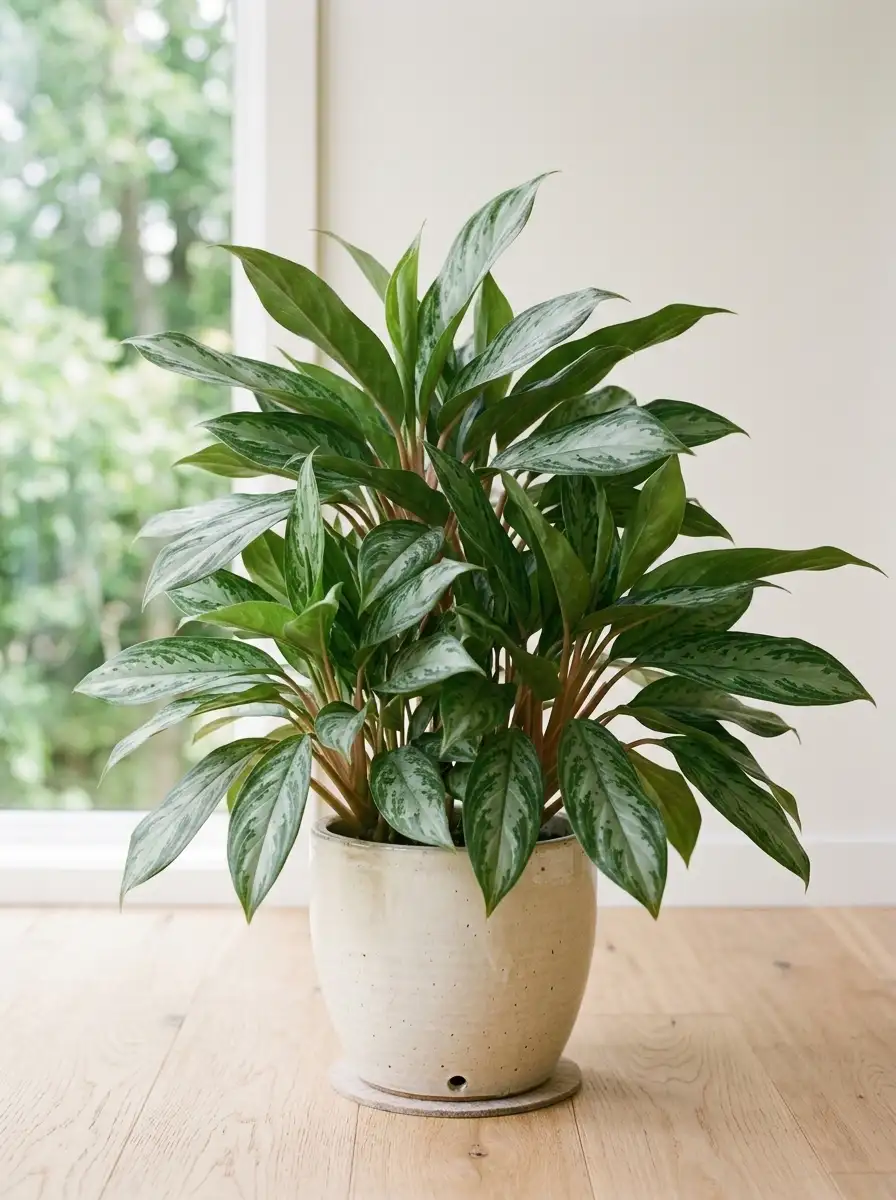
L'aglaonéma (Aglaonema) est l'une des trois plantes d'intérieur les plus tolérantes à la faible lumière pour les foyers canadiens — aux côtés de la plante ZZ et de la langue de belle-mère. Mais contrairement à ces deux succulentes, l'aglaonéma a un feuillage tropical large et coloré : variétés modernes en rose, rouge, panaché argent.
Ce guide couvre tout ce qui est spécifique à la culture de l'aglaonéma dans un foyer canadien — quelle variété pour quelle luminosité, pourquoi le garder au chaud (sensible au froid contrairement aux ZZ), bouturage par division, et toxicité aux animaux.
Votre plante reçoit-elle assez de lumière cet hiver ?
Un hiver canadien coupe les heures d'ensoleillement de moitié. Voyez ce que votre ville reçoit ce mois-ci et si une lampe de croissance est nécessaire.
🌿 Fiche d'entretien rapide
Aglaonéma en bref : Tolère faible lumière — l'une des 3 meilleures plantes de feuillage tropical pour bureaux/coins sombres canadiens. Arrosage — quand 3-5 cm sec, tous les 7-21 jours. SENSIBLE au froid — minimum 15 °C, loin des vitres canadiennes. Variétés colorées exigent plus de lumière. Toxique aux chats et chiens.
Les aglaonémas sont-ils toxiques pour les chats et chiens ?
Oui — les aglaonémas sont toxiques aux chats et chiens selon l'ASPCA. Les feuilles contiennent des cristaux d'oxalate de calcium insolubles; les mâcher cause irritation buccale, brûlure intense de la bouche et des lèvres, salivation, vomissements et difficulté à avaler. Les réactions sont généralement douloureuses plutôt que mortelles, mais l'aglaonéma n'est pas une plante sécuritaire pour les animaux — gardez hors de portée des chats et chiens qui mâchouillent le feuillage. La sève peut aussi irriter la peau humaine, lavez vos mains après la taille ou le bouturage. Si vous voulez une alternative sécuritaire pour faible lumière, la plante-araignée ou le calathéa sont non-toxiques.
Lumière — choisir la bonne variété pour votre espace
Les exigences en lumière varient significativement par variété. Choisissez bien selon votre espace au Canada :
🌓 Faible lumière (vert/argent)
'Maria', 'Silver Queen', 'Silver Bay'. Tolèrent fenêtre nord ou bureau loin des fenêtres. Choix #1 pour appartements canadiens sombres.
🪟 Moyenne (panaché)
'Stripes', 'White Rajah'. Lumière moyenne indirecte, 2-3 m d'une fenêtre. Maintient la panachure.
☀️ Vive indirecte (rouge/rose)
'Red Siam', 'Pink Dalmatian', 'Lipstick'. Variétés colorées modernes — exigent fenêtre est ou ouest pour garder leur couleur vive.
Comment arroser l'aglaonéma au Canada
Arrosez quand les 3-5 cm supérieurs de terreau sont secs. L'aglaonéma tolère la sécheresse mieux que l'arrosage excessif — c'est la cause #1 de mort. Eau à température ambiante seulement (sensible au froid).
Horaire d'arrosage : Été (mai-sept) : tous les 7-10 jours. Automne (oct-nov) : tous les 10-14 jours. Hiver (déc-fév) : tous les 14-21 jours. Printemps (mars-avril) : tous les 10-14 jours. En faible lumière, attendez plus longtemps — le terreau sèche très lentement.
L'arrosage excessif tue plus d'aglaonémas que tout le reste. Un humidimètre 3-en-1 confirme que le terreau est sec — enfoncez la sonde pour une lecture instantanée d'humidité, lumière et pH. Aucune pile requise.
Lien affilié — GrowersGuide.ca peut toucher une commission sur les achats admissibles, sans frais supplémentaires pour vous. En savoir plus.
Sensibilité au froid — critique en hiver canadien
L'aglaonéma est l'une des plantes tropicales les plus sensibles au froid. Minimum 15 °C — sous 10 °C cause des dommages permanents (taches grises ou foncées sur les feuilles). En hiver canadien, beaucoup de sources de froid à éviter :
- Vitres froides — gardez 30 cm minimum. Les vitres canadiennes peuvent être à 0-5 °C en janvier.
- Portes extérieures et vestibules — chaque ouverture envoie de l'air froid. Évitez ces emplacements.
- Eau du robinet froide — laissez l'eau atteindre la température ambiante avant d'arroser.
- Bouches de climatisation en été — éloignez d'au moins 1 m.
- Pièces froides — sous-sols non chauffés, vestibules. Choisissez une pièce constamment chauffée.
Soins hivernaux canadiens
Gardez TRÈS au chaud (15 °C+)
Le défi hivernal #1. Une nuit froide près d'une fenêtre canadienne mal isolée peut endommager les feuilles. Pièce centrale chauffée seulement. Loin de toutes les fenêtres extérieures et portes.
Réduisez drastiquement l'arrosage
Passez à toutes les 14-21 jours. En faible lumière + températures plus fraîches, le terreau sèche lentement. Arrosage au rythme d'été = pourriture certaine.
Acceptez la pause de croissance
Peu ou pas de nouvelle croissance de novembre à mars — normal. La croissance reprend avec la lumière au printemps. Arrêtez la fertilisation novembre-février.
Variétés colorées : plus de lumière
Si vous avez Red Siam, Pink Dalmatian ou autre variété rose/rouge, déplacez vers la fenêtre la plus lumineuse en hiver. Sans assez de lumière, les nouvelles feuilles émergent vertes au lieu de colorées.
Comment bouturer par division
La division est la méthode la plus facile et la plus fiable. L'aglaonéma pousse comme un cluster de tiges séparées qui peuvent être divisées. Meilleur moment : printemps.
Glissez la plante hors du pot. Vous verrez plusieurs tiges qui sortent du terreau — chacune a son propre système racinaire. Identifiez 2-3 sections distinctes à séparer.
Avec les doigts, séparez doucement les racines. Portez des gants — la sève est irritante. Si bien attaché, un couteau propre peut aider. Chaque section doit avoir tiges + racines.
Empotez chaque section dans son propre pot avec terreau frais bien drainant. Arrosez légèrement. Gardez au chaud et en lumière vive indirecte pendant 2-3 semaines pendant l'établissement. La croissance reprend après cette période d'adaptation.
⚠️ Toxique aux chats et chiens
L'aglaonéma est toxique aux chats et chiens selon l'ASPCA. Cristaux d'oxalate de calcium causent brûlure buccale intense, salivation et vomissements. Gardez hors de portée. Pour alternative non-toxique en faible lumière : plante-araignée ou calathéa.
Diagnostic — problèmes courants
Taches grises ou foncées sur les feuilles
Cause : dommages au froid. Le problème canadien hivernal #1. Éloignez des vitres, portes, bouches de climatisation. Utilisez eau à température ambiante. Feuilles endommagées ne récupèrent pas — taillez.
Feuilles jaunes
Cause #1 : arrosage excessif. Vérifiez terreau et drainage. Plusieurs feuilles jaunes en même temps = pourriture des racines. 1 feuille du bas occasionnelle = normal.
Pointes brunes
Causes : air sec, sels d'eau du robinet, ou manque d'eau. Humidificateur en hiver, eau filtrée, vérifier l'horaire d'arrosage. Rincez le terreau occasionnellement pour évacuer les sels.
Variété colorée qui verdit
Cause : manque de lumière. Les variétés rose/rouge (Red Siam, Pink Dalmatian) ont besoin de lumière vive indirecte pour leur couleur. Déplacez vers fenêtre est/ouest.
Questions fréquentes
L'aglaonéma tolère-t-il la faible lumière ?
Oui — c'est l'une des 3 meilleures plantes de faible lumière pour le Canada (avec ZZ et langue de belle-mère). Les variétés vertes/argent ('Maria', 'Silver Queen') tolèrent les fenêtres nord et bureaux. Variétés colorées rose/rouge ont besoin de plus de lumière.
L'aglaonéma est-il toxique pour les chats ?
Oui — toxique aux chats et chiens selon l'ASPCA. Cristaux d'oxalate de calcium causent brûlure buccale. Gardez hors de portée. Alternatives non-toxiques : plante-araignée, calathéa.
Pourquoi mon aglaonéma a-t-il des taches grises sur les feuilles ?
Dommages au froid. L'aglaonéma déteste sous 15 °C. Éloignez des vitres canadiennes en hiver, portes extérieures, eau froide du robinet. Feuilles endommagées ne reverdissent pas.
Comment bouturer un aglaonéma ?
Division au printemps : dépotez, séparez les tiges qui ont leurs propres racines, rempotez chacune. Aussi : boutures de tige dans l'eau ou terreau humide. Portez des gants (sève irritante).
📖 Autres guides de plantes d'intérieur
Plantes de faible lumière aux côtés de l'aglaonéma.
Vous cultivez aussi des légumes ?
Calendriers de plantation gratuits pour 30+ légumes dans toutes les grandes villes canadiennes.