
Meilleurs légumes à cultiver en pot au Canada — guide complet
Cultivez des légumes frais sur votre balcon, patio ou porche — avec des conseils adaptés aux étés canadiens, aux règlements de copropriété et aux courtes saisons.
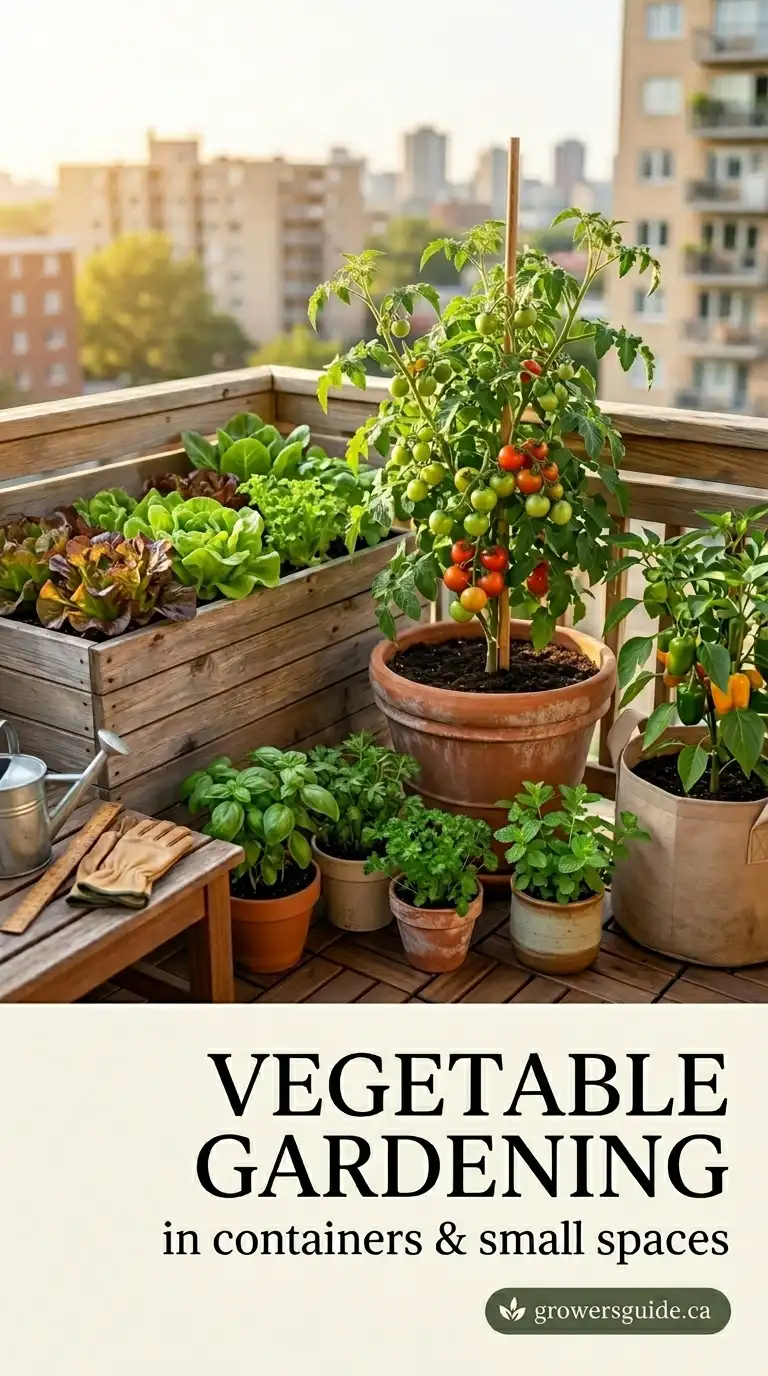
Plus de la moitié des Canadiens vivent en appartement, en copropriété ou en maison de ville, sans accès à un jardin traditionnel. Le jardinage en pot change tout. Un balcon exposé au sud à Toronto, Calgary ou Vancouver peut produire d'importantes quantités d'aliments frais de mai à octobre — tomates, laitue, fines herbes, poivrons, concombres, haricots et plus — dans de simples pots, jardinières et sacs de culture. Vous cultivez précisément sur un balcon? Voyez notre guide du jardin de balcon pour quoi cultiver selon le soleil et le vent, et les contenants qui survivent en hauteur.
La culture en pot convient aussi vraiment bien au climat canadien. Les pots se réchauffent plus vite que la pleine terre au printemps — ce qui vous fait gagner 2 à 3 semaines sur votre date de gel pour les cultures de saison chaude. On peut les rentrer ou les abriter lors des gels imprévus de mai ou septembre. Et dans les régions plus chaudes comme l'Okanagan, on peut les déplacer à l'ombre l'après-midi au cœur de l'été. Voici tout ce qu'il faut savoir.
Meilleurs légumes en pot au Canada : tomates cerises (pot de 20 à 30 L), laitue et feuilles (15 cm de profond), fines herbes (6 à 8 L), poivrons (15 à 20 L) et haricots nains (20 L). Tous produisent bien sur un balcon ou un patio exposé au sud avec 6 heures et plus de soleil. Rentrez les pots quand un gel tardif menace — un avantage clé sur la pleine terre.
Guide complet des tailles de contenant — 20+ légumes
La taille du pot est le facteur le plus important pour réussir en pot. Trop petit, et le plant manque d'espace racinaire, d'eau et de nutriments avant de bien produire. Dans le doute, prenez plus gros — aucun plant n'a jamais souffert d'un trop grand volume racinaire.
Source : profondeur racinaire minimale en contenant — pratique de jardinage courante; conforme à notre guide du potager en pot et au calculateur de contenant.
🔄 Free to reuse — please credit GrowersGuide.ca with a link.
| Légume | Contenant minimal | Taille recommandée | Remarques |
|---|---|---|---|
| 🍅 Tomates cerises | 15 L (3 gal) | 20–30 L (5–7 gal) | 1 plant par pot; tuteur ou cage requis |
| 🍅 Grosses tomates | 20 L (5 gal) | 40–60 L (10–15 gal) | Plus gros vaut bien mieux; les sacs de culture en tissu sont excellents |
| 🌶️ Poivrons | 10 L (2,5 gal) | 15–20 L (3–5 gal) | 1 plant; variétés compactes idéales en pot |
| 🥒 Concombres | 15 L (3 gal) | 20–30 L (5–7 gal) | Variétés naines; treillis ou cage requis |
| 🥬 Laitue et feuilles | 15 cm de profond | 20–25 cm de profond, large | 4 à 6 plants par pot de 30 cm; racines superficielles |
| 🌿 Fines herbes (basilic, persil) | 4 L (1 gal) | 6–8 L (1,5–2 gal) | 1 gros plant ou 2 à 3 petits par pot |
| 🌿 Menthe | 4 L (1 gal) | 8–10 L (2–2,5 gal) | Gardez-la dans son propre pot — elle envahit tout |
| 🫘 Haricots nains | 15 L (3 gal) | 20 L (5 gal) | 6 à 8 plants par pot; aucun tuteur |
| 🥕 Carottes | 30 cm de profond | 40+ cm de profond | Variétés courtes (Chantenay, Marché de Paris) seulement |
| 🔴 Radis | 15 cm de profond | 20 cm de profond | Culture rapide (25 jours); 16 par pot de 30 cm |
| 🥬 Chou frisé | 15 L (3 gal) | 20 L (5 gal) | 1 à 2 plants; récoltez les feuilles extérieures en continu |
| 🍓 Fraises | 4 L (1 gal) | 6 L par plant | Variétés remontantes idéales en pot |
| 🧅 Oignons verts | 15 cm de profond | 20 cm de profond | 16+ par pot de 30 cm; repoussent des retailles |
| 🫐 Piments forts | 10 L (2,5 gal) | 15 L (3 gal) | Excellents en pot; hivernez à l'intérieur |
| 🥦 Brocoli | 15 L (3 gal) | 20–25 L (5–6 gal) | 1 par pot; gros plant, a besoin d'espace |
| 🌱 Micropousses | Plateau de 5 cm | Tout plateau peu profond | Récolte en 7 à 14 jours; aucun ensoleillement requis |
Combien de terreau votre contenant demande-t-il?
Calculez le volume exact de terreau pour toute taille de contenant
Meilleurs légumes en pot pour les balcons et patios canadiens
Conseils de jardinage en pot pour les conditions canadiennes
💧 Arrosage — le défi no 1 de la culture en pot
Les pots sèchent bien plus vite que la pleine terre, et c'est amplifié durant les étés canadiens — une chaude journée de juillet à Toronto ou Calgary peut exiger deux arrosages par jour. Le test : enfoncez le doigt à 5 cm dans le terreau. S'il est sec à cette profondeur, arrosez à fond jusqu'à ce que l'eau s'écoule par le fond.
Les jardinières à réserve d'eau valent l'investissement pour les jardiniers occupés — elles demandent généralement un arrosage tous les 3 à 5 jours plutôt que quotidien. Arrosez au pied des plants, pas sur le feuillage — les feuilles mouillées favorisent les maladies fongiques. Utilisez notre calculateur d'arrosage pour estimer les besoins de vos pots.
Pourquoi les pots sèchent plus vite que la pleine terre : température, type de sol, ensoleillement, vent, taille du pot, humidité de l'air et taille du plant influent tous sur la vitesse de séchage. Voyez ce qui fait sécher le sol plus vite →
🌱 Terreau — n'utilisez jamais de terre de jardin en pot
La terre de jardin se compacte en pot, coupant l'oxygène aux racines et empêchant le drainage. Utilisez un terreau de qualité (Canadian Tire, Home Depot et la plupart des jardineries en ont) ou faites le vôtre avec 60 % de compost, 20 % de perlite et 20 % de fibre de coco.
Renouvelez votre terreau aux 1 à 2 ans — il se décompose, perd sa structure et s'appauvrit. Ajouter du compost chaque printemps prolonge sa vie et améliore les résultats. Calculez exactement la quantité nécessaire avec notre calculateur de sol.
🧪 Fertilisation — les pots en demandent plus que la pleine terre
Chaque arrosage entraîne des nutriments par les trous de drainage. Les plants en pot ont besoin d'un apport supplémentaire toutes les 1 à 2 semaines durant la saison. Les engrais liquides sont les plus efficaces en pot — ils atteignent les racines immédiatement au lieu de devoir se décomposer dans le sol.
Pour les plants fruitiers (tomates, poivrons, concombres), utilisez un engrais plus riche en potassium qu'en azote une fois les fleurs formées — trop d'azote à la floraison donne du feuillage luxuriant mais peu de fruits. Un engrais à légumes équilibré ou de l'émulsion de poisson convient bien aux feuilles et aux fines herbes toute la saison.
🪴 Choix du contenant — le matériau compte l'hiver canadien
Les pots en terre cuite sont beaux mais sèchent vite, sont lourds sur un balcon et fendent au gel — pas idéaux pour l'hiver canadien. Les pots en plastique sont légers et retiennent bien l'humidité. Les sacs de culture en tissu (de plus en plus populaires, offerts chez Canadian Tire et Amazon.ca) offrent un excellent cernage racinaire à l'air, se réchauffent vite au printemps et se plient à plat pour l'entreposage.
Limite de poids du balcon : si vous jardinez sur un balcon de copropriété, vérifiez la capacité portante de l'immeuble. Un pot de 40 litres rempli de terreau humide peut peser 40 à 50 kg. La plupart des balcons canadiens supportent 200 à 400 kg/m², mais mieux vaut confirmer. Les terreaux légers (avec perlite et fibre de coco plutôt que de la terre lourde) sont un bon choix pour les balcons sensibles au poids.
Les sacs de culture en tissu respirant assurent un cernage racinaire à l'air pour des plants plus sains, se réchauffent vite dans les printemps frais du Canada et se plient à plat pour l'entreposage hivernal — une façon simple et abordable de démarrer un potager de balcon ou de patio.
Lien affilié — GrowersGuide.ca peut toucher une commission sur les achats admissibles, sans frais supplémentaires pour vous. En savoir plus.
☀️ Soleil — connaissez votre exposition avant de planter
La plupart des légumes fruitiers (tomates, poivrons, concombres, haricots) ont besoin de 6 à 8 heures de soleil direct par jour. Les feuilles (laitue, épinard, chou frisé, fines herbes) se contentent de 4 à 6 heures. Si votre balcon est au nord ou ombragé par un immeuble, misez sur les cultures tolérantes à l'ombre : laitue, épinard, roquette, menthe, persil et coriandre s'y débrouillent bien. Un balcon exposé au sud reçoit un excellent ensoleillement de mai à septembre et peut presque tout cultiver.
Ce contenant en plastique convient-il à la culture d'aliments ?
Réutiliser une chaudière, un pot de yogourt ou un godet de pépinière est la façon la moins chère de démarrer un potager en pot, et presque tout ce qu'on lit à ce sujet est plus alarmant que nécessaire. En bref : les plastiques dans lesquels vos aliments sont déjà vendus conviennent pour cultiver des aliments. Le chiffre dans le triangle de recyclage indique le polymère.
| Code | Plastique | On le trouve comme | Pour cultiver des aliments |
|---|---|---|---|
| 2 | PEHD | Cruches de lait et de détergent, chaudières de 20 L, la plupart des godets de pépinière | Le meilleur choix. Rigide, résistant aux UV, le plastique standard des chaudières alimentaires. |
| 5 | PP | Pots de yogourt et de margarine, contenants pour emporter, pailles | Le meilleur choix. Stable et tolérant à la chaleur ; c'est déjà ce que sont la plupart des pots alimentaires. |
| 4 | PEBD | Sacs à pain, bouteilles souples, doublures flexibles | Convient. Trop mou pour tenir une forme, mais inoffensif comme doublure. |
| 1 | PET / PETE | Bouteilles d'eau et de boisson gazeuse, barquettes à petits fruits | Court terme seulement. Conçu pour un usage unique ; il devient cassant dehors. Bon pour des semis, pas pour une saison au soleil. |
| 3 | PVC / V | Tuyaux, certaines pellicules, retailles de revêtement de vinyle | À éviter. Souvent plastifié, et aucune raison de le choisir quand le 2 et le 5 sont gratuits. |
| 6 | PS | Verres en mousse, barquettes, ustensiles transparents cassants | À éviter. Il s'effrite en fragments qui restent dans votre terreau pour de bon. |
| 7 | Autre | Tout ce qui n'est pas 1 à 6 | Ça dépend — 7 n'est pas un matériau. C'est une catégorie fourre-tout : polycarbonate, nylon, bioplastiques PLA, emballages multicouches. À traiter comme « non identifié », pas comme « dangereux ». |
Les trois règles qui comptent plus que le chiffre
1. Ce qu'il a contenu compte plus que sa composition. Une chaudière n° 2 de qualité alimentaire ayant servi à du scellant d'asphalte est pire qu'une barquette n° 6 ayant contenu des fraises. Ne réutilisez jamais un contenant ayant servi à des produits nettoyants, du carburant, de la peinture, un pesticide ou un contenu industriel inconnu — les solvants imprègnent le plastique lui-même et ne se rincent pas. Si vous ignorez ce qu'un baril a transporté, n'y cultivez pas d'aliments.
2. Le soleil est le facteur canadien dont personne ne parle. Presque tous les articles sur la sécurité des plastiques parlent d'usage en cuisine. Un contenant sur un balcon plein sud de mai à septembre reçoit bien plus d'UV que n'importe quel usage intérieur, et ce sont les UV — pas le contact avec le terreau — qui dégradent réellement le plastique. Les plastiques minces et transparents (bouteilles n° 1, barquettes n° 6) blanchissent et deviennent cassants en une seule saison et commencent à libérer des fragments. Les n° 2 et n° 5 opaques et épais durent des années. Les godets noirs de pépinière durent le plus longtemps, le noir de carbone bloquant les UV.
3. Pas de bois traité sous pression, pas de vieille peinture. Autre sujet, même réflexe : ne bâtissez pas un bac à légumes avec des retailles de bois traité d'âge inconnu, et ne réutilisez pas de bois ou de métal peint pouvant dater d'avant les peintures sans plomb.
Une note honnête sur ce qui est établi et ce qui ne l'est pas. Le Règlement sur les aliments et drogues du Canada (titre 23) encadre les emballages vendus avec un aliment : il exige qu'ils ne transmettent rien de nocif à l'aliment. Aucun règlement canadien n'encadre ce que vous pouvez réutiliser dans votre propre jardin ; quiconque vous cite une règle à ce sujet l'invente. Le tableau ci-dessus reflète les polymères déjà utilisés en contact alimentaire et leur durabilité physique à l'extérieur. Là où la réponse honnête est « ça dépend », nous le disons plutôt que de trancher.
Adaptez le support à la façon dont la plante grimpe vraiment
Les jardiniers en pot achètent constamment le mauvais support, parce qu'on traite le mot « treillis » comme une seule chose. Les plantes grimpent de quatre façons différentes, et trois d'entre elles ne peuvent pas utiliser un support conçu pour les autres. Bien choisi, une simple branche gratuite suffit ; mal choisi, une obélisque à 40 $ ne sert à rien.
| Façon de grimper | Cultures en pot | Ce qu'il lui faut |
|---|---|---|
| Volubiles — toute la tige s'enroule autour du support | Haricots grimpants, ipomée, hoya | Quelque chose de mince — moins de 5 cm environ. Une tige ne peut pas enrouler un gros poteau. Bambou, tuteur ou corde tendue conviennent. |
| À vrilles — de petits doigts qui agrippent | Pois, concombres, vigne | Quelque chose à agripper : filet, ficelle ou branches ramifiées. Un poteau lisse ne sert à rien — les vrilles glissent. |
| Adhérentes — des racines aériennes qui s'accrochent | Pothos, monstera, lierre | Une surface rugueuse et légèrement humide où s'enraciner — un tuteur-mousse ou un tube enveloppé de coco, pas un tuteur lisse. |
| Non grimpantes — elles ne grimpent pas du tout | Tomates, poivrons, rosiers | Des attaches, pas une structure d'escalade. C'est l'erreur la plus fréquente. Une tomate ne s'accrochera jamais d'elle-même : elle penche jusqu'à casser si vous ne l'attachez pas. |
Des supports gratuits qui fonctionnent. Les branches ramifiées conservées après la taille — les « rames à pois » — restent le meilleur support pour les pois, et ne coûtent rien. Les vieilles lamelles de store vénitien et les retailles de bambou ont la bonne épaisseur pour un tipi à haricots. Un sac à provisions en filet tendu entre deux tuteurs devient un filet à pois instantané. Un tube de carton enveloppé de fibre de coco fait un tuteur-mousse convenable pour un monstera en pot.
N'attachez jamais avec du fil métallique, du fil de pêche ou des attaches autobloquantes. Une tige s'épaissit toute la saison ; tout ce qui n'est pas élastique s'incruste et étrangle la plante, tuant tout ce qui se trouve au-dessus de l'attache. Des bandes découpées dans un vieux t-shirt ou un bas-culotte sont douces, extensibles et gratuites — et vraiment meilleures que la plupart des produits vendus pour cet usage.
🇨🇦 Calendrier de plantation en pot par ville canadienne
Sortez les pots après votre date de dernier gel printanier. Vous pouvez les rentrer pour les protéger si un gel tardif menace.
Dehors dès la fin mars-avril. À l'année pour les feuilles rustiques.
Dehors sans risque après le 10-15 mai. Protégés dès la fin avril.
Dehors après le 15-20 mai. Attention aux gels tardifs jusqu'à mi-mai.
Dehors après le 20 mai-1er juin. Rentrez lors des gels de fin mai.
Dehors après le 25 mai-1er juin. Saison courte mais productive.
Dehors après le 10-20 mai. Étés côtiers frais parfaits pour laitue et herbes.
Trouvez les dates de gel exactes de votre ville avec notre calculateur de dates de gel →
Foire aux questions
Puis-je cultiver des tomates sur un balcon d'appartement au Canada?
Oui — les variétés de tomates cerises et de balcon conviennent bien aux pots, et un balcon exposé au sud reçoit assez de soleil pour une bonne récolte. Il vous faut un contenant d'au moins 20 litres (un seau de 5 gallons ou un sac de culture en tissu), un arrosage quotidien constant l'été, un apport liquide hebdomadaire dès la floraison, et une cage ou un tuteur. Le principal défi sur un balcon est le vent — il assèche les pots plus vite et peut abîmer les plants hauts. Un coin abrité ou un brise-vent aide beaucoup. Vérifiez les règlements de votre copropriété — la plupart autorisent le jardinage en pot, mais certains limitent les structures au-dessus de la rampe.
À quelle fréquence arroser les légumes en pot l'été?
Durant les étés chauds (juillet-août), la plupart des pots demandent un arrosage quotidien, et les gros plants fruitiers comme les tomates et les concombres peuvent en demander deux fois par jour lors des canicules. Les petits pots sèchent plus vite que les gros — une raison de plus de prendre plus gros. La méthode la plus fiable : vérifiez chaque jour en enfonçant le doigt à 5 cm. Arrosez quand c'est sec à cette profondeur. Lors des canicules au-dessus de 30 °C, arrosez le matin et revérifiez le soir. Les contenants à réserve d'eau peuvent réduire la fréquence à tous les 3 à 5 jours.
Quels légumes poussent le mieux à la mi-ombre sur un balcon nord?
Un balcon exposé au nord limite beaucoup les légumes fruitiers, mais les cultures de feuilles et les fines herbes réussissent : laitue, épinard, roquette, chou frisé, bette à carde, coriandre, persil, menthe et ciboulette tolèrent tous 3 à 4 heures de lumière indirecte. Vous n'aurez pas de tomates ni de poivrons sans 6 heures et plus de soleil direct. Si l'immeuble a des balcons à l'est ou à l'ouest, ceux-ci reçoivent 4 à 5 heures de soleil et permettent un peu plus — des tomates cerises dans un coin très ensoleillé à l'ouest peuvent parfois produire, avec des rendements plus faibles qu'en plein soleil.
Quel est le meilleur terreau pour les légumes en pot au Canada?
Un bon terreau de pot équilibre rétention d'humidité, drainage et poids. Pour la plupart des légumes, cherchez un terreau contenant de la perlite (drainage) et du compost (fertilité). Évitez les mélanges lourds à base de terre — ils se compactent et drainent mal. Pour les gros plants fruitiers comme les tomates, ajoutez 20 à 25 % de perlite ou de vermiculite grossière au terreau standard pour un meilleur drainage et une meilleure aération. Ajouter du compost chaque printemps restaure la fertilité. Au Canada, Pro-Mix, FafardPRO et Terre Noire sont des marques répandues et performantes. Évitez les terreaux génériques fortement rabaissés — la qualité varie beaucoup.
Comment protéger les plants en pot des gels tardifs canadiens?
C'est ici que les pots ont un gros avantage sur la pleine terre. Quand un gel tardif menace (fréquent en mai dans la plupart des villes canadiennes), rentrez simplement vos pots pour la nuit. Même un garage froid ou un porche non chauffé suffit contre les gels légers. Pour les cultures rustiques comme la laitue et le chou frisé, un voile antigel ou un vieux drap posé sur les pots suffit généralement. Surveillez les prévisions 14 jours d'Environnement Canada dès la fin avril — la plupart des gels tardifs sont prévisibles 24 à 48 heures d'avance.
Planifiez votre potager en pot
Utilisez ces outils pour calculer le terreau, trouver les dates de gel et planifier l'arrosage